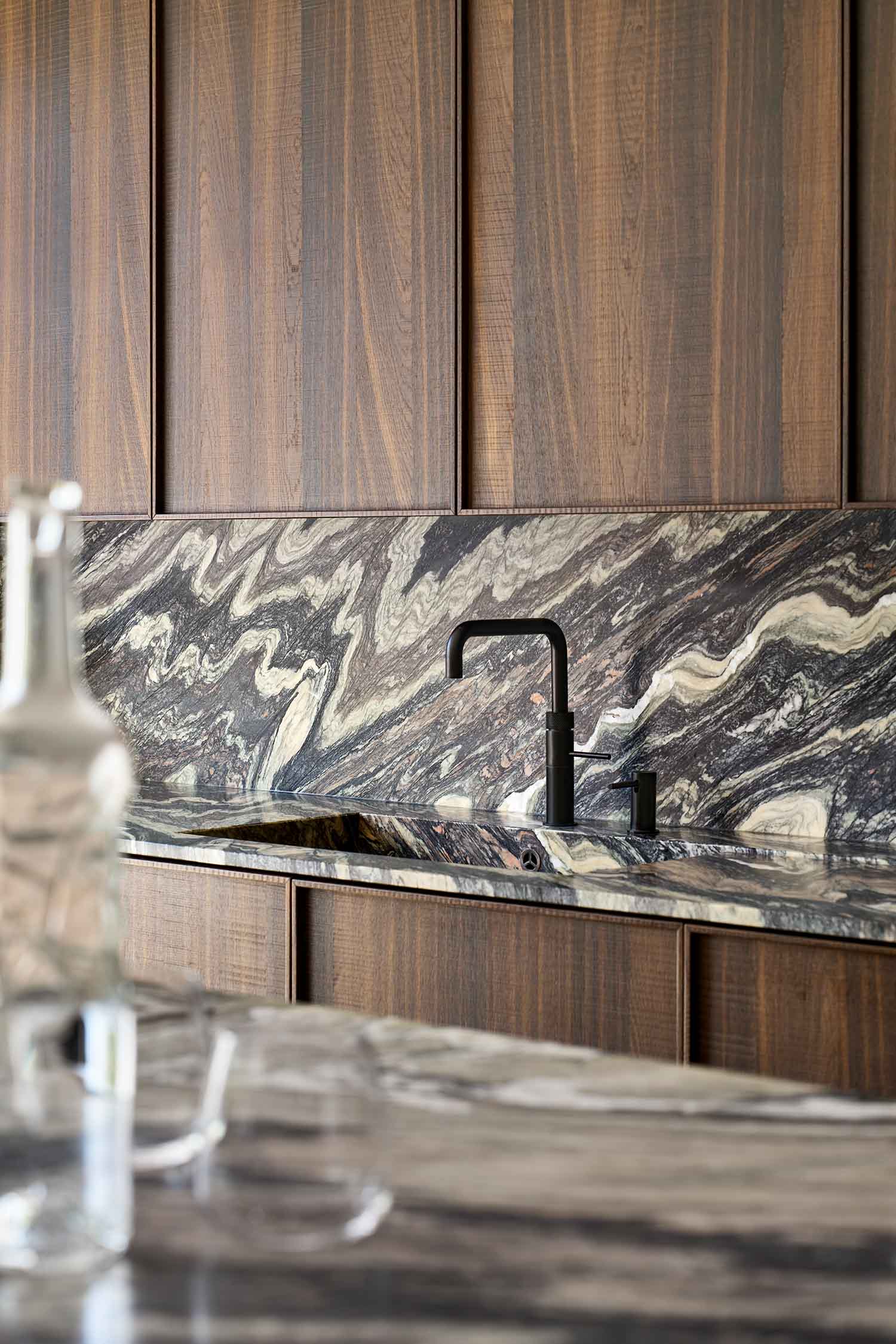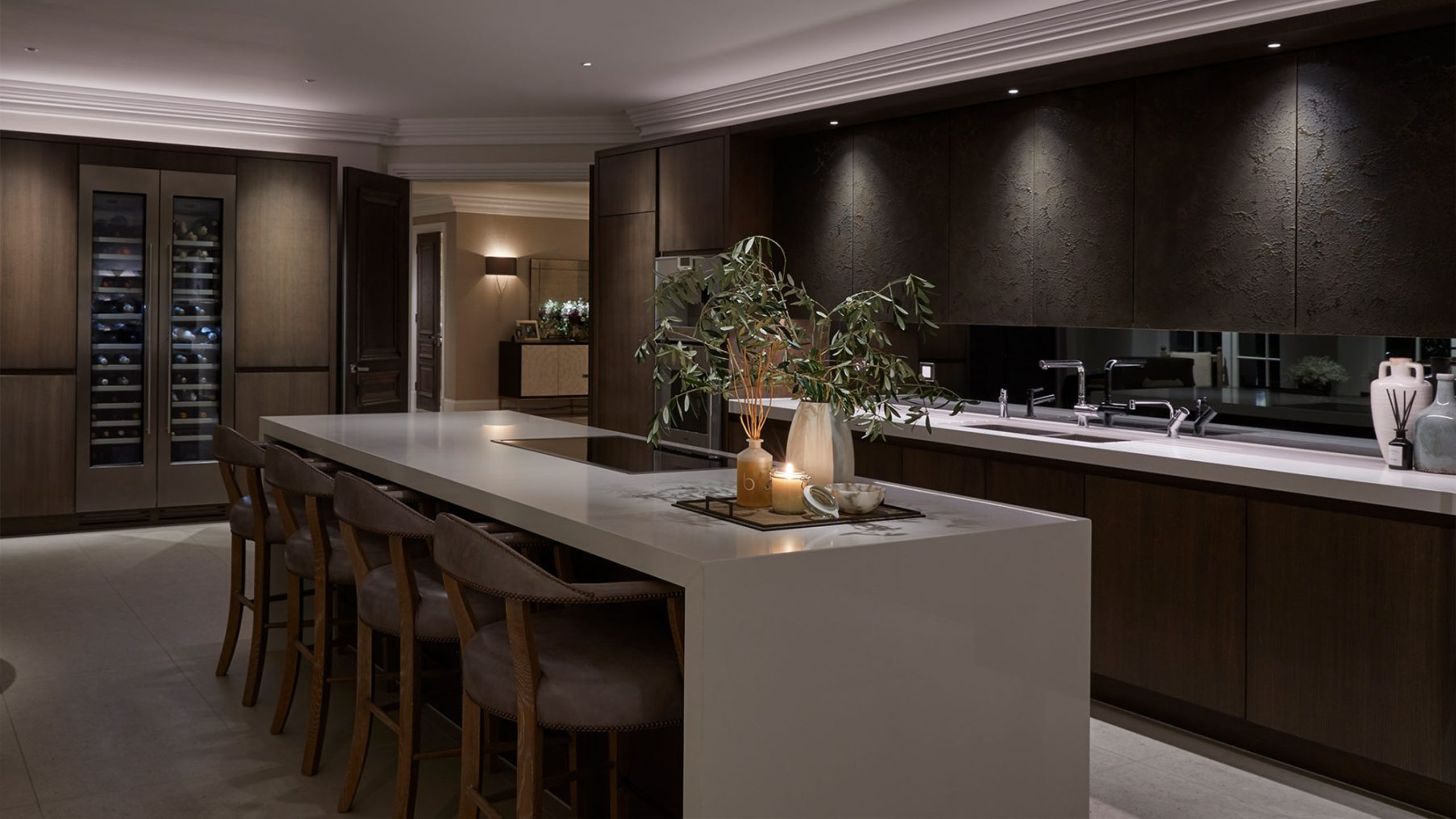
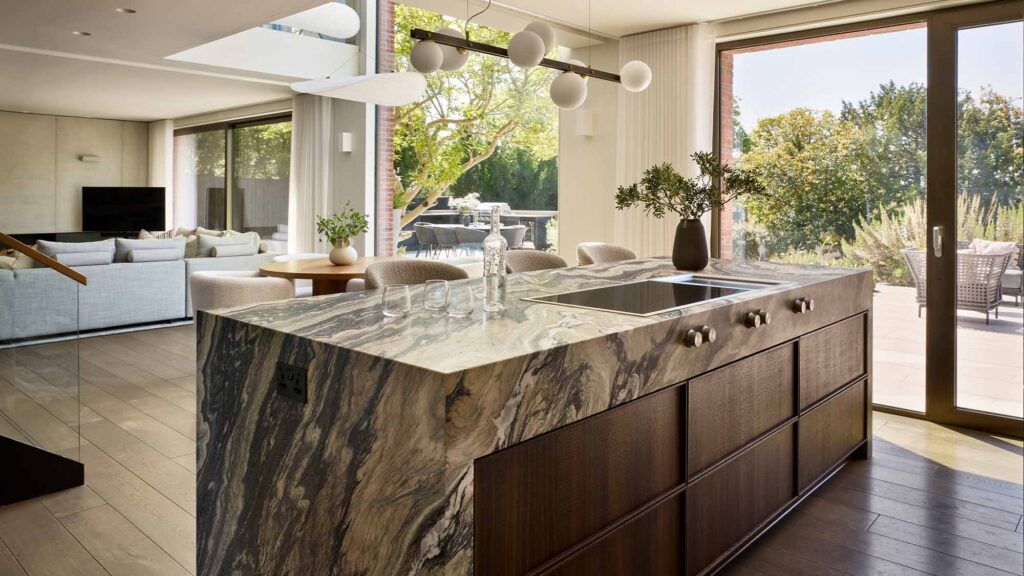
In Krieder’s Chelsea townhouse project, designed in collaboration with Sophie Paterson Interiors, the Macassar ebony cabinetry sits alongside Arabescato marble. Two striking materials in a period property, and a combination that needs a careful eye for proportion. Get that wrong and even the most expensive finishes won’t save the room.
Looking at the photographs, though, could you tell whether the cabinets were handmade or produced in a factory? Probably not. And why should you have to? Surely the quality of the finished kitchen is more important than the tools used to make it.
The trouble is, the word handmade has become something of a selling point in its own right. It brings to mind traditional workshops and skilled cabinetmakers, while factory-made can still conjure up images of flat-pack cupboards. Neither picture tells the whole story, particularly at the luxury end of the market.
Some of Europe’s leading kitchen manufacturers use highly sophisticated machinery alongside skilled craftspeople. Traditional cabinetmakers use machinery too. What separates a good kitchen from a mediocre one often has more to do with the decisions made along the way.
There’s the design itself, the accuracy of the measurements, the construction of the cabinets and how everything comes together during installation. All worth examining before paying a premium for the word handmade.
What Does Handmade Actually Mean?
Imagine you’re renovating an older house and there’s an awkward space beside the chimney breast. You want a cupboard there, but none of the usual cabinet sizes quite fits.
A traditional cabinetmaker could build something specifically for that space. That’s one of the real advantages of handmade furniture. You can decide on the width, depth, door style and practically every other detail without being tied to a catalogue.
But here’s where the terminology gets rather muddled. Some factory manufacturers can accommodate unusual dimensions too. Others work with a fixed selection of cabinet sizes, leaving the designer to make the best use of what’s available. Both approaches can produce a lovely kitchen, although the amount of freedom you’re buying is quite different.
Then there’s the word bespoke, which you’ll see almost everywhere. It might mean that every cabinet is made individually. It might simply mean that the layout and finishes have been chosen for your home.
I’d be more interested in asking what happens when a standard cabinet doesn’t fit. Can the manufacturer alter its dimensions? Will the designer suggest a different arrangement? Or will the space be finished with a matching panel?
The answers tell you rather more than the word handmade ever will.
What Does Precision German Manufacturing Actually Give You?
Why would a kitchen manufacturer put a cabinet door through two weeks of extreme humidity testing? Well, think about what happens around the dishwasher, the sink or the hob. Steam, splashes, changes in temperature. Over time, these can take their toll on poorly protected materials, particularly around the edges.
One German manufacturer’s testing laboratory exposes kitchen fronts to temperatures of 40°C and 95% humidity for two weeks. Other tests involve steaming the doors for half an hour. These are deliberately harsh conditions, intended to find weaknesses in materials and finishes before they end up in someone’s home.
It’s quite reassuring to know that somebody has already investigated how a cabinet might behave after years of use.
There’s the manufacturing accuracy to consider as well. In a contemporary kitchen, particularly one with long runs of handleless cabinets, the smallest inconsistencies can become surprisingly noticeable. A door sitting slightly out of line, a drawer that doesn’t close quite as smoothly as the others. You might overlook these things in a busy showroom. Living with them every day is another matter.
Of course, all that engineering is only part of the story.
You can manufacture a cabinet to extremely precise measurements, but what if those measurements were wrong in the first place? Or the designer hasn’t allowed enough room for the dishwasher door to open without obstructing the walkway?
That’s why the survey and the design work deserve just as much attention as the manufacturing. A kitchen can be perfectly made and still be poorly planned.

Why the Design Work Matters Just as Much
Picture a full-height bank of cabinets arriving at a property, beautifully finished and made to the exact dimensions on the drawings. There’s just one problem. The wall bows slightly halfway up, and the units won’t sit as intended.
It’s not something you’d necessarily notice during an initial visit, especially if the room is still being renovated. But it’s exactly the sort of detail that needs picking up before the kitchen goes into production.
Matthew Yeatman at Krieder is particularly particular about this stage of a project.
"We can manufacture cabinets to incredibly accurate dimensions, but those measurements have to be right in the first place. That’s why we put so much work into the consultation, the survey and the design. I’d much rather spend longer getting those details right than discover a problem when the kitchen arrives."
There’s quite a bit happening behind the scenes. The designer needs to know where the finished floor will sit, how the walls are running, where the plumbing and electrics will emerge and whether the appliances have enough room to operate properly. If building work is still underway, some of those details may need checking again before the final drawings are signed off.
It’s worth asking your kitchen designer when those final checks take place, particularly if you’re renovating or extending. A good set of drawings should reflect the room as it will actually be, not simply how it looked at the first appointment.
What Are You Really Paying For Inside a Kitchen Cabinet?
In a recent round of kitchen testing by Which?, two ranges failed when the hinges were put under load. The hinges actually pulled away from the cabinets. Not exactly what you’d hope to discover after having a new kitchen installed.
It’s an interesting test because the problem isn’t necessarily the hinge itself. The material it’s fixed into, and how securely it’s attached, matter just as much.
Shelves are another example. Some simply rest on small metal pegs, which is perfectly common, but certain designs can tip if weight is applied near the front. Which? found that more secure shelf supports performed better.
None of this is especially glamorous. We tend to spend far longer choosing door finishes than looking at the construction behind them.
And does paying £40,000 or £50,000 automatically mean you’re getting better cabinetry? Not necessarily. At that level, I’d expect the supplier to explain exactly what materials and fittings are being used, how they’ve been tested and what can be repaired or replaced later.
A beautifully finished door is one thing. Knowing the cabinet behind it has been properly engineered is quite another.
What Happens If You Need a Replacement Door in Ten Years?
Kitchen door manufacturer Uform makes an interesting admission in its quality guidelines. Even when a replacement door is made in the original colour, it may not match the rest of the kitchen perfectly.
There are several reasons. Paint finishes can vary slightly between production batches, while years of daylight and cleaning gradually change the appearance of the original doors. The difference may be minor, but on a long run of contemporary cabinetry, one door that’s a slightly different shade can become rather noticeable.
Here’s something else you might not know. Two doors with the same finish can actually appear to be different colours depending on the light falling on them. It’s called metamerism, and Uform recommends comparing doors side by side in natural daylight before deciding there’s a colour mismatch.
Of course, there’s not much point finding the perfect colour match if the original door style has been discontinued.
So what happens if you damage a door eight or ten years after installation? Can you order another one, and will the supplier still have a record of the finish? Those are fair questions when you’re spending a substantial amount on a kitchen.
I’d also keep a copy of the final cabinet specifications. Not just the colour names, but the actual finish codes and details of the fittings. They’re easily forgotten once the kitchen is installed, but rather useful when something needs replacing years later.
Is a Handmade Kitchen Worth the Extra Money?
Take a kitchen island. In one quotation, it might have a few cupboards with ordinary hinged doors. In another, the same-sized island could contain deep pan drawers, integrated bins, specialist storage and a beautiful stone worktop that continues down both ends. From a distance, the two designs might look remarkably similar. The cost of making them certainly won’t be.
It’s one reason kitchen quotations can be so difficult to compare, particularly when you’re looking at the higher end of the market.
Handmade furniture generally costs more when there’s a lot of individual joinery involved. A cabinetmaker might spend several days producing a particular door design or getting the proportions of an unusual piece of furniture just right. But don’t assume a factory-manufactured kitchen will necessarily be cheaper. Some of the sophisticated finishes, fittings and engineering used by premium European manufacturers are expensive to produce.
The interesting part is finding out where the money has gone.
I’d want to see the appliance specification, what’s included in the installation and whether the worktops have been priced for templating and fitting. Even the internal fittings deserve attention. A cupboard with two shelves isn’t the same proposition as one fitted with several heavy-duty pull-out mechanisms.
And if you’re comparing two kitchen companies, ask them to quote against the same requirements wherever possible. Otherwise, you could end up choosing the cheaper kitchen without realising how much has been left out.
Why the Installation Matters Just as Much
Stone worktop specialists are surprisingly strict about when they’ll take their final measurements. The base cabinets must already be fitted, level and fixed securely in place. Some won’t even carry out the templating if the kitchen isn’t ready.
There’s a good reason. Once the measurements have been taken, moving a cabinet by a few millimetres could leave you with a very expensive piece of stone that no longer fits. And if you’ve chosen a marble with strong veining, the position of the joins and cut-outs deserves some thought too.
Ivett & Reed, a British stone specialist, specifically warns customers not to move their cabinets after templating. They also want the actual sink, hob and other relevant fittings available so their measurements can be checked before cutting begins.
Integrated appliances bring their own challenges. Electrolux, for example, warns that inadequate ventilation around an integrated fridge can lead to condensation, higher running costs and even premature failure. It’s something that needs getting right during installation, not after the cabinetry has been fitted around it.
I’d want to know who takes responsibility for coordinating all these different trades. Particularly if you’re buying an expensive kitchen from one company and arranging the installation through another.
So, Would You Choose Handmade or Factory-Made?
Krieder’s Chelsea Townhouse project is an interesting example of why the answer isn’t always obvious. Working with Sophie Paterson Interiors, the kitchen combines Macassar ebony cabinetry with Arabescato marble, set within a period property where many of the original architectural features have been carefully restored.
Now compare that with Sophie Paterson’s own home in Surrey. A new-build property, with a streamlined kitchen finished in grey oak. Very different surroundings, and a different design approach.

Neither project needed to follow a particular style simply because of the building’s age. The Chelsea kitchen is contemporary despite its historic setting, while the Surrey kitchen was designed around the character of a modern family home.
There’s a lesson here for anyone choosing between handmade and factory-made cabinetry. If you’re commissioning an unusual piece of furniture or need intricate joinery to match existing architectural details, traditional cabinetmaking may be an excellent choice. For a kitchen with long, clean lines, sophisticated finishes and integrated appliances, a specialist manufacturer has plenty to offer.
Perhaps the most useful thing you can do is show a designer examples of kitchens you genuinely like, then discuss what’s possible in your own home. You may find the manufacturing method is a much smaller part of the conversation than you expected.
One Last Thing Before You Order
A beautifully rendered kitchen design can be quite convincing. You can see the island, the lighting, the finishes and how the whole room might look once it’s completed. What you can’t always see is exactly what’s included in the price.
Citizens Advice recommends getting a written agreement that sets out the work, materials, costs and timings before a home improvement project begins. It’s sensible advice for a kitchen costing £10,000, and perhaps even more important when you’re spending five or six times that amount.
I’d want the final specification alongside the drawings. The actual door finish codes, cabinet construction, drawer systems, appliance models and worktop details. If you’ve chosen a particular handle or an unusual interior finish, make sure it’s recorded rather than left to a conversation somebody might forget.
And what happens if you change your mind after approving the design? Some alterations are straightforward. Others may mean ordering new components or delaying production, particularly if the cabinetry is already being manufactured.
Get those details agreed before anything is ordered.
By that stage, whether the kitchen is handmade or factory-made should be just one part of a much bigger decision. You’ll have a better idea of the people designing it, the quality of the furniture and precisely what you’re paying for.