A kitchen tap is one of the few things in a kitchen you’ll probably use dozens of times a day. Yet it’s surprisingly easy to choose one almost entirely on appearance. You find a finish that works with the sink, check that you like the shape and move on to something seemingly more important.
There is rather more to it than that. The height and reach of the spout affect how comfortably you can use the sink. The water pressure can affect how the tap performs. A pull-out hose can make washing large pans considerably easier. And once you start considering filtered, boiling, chilled or sparkling water, the tap can require equipment beneath the worktop that needs to be accounted for in the cabinetry.
In a well-planned luxury kitchen, the tap shouldn’t really be treated as an accessory at all. It is part of the working design of the sink area.
Start with what you actually need from the tap
Before looking at finishes or brands, work out what you want the tap to do. For some kitchens, the answer is straightforward: hot and cold water delivered reliably from a well-made mixer tap.
Other households may want instant boiling water because the kettle is constantly being used. Some want filtered drinking water. Others want chilled or sparkling water available without bottles taking up fridge space. You might also want a pull-out spray because you regularly wash large pans or use a particularly wide sink.
None of those options automatically makes a kitchen better. The important thing is identifying which functions will genuinely make everyday use easier.
| Type of tap | Best suited to |
|---|---|
| Standard mixer | Kitchens where simplicity, reliability and straightforward maintenance matter most. |
| Pull-out mixer | Larger sinks, frequent cooking and households regularly washing large cookware. |
| Filtered-water tap | Homes where drinking-water taste or filtration is a priority. |
| Multifunction tap | Kitchens where boiling, filtered, chilled or sparkling water would genuinely be used regularly. |
The most sophisticated tap isn’t necessarily the best one. Sometimes the smartest specification is the simplest.
Don’t dismiss the standard mixer tap
Boiling-water systems receive a lot of attention, particularly in premium kitchens, but a good mixer tap remains an excellent choice. There is less equipment beneath the sink, fewer components requiring maintenance and usually considerably less to think about after installation. That simplicity has value.
It can be particularly useful where the sink cabinet already needs to accommodate recycling, cleaning products or other equipment. A beautifully made mixer also doesn’t have to feel like the compromise option. In the right luxury kitchen design, a simple tap in the right proportions and finish can work considerably better than a multifunction system chosen simply because it offers more features.
The question isn’t whether you can have boiling, chilled and sparkling water. It’s whether you’ll actually use it.
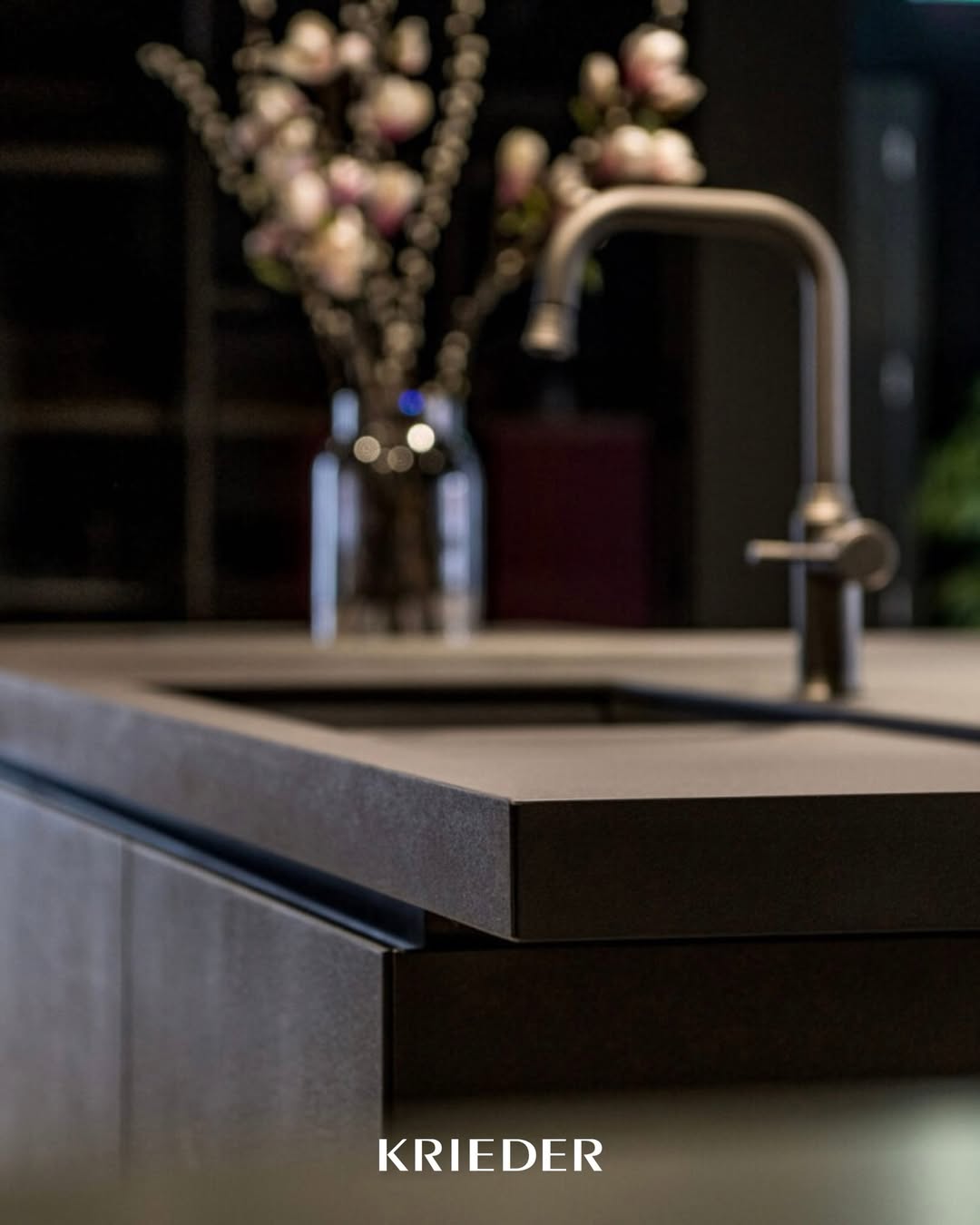
When does a pull-out kitchen tap make sense?
Pull-out taps are one of those features that can look unnecessary until you’ve lived with one. Instead of the water being restricted to the fixed reach of the spout, the end of the tap extends on a flexible hose.
That can make it easier to rinse vegetables, clean the corners of a large sink, fill containers that don’t sit comfortably beneath the spout and wash oversized trays. They’re particularly useful with a large single-bowl sink.
But there are differences between products. Look at how smoothly the hose extends and retracts, where it returns when released and whether the spray head feels substantial enough for repeated use. Some models also switch between a conventional flow and a spray pattern. This is one of those details that’s worth physically trying rather than judging from a photograph.
What about boiling-water taps?
For households that regularly make hot drinks or cook from scratch, a boiling-water tap can quickly become part of the daily routine. It also removes the kettle from the worktop, which can be particularly useful in a clean, minimal German kitchen or on an island where reducing visual clutter matters.
But it isn’t an essential ingredient of a high-end kitchen. If the kettle is used once in the morning and perhaps again in the evening, the additional cost, equipment and maintenance may be difficult to justify.
We’ve looked at this question in much more detail in our guide to whether a boiling-water tap is worth it, including brands, hard water, filters and what ownership is actually like over time.
The important thing at the design stage is understanding that a boiling-water tap isn’t just a different tap. There is equipment underneath it, and that affects the kitchen around it.
Filtered, chilled and sparkling water: how far should you go?
Multifunction kitchen taps have moved considerably beyond instant boiling water. Depending on the system, a single tap can now provide conventional hot and cold water alongside filtered, boiling, chilled and even sparkling water.
For the right household, that’s genuinely useful. If you buy large quantities of bottled sparkling water, drink filtered water throughout the day and regularly use boiling water for cooking and drinks, combining those functions in one place can remove several small appliances and bottles from the kitchen.
But don’t buy functions simply because they’re available. Every additional feature potentially introduces more equipment, filters or consumables. Ask yourself what you’re actually trying to replace. If nobody in the house drinks sparkling water now, having it available from the tap probably isn’t going to transform the kitchen. If the fridge is permanently full of bottles of it, that’s a different conversation.
The space underneath the sink matters
This is where choosing a kitchen tap becomes part of designing the cabinetry. Open a beautifully minimal sink cabinet fitted with a multifunction water system and there may be considerably more happening inside than you’d expect.
Depending on the system, you could have a boiling-water tank, filter, chiller or CO₂ cylinder alongside the normal waste and plumbing. Then add the things you may also want in that cabinet: bins, recycling, cleaning products and perhaps storage. And, of course, the sink itself projects down into the same space.
This is why the tap, sink and cabinet should be considered together. We’ve covered this from the other direction in our guide to choosing a kitchen sink, because making the bowl unnecessarily large can leave very little useful room beneath it.
A made-to-measure kitchen gives the designer more freedom to solve these conflicts, but it still needs to be planned before cabinetry is manufactured. You don’t want to discover during installation that the boiling-water tank and recycling system both need to occupy the same 300mm of cupboard.
Filtration and water softening aren’t the same thing
This is particularly relevant in London, Kent and other hard-water areas. A water filter can improve drinking-water taste and remove or reduce particular substances depending on the type of filtration being used. That doesn’t automatically mean it softens the water or eliminates limescale. Those are different jobs.
If you’re buying a boiling or multifunction water system, check what the manufacturer’s filter actually does, whether additional limescale protection is recommended for your area and how frequently cartridges need replacing.
It’s also worth thinking about access. A filter that technically fits at the back of the cabinet isn’t particularly well planned if changing it means dismantling the recycling system every time. Serviceability isn’t the most exciting part of premium kitchen design, but you’ll appreciate it considerably more a few years after installation.
Tap height and reach matter more than they appear to
This is one of the easiest things to overlook when choosing a tap online. A tall tap can look elegant, but the proportions need to work with the sink. The water needs to land in a sensible part of the bowl rather than hitting too close to the edge. Put a tall spout over a shallow sink and excessive splashing can become irritating very quickly.
Reach matters too. With a large bowl, a tap that projects too little can make you constantly work towards the back of the sink. Too much projection can create the opposite problem.
If the sink sits beneath a window, check clearance. If the tap sits on an island, consider its height from across the room. The tap becomes part of the silhouette of the island and a very tall model can be more visually dominant than expected. These are small measurements with surprisingly noticeable consequences.
Think about the sink and tap as one decision
This is probably the most important point. The tap shouldn’t be selected independently of the sink. A large single bowl creates different requirements from a compact double bowl. An undermount sink interacts differently with the worktop than an inset model. A pull-out spray may be particularly useful with one configuration and largely unnecessary with another.
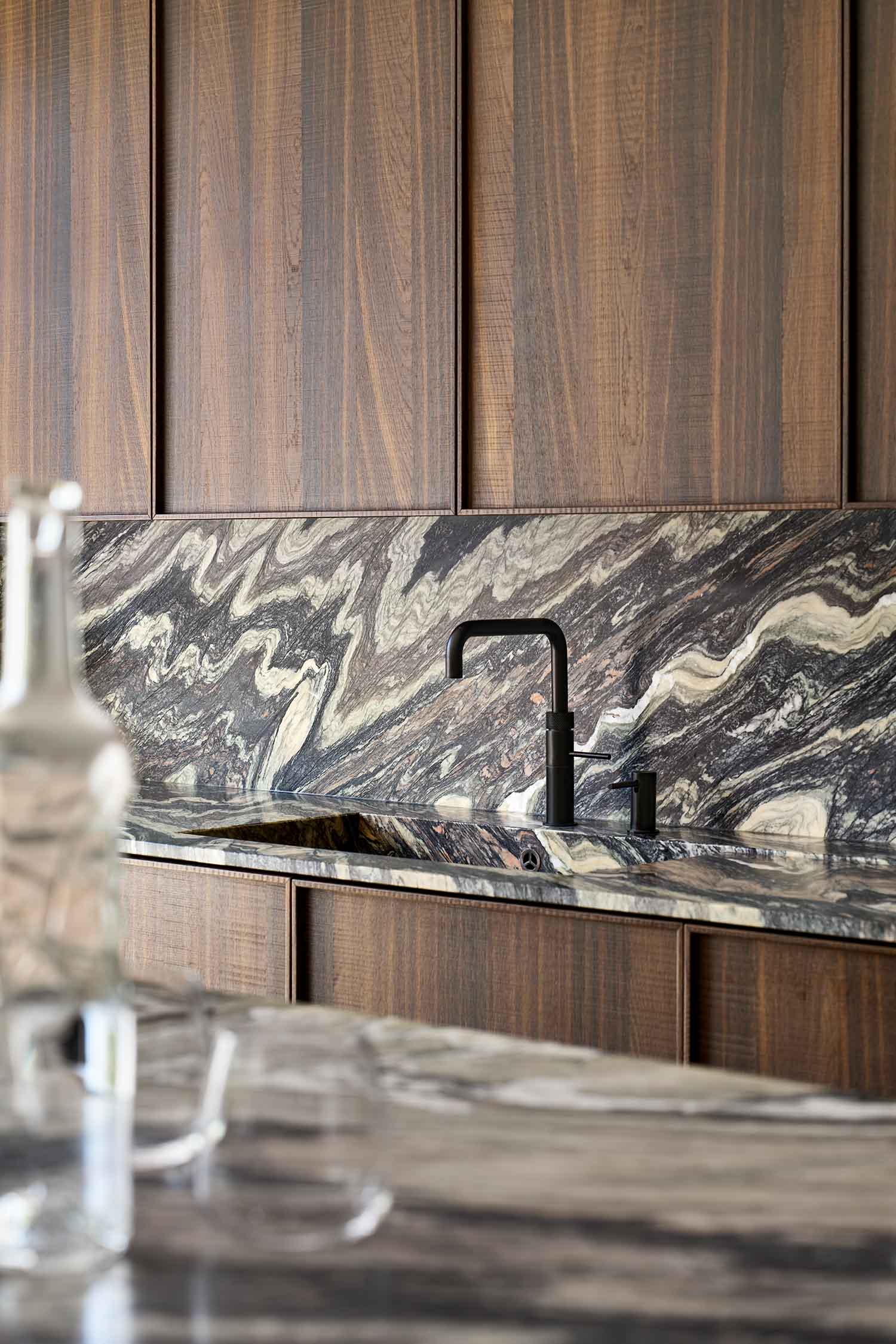
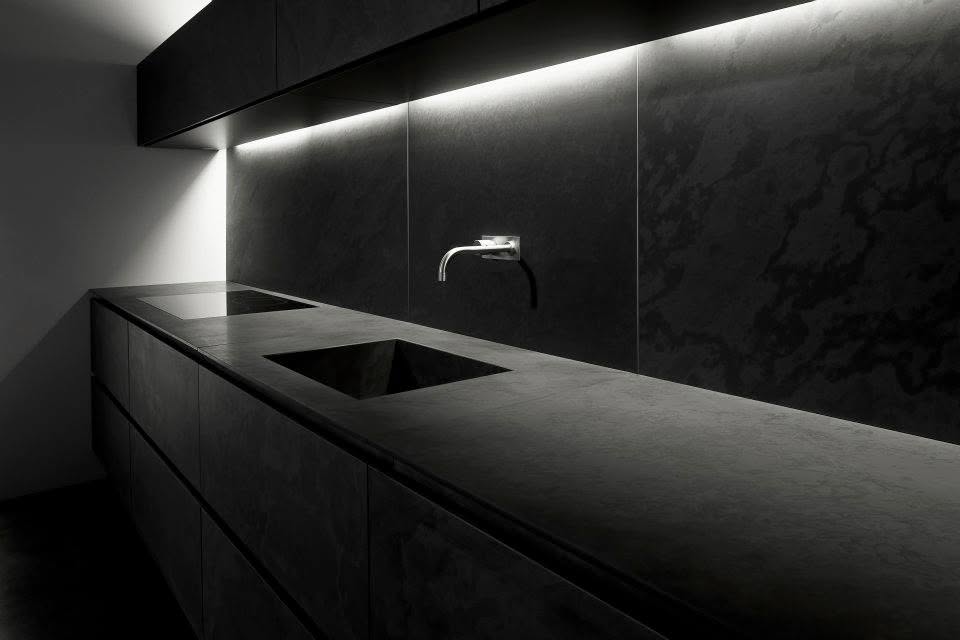
The relationship is visual as well. Krieder’s Pura kitchen, for example, uses a matt black tap against a Carrara-effect surface to deliberately create contrast. In the Ecostone kitchen, the tap is treated as part of the much more minimal architecture of the worktop, with a lowering design allowing the sink itself to be concealed.
Neither approach is inherently more luxurious. What makes them successful is that the tap belongs to the kitchen around it.
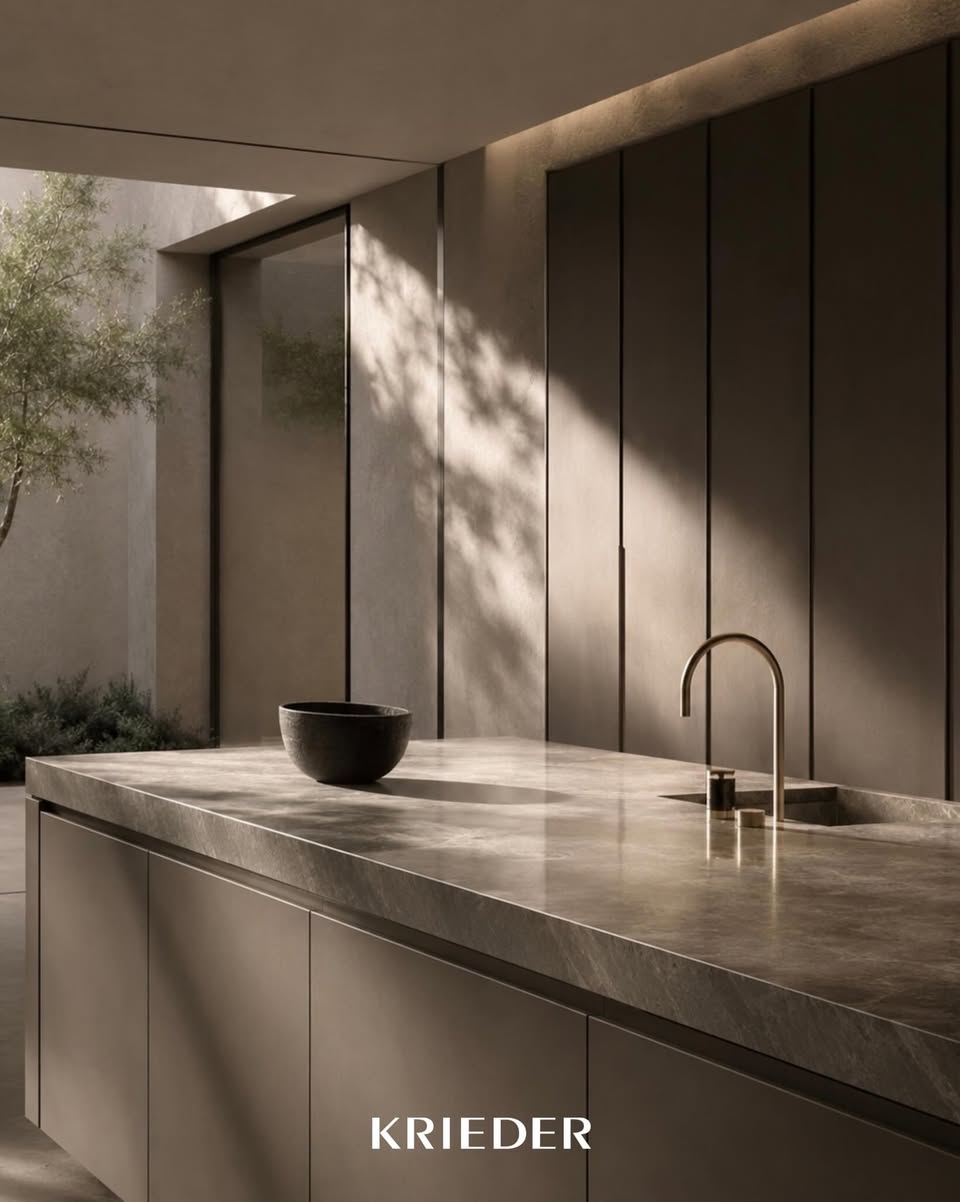
Choosing the right tap finish
Chrome remains popular for a reason. It’s neutral, familiar and works with almost anything. But contemporary luxury kitchens increasingly use taps as part of a wider material palette.
Brushed stainless steel, black, brass, bronze and other metallic finishes can connect the sink area with handles, lighting, appliances and architectural details elsewhere in the room. You don’t necessarily need every metal to match. In fact, trying to make every metallic surface identical can make a kitchen feel overly coordinated. What matters more is whether the finishes make sense together.
If you’re combining metals, look at undertones as well as colour. A warm brushed brass and a very cool polished chrome will create a much stronger contrast than two softer brushed finishes.
Also think beyond installation day. The tap is constantly handled, cleaned and exposed to water. Ask how the chosen finish should be maintained and whether the surface treatment is suitable for the amount of use it will receive.
Does the tap work with your water pressure?
This is less glamorous than choosing between brushed brass and matt black, but considerably more important. Not every tap performs equally well at every water pressure. Some properties have high-pressure systems; others don’t. Certain taps and multifunction systems have minimum operating requirements.
A tap can look perfect and still be frustrating if the flow is disappointing. Water pressure should therefore be checked before the final specification, particularly when renovating an older property or choosing a specialist tap system. It’s one more reason a tap is better specified as part of the kitchen project than bought independently at the last minute.
Should the tap go on the kitchen island?
If the sink is on the island, the tap inevitably becomes part of the island design too. There are good reasons to put it there. Preparing food while facing into the room can feel much more sociable than working against a wall. It can also create an efficient preparation zone when the sink, dishwasher, bins and work surface are planned together.
But an island is usually one of the most visible elements in an open-plan kitchen. A tall tap, draining dishes, soap bottles and the general evidence of using a sink are therefore visible too.
If your luxury kitchen island is intended primarily as a clean entertaining space, you may prefer to keep the main sink elsewhere. If it’s designed as a genuinely hardworking preparation area, putting the sink and tap there can make perfect sense.
The function of the island should determine the answer.
One tap or two?
There is another option that gets surprisingly little attention. You don’t necessarily need every function to come through the same tap.
Some kitchens work better with a conventional mixer plus a separate drinking-water or boiling-water tap. Others benefit from putting everything through one multifunction unit, particularly where visual simplicity is important.
There are trade-offs. One tap keeps the sink area visually cleaner. Separate taps may provide greater flexibility and allow each product to do a more specialised job. The available worktop space, sink size and overall design will usually help determine which approach makes more sense.
Again, there isn’t a universally premium solution.
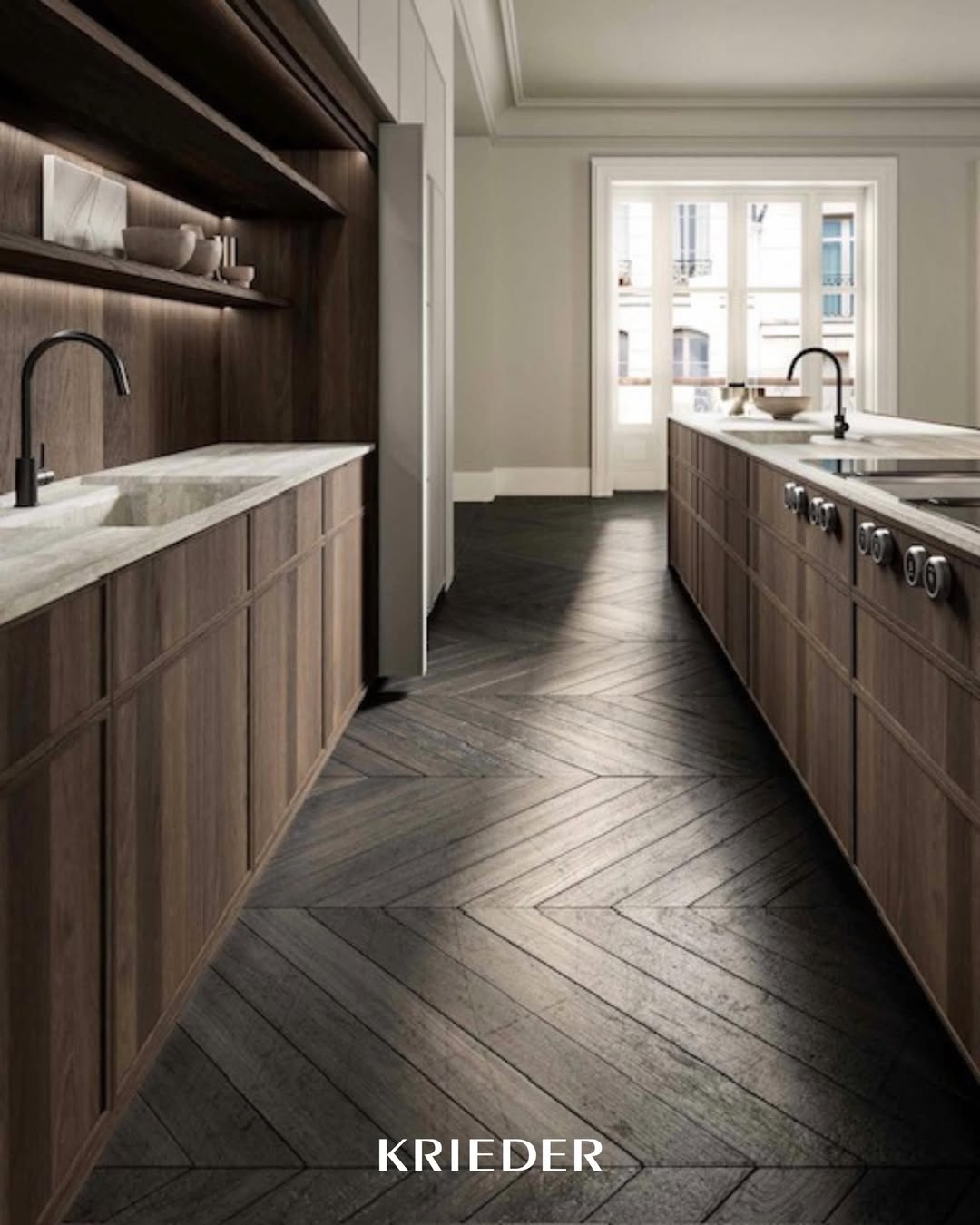
What should you decide before the worktop is templated?
By the time a stone or porcelain worktop is being templated, the tap specification should no longer be vague. You should know:
- the exact tap model;
- where it will be positioned;
- how many holes the installation requires;
- whether a separate control, dispenser or secondary tap is needed;
- the exact sink model;
- what equipment sits beneath the worktop;
- where electrical supplies are required;
- where filters and tanks will be located;
- whether the system requires ventilation or particular clearances; and
- how everything will remain accessible for future servicing.
Changing your mind about the tap after the worktop has been drilled is considerably less enjoyable than changing it beforehand.
This is precisely why the specification stage matters in a bespoke kitchen. The visible simplicity of the finished room depends on resolving these details before anybody starts cutting expensive materials.
So which type of kitchen tap should you choose?
If you want simplicity and primarily need reliable hot and cold water, buy an excellent mixer tap. If you frequently wash large cookware or use a generous sink, consider a pull-out model. If drinking-water quality is the priority, look at a properly specified filtration system and understand exactly what it removes.
If the kettle is constantly being boiled, an instant boiling-water tap may earn its place very quickly. And if your household already consumes chilled, filtered or sparkling water throughout the day, an all-in-one system can consolidate several functions into one part of the kitchen.
But don’t count functions and assume more means better. The right tap is the one that solves the things you actually do.
Kitchen tap FAQs
Are boiling-water taps worth it?
They can be, particularly in households that regularly make hot drinks and cook throughout the day. The biggest benefits tend to be convenience and removing the kettle from the worktop rather than financial savings alone. If boiling water is rarely needed, a conventional mixer may be the better investment.
What is the difference between a 3-in-1 and 4-in-1 kitchen tap?
The terminology varies between manufacturers, so always check the actual specification rather than relying on the number. Typically, multifunction taps combine normal hot and cold water with additional functions such as filtered or boiling water. More advanced systems can also provide chilled and sparkling water.
Do boiling-water taps need electricity?
Systems that keep water heated in a tank generally require an electrical supply beneath the sink. Exact installation requirements vary between manufacturers and models, so they should be confirmed before the kitchen is installed.
Do I need a water filter in a hard-water area?
That depends on the system. Filtration and water softening are not the same thing, and a drinking-water filter doesn’t necessarily prevent limescale. Check the manufacturer’s recommendations for your water hardness and the particular tap system you’re considering.
Is a pull-out kitchen tap worth having?
It can be extremely useful with a large sink or if you regularly wash oversized cookware. The extendable hose makes it easier to direct water around the bowl and rinse items that don’t sit neatly beneath a fixed spout.
What is the best tap for a luxury kitchen?
There isn’t one. A high-quality mixer can be just as appropriate as an all-in-one boiling and filtered-water system. The best choice depends on the sink, water pressure, available cabinet space, kitchen layout and how you actually use the room.
Should the kitchen tap match the sink?
Not necessarily. Matching finishes can create a very restrained look, while contrast can make the tap a deliberate design feature. What’s more important is that the sink, tap, worktop and surrounding finishes have been considered together.
When should I choose my kitchen tap?
Choose it during the kitchen design process and certainly before the worktop is templated. The tap can affect worktop drilling, plumbing, electrical requirements and the amount of usable space beneath the sink.
A good tap shouldn’t need much thought once it’s installed
There’s a tendency to judge kitchen products by how impressive they appear in a showroom. The better test is what happens afterwards.
Does the water land where it should? Can you fill the largest pan without wrestling it into the bowl? Can the filter be changed without dismantling the cupboard? Do you actually use the sparkling-water function you paid for? Does the finish still make sense alongside the rest of the kitchen?
Those details aren’t particularly dramatic, but you’ll experience them every day. That’s why, when we’re designing a luxury kitchen, the question isn’t simply which tap looks best. It’s which one will make the most sense once nobody is thinking about the tap anymore.