Walk into a well-designed kitchen today and the first thing you notice isn’t always the cabinetry.
It’s what’s happening on top of it.
A low, steady gas flame.
A completely flat induction surface that barely gives anything away.
Or nothing at all – just a clean island, with the extraction doing its work quietly, somewhere out of sight.
These setups get compared all the time. Usually in simple terms. Gas or induction. Hood or no hood.
But that’s not really the decision.
Because you’re not just choosing how you cook. You’re choosing how the room behaves. How it feels to stand in it. Whether your eye is drawn upwards or allowed to settle.
If you’re exploring luxury kitchen designs, this is one of those choices that quietly shapes everything else.
What are we actually comparing?
There’s a tendency to treat these as three equal options. They’re not.
Gas and induction sit in one camp. They define the act of cooking itself. The heat. The control. The rhythm of it.
Downdraft sits somewhere else entirely. It’s about what happens to everything you don’t want lingering. Steam. Grease. Smell. Visual noise.
Put them together in different ways and you end up with very different kitchens.
Gas with a statement extractor has presence. You notice it. It anchors the room.
Induction with a ceiling hood is quieter. More restrained. It does the job without asking for attention.
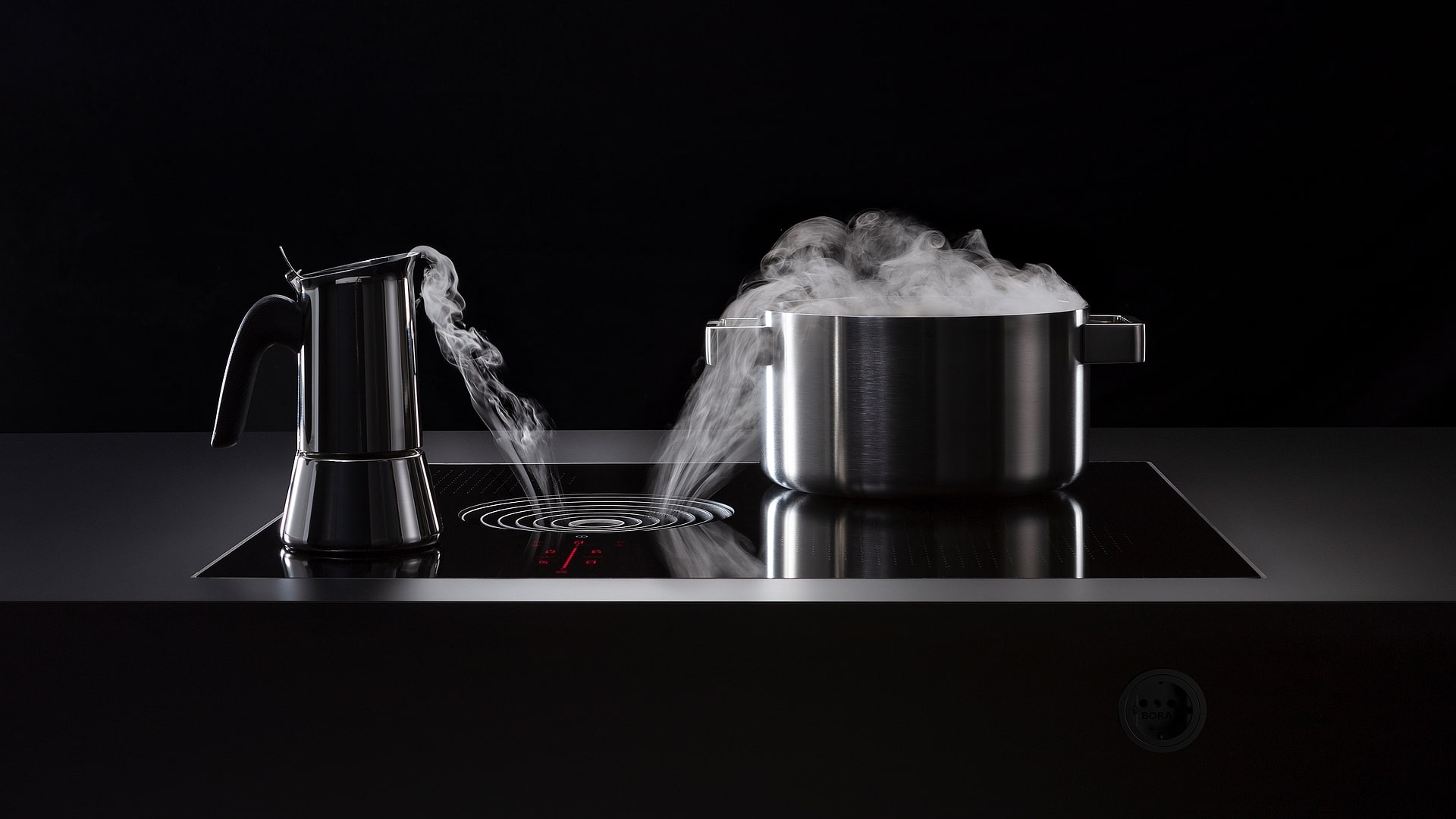
Then there’s induction paired with integrated extraction. No interruption overhead. No visual clutter. Just a surface and space around it.
None of these are right or wrong. But they do lead you in very different directions.
If you want a deeper look at how layout decisions shape a space, this ties closely into open-plan kitchen design.
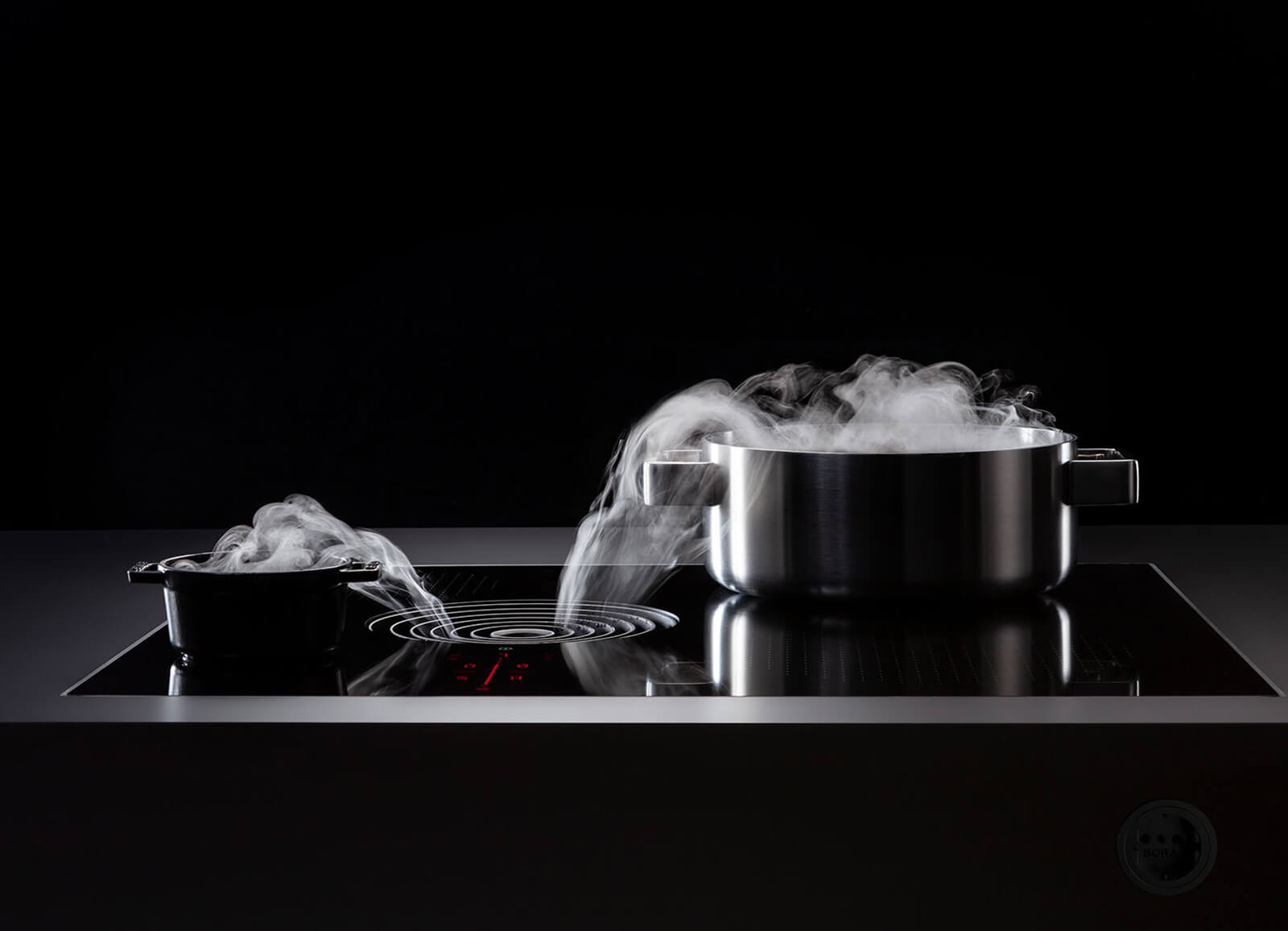
At a glance: which setup suits you best?
Choosing between gas, induction and downdraft isn’t about which is best overall. It’s about which setup suits how you cook and how your kitchen is designed.
Here’s a quick comparison of the main cooking setups used in modern luxury kitchens.
| Setup | Best for | Key advantage | Key drawback |
|---|---|---|---|
| Gas + extractor hood | Traditional cooking, wok use | Visible flame control, works with all pans | More heat, requires strong ventilation |
| Induction + extractor hood | Most modern kitchens | Fast, efficient, easy to clean | Needs compatible cookware |
| Induction + downdraft | Open-plan and island kitchens | Clean sightlines, minimal look | Requires planning, reduces storage below |
| Gas + downdraft | Specialist luxury setups | Combines flame cooking with clean design | Expensive, complex installation |
What actually feels better to cook on?
At some point, the practical question comes in.
What’s it like, day to day?
Induction is quick. Noticeably so. Water boils faster. Heat responds instantly. There’s very little lag.
Gas is different. Slower on paper, but more expressive. You can see it. Adjust it instinctively.
For most households, induction tends to win on ease. It’s cleaner, cooler, easier to manage.
But cooking isn’t always logical.
If you want a more focused breakdown of the cooking side alone, this is explored further in induction vs gas in luxury kitchens.
Why extraction matters more than the hob
This is the part most people underestimate.
Even with induction, you’re dealing with steam, grease and smells that need somewhere to go.
With gas, it becomes even more important.
Gas releases more ambient heat into the room. In an open-plan space, you notice it.
Induction keeps things more contained.
Then there’s the extraction itself.
Overhead extractors are familiar. Reliable. In many cases, still the most effective option.
But they sit in your line of sight.
Downdraft systems approach it differently. Pulling air down or across. Keeping the space visually clear.
Not better in every situation. But very different in how they shape the room.
This is exactly why systems like Bora appliances have become more common in island-led kitchens.
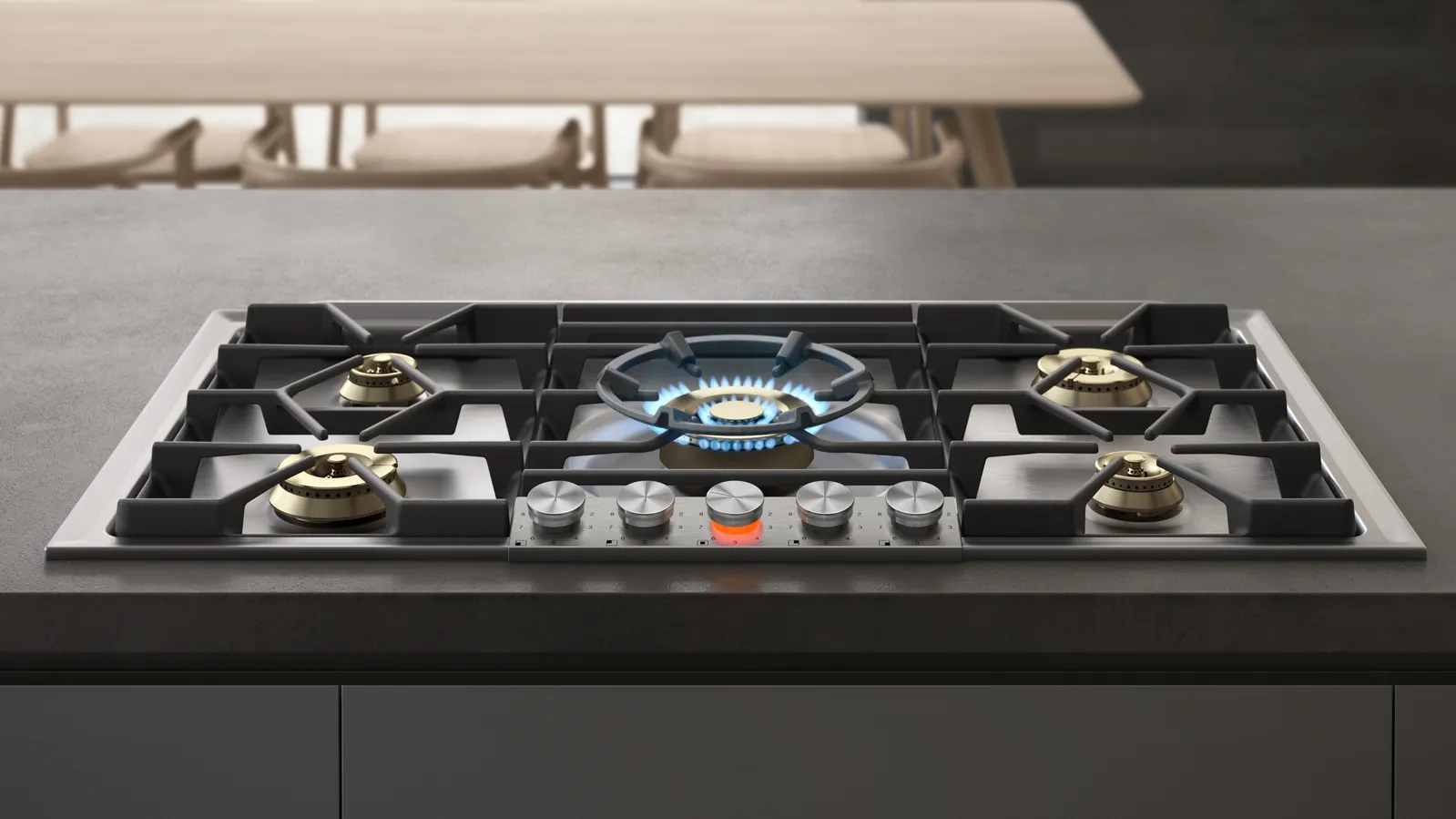
How each setup changes the look and feel of the kitchen
This is where the decision usually gets made.
In a more traditional kitchen, a statement extractor can work beautifully. It gives the room weight.
In a more minimal, architectural space, it can feel like too much.
Remove it, and everything opens up.
This shift towards cleaner lines sits alongside the rise of handleless kitchens, where visual simplicity is doing a lot of the work.
Material choice plays its part too. A sleek cooking setup tends to make even more sense when the surrounding finishes are calm and restrained, which is something we touched on in our kitchen materials guide.
What people don’t think about until it’s too late
This is where projects can get caught out.
Downdraft systems take up space in the cabinetry below. That needs planning early.
Ducting routes aren’t always simple. Especially in existing homes.
Recirculating systems rely on filters. They need maintaining.
Induction may require electrical upgrades.
Gas needs proper installation and ongoing consideration.
These are the same kinds of details that come up when planning timelines, which are covered in how long a luxury kitchen project takes.
Which setup suits which type of home?
This is where it becomes clearer.
Open-plan, island-led spaces
Induction with integrated downdraft tends to work best.
More traditional layouts
Gas with a well-designed extractor can feel entirely right.
Busy family kitchens
Induction with overhead extraction often lands in the middle.
More bespoke, high-end projects
You’ll occasionally see hybrid setups using brands like Gaggenau, combining modular gas and integrated extraction.
So what actually makes the most sense?
If you step back, a pattern does emerge.
Induction has quietly become the default in many high-end kitchens. Not because it’s fashionable, but because it works.
Pair it with well-planned extraction and it solves most problems without drawing attention to itself.
Where design leads the brief, integrated extraction often follows. It keeps the space open.
Gas hasn’t disappeared. It’s just become a choice, rather than the starting point.
And that’s probably the simplest way to look at it.
Not which is best.
But which one fits how you want the kitchen to feel when you’re actually standing in it.
Frequently asked questions
Is induction better than gas for everyday cooking?
For most households, yes. Induction is faster, more energy efficient, and easier to clean. Gas still appeals to those who prefer visible flame control.
Is downdraft extraction as effective as a hood?
It can be, but it depends on the system and installation. Overhead extractors are often more straightforward and consistently powerful.
Can you use a gas hob with downdraft extraction?
Yes, but it’s less common. It’s usually seen in more bespoke kitchens using modular appliance systems.
Do downdraft extractors remove steam properly?
Ducted systems can remove steam effectively. Recirculating systems manage odours well but are less effective at removing moisture.
Do you need special pans for induction hobs?
Yes. Induction requires pans with a magnetic base. Most modern cookware is compatible.
Which cooking setup is best for a kitchen island?
Induction with integrated downdraft is often the best fit, particularly in open-plan layouts.