Walk into almost any luxury kitchen showroom today and you’ll notice something that’s quietly disappeared: the kettle. Not because people have stopped making tea, but because an increasing number of homeowners have decided they no longer want one taking up valuable worktop space.
At first glance, a boiling water tap can seem like one of those additions that falls firmly into the nice to have category. Convenient? Certainly. Essential? Perhaps not. It’s an understandable reaction. After all, most of us have managed perfectly well with a kettle for years. We’ve heard that view many times, and we’ve also noticed something else: it almost always comes from people who haven’t lived with a boiling water tap.
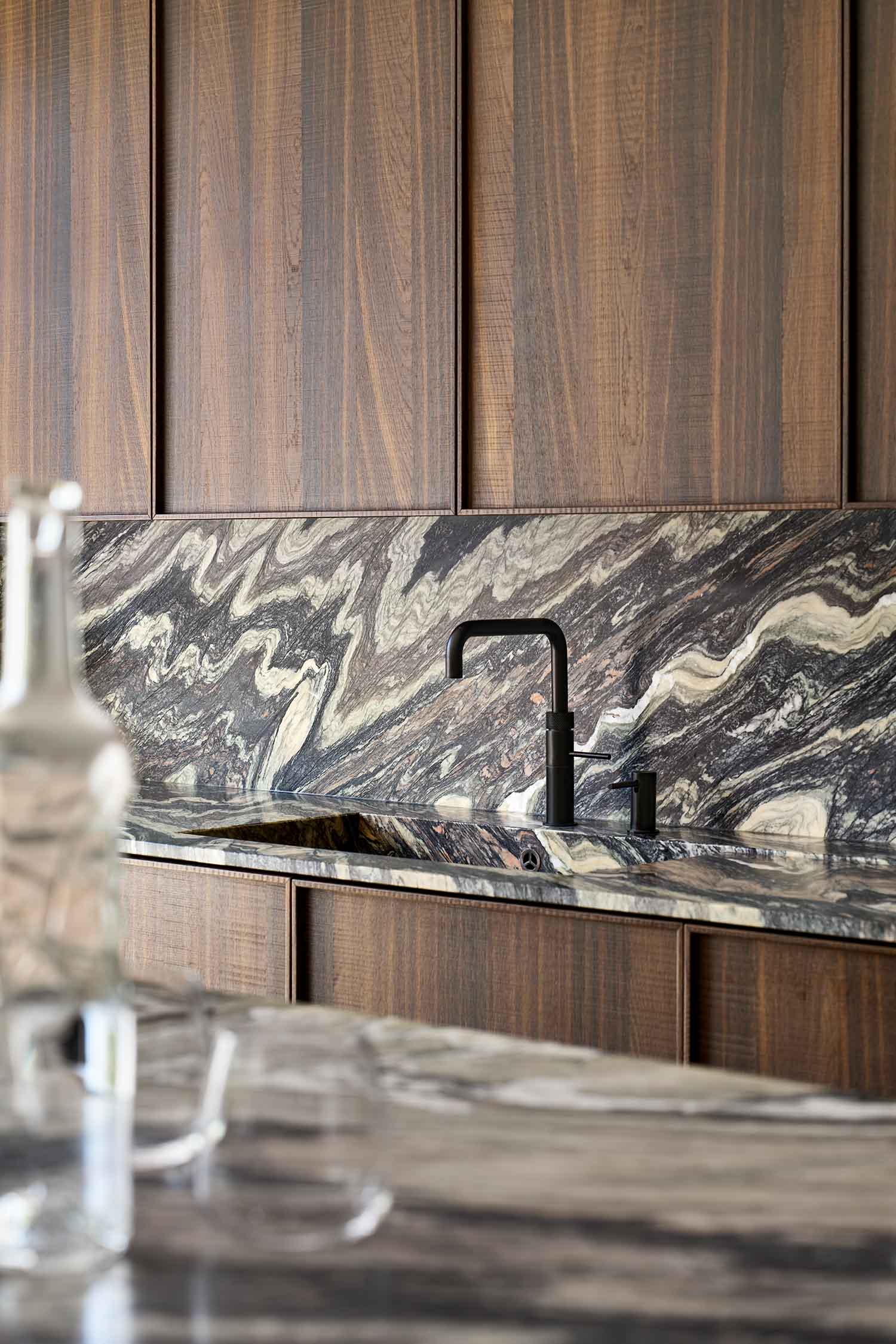
A client once admitted they questioned whether it was worth the cost right up until the day they moved into their new kitchen. A few months later they laughed and said the only thing they’d forgotten to pack when they went away for the weekend was a kettle. It simply wasn’t part of everyday life anymore. There was more space around the sink, filling a saucepan took seconds and the kettle no longer dictated where everything else had to sit. None of those changes felt dramatic on their own, but together they subtly changed the rhythm of the kitchen.
Most buying guides compare temperatures, tank sizes and filter systems. Those things matter, and we’ll come to them, but they’re only part of the picture. The more useful question is whether a boiling water tap genuinely improves the way you use your kitchen every day, or whether it becomes another expensive gadget that loses its appeal once the novelty wears off. Some homeowners would never choose a kitchen without one. Others are better spending that part of the budget elsewhere.
That is how we approach every luxury kitchen project at Krieder: start with how the room will be used, then decide which products deserve a place in it.
The First Thing People Stop Noticing Isn’t the Tap
A couple came back into the showroom about a year after we’d finished their kitchen. They weren’t planning another project. They happened to be nearby and thought they’d call in for a coffee and let us know how they were getting on. As conversations often do, it drifted back to the kitchen.
“What do you like most now you’ve lived with it for a while?” The husband smiled for a moment before answering. “It’s funny,” he said. “I don’t really notice anything anymore.” He caught our puzzled expressions and laughed. “I mean that as a compliment.”
He wasn’t admiring the cabinetry every morning. The worktops had become part of the house. Even the boiling water tap had disappeared into the background. The kitchen had stopped feeling new. It simply felt like home. We’ve heard versions of that conversation more than once. People rarely talk about the things they expected to notice. Instead, they mention the little routines that have quietly changed: filling a saucepan no longer starts with waiting for the kettle, a quick cup of tea takes seconds and the worktop feels less cluttered because the kettle no longer has a permanent place on display.
None of those moments would justify the cost of a kitchen on their own. Together, though, they change the rhythm of the room in ways that are difficult to appreciate until you’ve lived with them. That’s why owners so rarely begin by praising the tap itself. More often, they say something much simpler: “We really miss it when we’re away.”
So… Is It Actually Worth the Money?
It’s usually the question people leave until last. They’ve chosen the cabinetry, settled on the worktops and the appliances are taking shape. Then someone looks down the quotation, spots the boiling water tap and asks, almost apologetically, “Do people ever regret these?”
It’s a sensible question. Kitchens are full of decisions that look attractive on paper. Some become everyday favourites. Others quietly fade into the background after the excitement of moving in has passed. A boiling water tap can go either way.
We’ve never felt comfortable telling people it’s essential because it simply isn’t. If someone only boils a kettle once or twice a day, they’re unlikely to see the same value as a family preparing breakfast, cooking every evening and making drinks throughout the day. One client looked at every available option before quietly deciding not to have a boiling water tap at all. A year later they came back to us for another project in a different property. This time, it was one of the first things they asked to include. Nothing about the technology had changed. Their life had.
A boiling water tap is not a convincing purchase if the argument rests on saving money. The value is in removing small interruptions from the day, and whether that matters depends entirely on the household using it.
Not Every Boiling Water Tap Solves the Same Problem
One of the more surprising conversations we’ve had happened in front of two taps that looked almost identical. A client pointed at the more expensive one and asked, “So this is the better tap?” Matthew didn’t answer straight away. Instead, he asked another question: “Tell me about your kitchen.”
The conversation moved away from taps almost immediately. They talked about grandchildren who visited every weekend, Sunday lunches that regularly stretched into the evening and how nobody in the family ever seemed to leave the island once dinner had started. By the time they returned to the taps, the answer was obvious. Not because one product had changed, but because the brief had.
That’s what makes boiling water taps surprisingly difficult to compare. Most reviews line them up as though they’re all chasing exactly the same customer. Spend a little time specifying kitchens and you begin to realise that isn’t really what’s happening. One homeowner wants the cleanest possible worktop with every function integrated into a single tap. Another is happy with something simpler, provided it does the basics exceptionally well. Somebody else is thinking less about features altogether and more about what happens if the unit ever needs servicing ten years from now.
They’re all sensible priorities. They just don’t point towards the same product. A better question than “Which one is best?” is “Which one still makes sense once this kitchen has stopped feeling new?”
So Which Brand Fits That Brief?
This is usually the point where brochures start coming out and somebody asks for a recommendation. The temptation is to answer immediately. In reality, it’s often the easiest way to make the wrong decision.
By now we’ve usually spent enough time talking about the project to understand what matters most. Some clients want to clear the worktop of as many appliances as possible. Others want simplicity, reliability and something they’ll barely have to think about once it’s installed. Those priorities might sound similar, but they often lead in different directions.
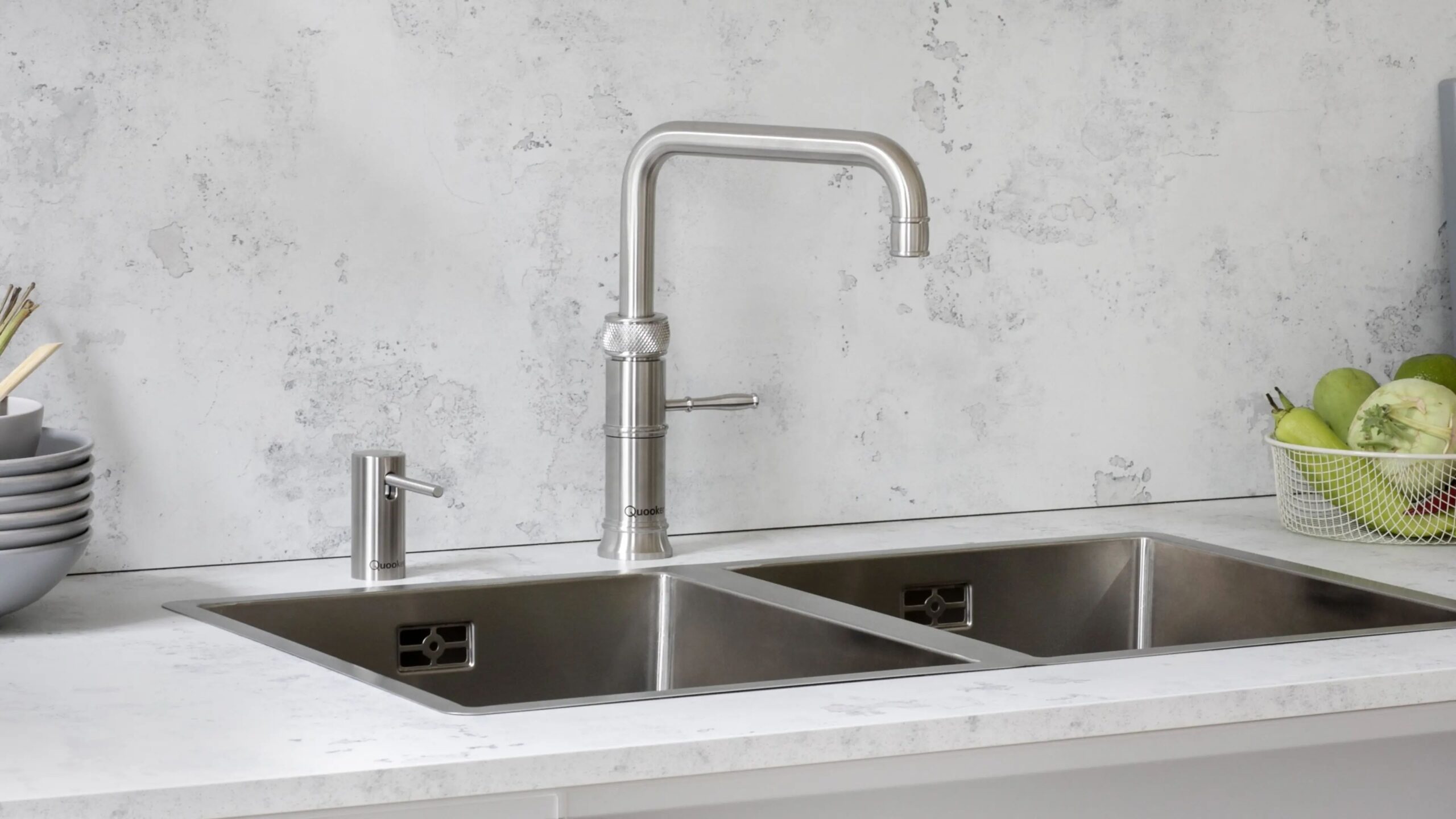
Quooker has earned its reputation by thinking beyond boiling water. For many homeowners it’s less of a tap and more of a complete water system, bringing together boiling, filtered, chilled and, with the relevant configuration, sparkling water in one part of the kitchen. If the aim is to simplify the room and reduce the number of things on display, it is easy to understand why Quooker has become such a familiar name in high-end kitchens.
Qettle appeals for a different reason. We’ve seen clients arrive expecting to choose Quooker, only to discover that Qettle offered what they actually wanted at a price that left room elsewhere in the project. Franke, Grohe and InSinkErator each have their own following too, often because a client already knows the manufacturer, likes the design language or simply trusts a brand they have lived with before.
That is why two kitchens with similar budgets can end up with completely different taps. The more useful comparison is not which logo wins, but which system best matches the way that particular kitchen is going to be used. For the same reason, we take a similarly considered approach to specifying luxury kitchen appliances more broadly rather than treating every product category in isolation.
The One Thing Most Buyers Forget to Ask
Almost every conversation begins with the tap sitting proudly on a display sink. Very few begin with the cupboard underneath. The tap is the part you’ll see every day, while everything below the worktop is hidden away, so it is easy to forget how much is going on beneath it.
Open that cupboard and the tap itself is only half the story. The tank needs space. So does the filter. Add pipework, recycling, cleaning products and, in some homes, another unit for chilled or sparkling water, and a sink cabinet can become crowded surprisingly quickly.
It is one of the reasons appliance conversations need to happen before the cabinetry is signed off. A small adjustment on a drawing can make changing a filter straightforward years later. Trying to create that access once the kitchen has been built is considerably less elegant. This is also why Krieder’s article on preparing for a kitchen design consultation recommends discussing appliances early in the project rather than treating them as a late-stage purchase.
We’ve occasionally seen homeowners choose a slightly different cabinet layout because it made future access easier. It can feel like an invisible decision on day one. The first time a filter is changed without emptying half the cupboard, it makes rather more sense.
If You Live in a Hard Water Area, Read This First
Every so often, somebody asks a question that completely changes the conversation. It usually comes towards the end of the appointment: “We’re in Tunbridge Wells. Does the water make any difference?” It’s a far better question than most people realise.
Whether you choose Quooker, Qettle, Franke or another manufacturer, hard water is something you can’t ignore. It isn’t a fault with the tap and it isn’t unique to one brand. It is simply part of living in many parts of the UK, particularly across the South East.
The important thing is planning for it. The filter hidden beneath the sink quietly does one of the hardest jobs in the kitchen. In areas where limescale is common, replacing it when the manufacturer recommends is not just about taste. It is part of looking after the system.
We’ve found that clients rarely object to changing a filter. What catches people out is forgetting it exists. That is another reason to leave enough room beneath the sink to reach it comfortably rather than discovering years later that every bottle, cleaning product and recycling caddy has to come out first. None of this should put anyone off buying a boiling water tap. It is simply part of owning one, in much the same way that a coffee machine occasionally needs descaling.
It Isn’t Just About Tea
One client laughed when we asked how they were getting on with their new kitchen. “I hardly use the kettle anymore,” they said. We pointed out that was rather the idea. “No,” they replied. “I don’t think you’ve understood. I don’t miss it.” That small difference says quite a lot.
People often imagine a boiling water tap as something you buy for making tea a little faster. Spend a few months living with one and it usually finds its own place in the day. A saucepan is filled without thinking. Potatoes are already on the hob before somebody remembers there used to be a kettle involved. A quick bowl of porridge before work somehow feels less rushed.
We’ve heard equally ordinary stories from families. One homeowner told us the tap earned its place every school morning. Another admitted they probably used it more for cooking than making drinks. Someone else said visitors instinctively reached for the kettle, only to realise there wasn’t one. Those aren’t features. They’re habits, and habits are surprisingly difficult to appreciate in a showroom.
It is one of the reasons we encourage people to think less about what a boiling water tap can do and more about the rhythm of their own kitchen. If cooking happens once or twice a week, the answer may be very different from a household where somebody is chopping vegetables, filling pans and making drinks from breakfast until bedtime. A brochure can’t answer that question. Only the people living in the kitchen can.
Will You Still Love It Five Years From Now?
It’s a question that almost never appears in buying guides, perhaps because nobody can answer it after spending twenty minutes testing a tap in a showroom. One of the advantages of designing kitchens over many years is that you occasionally hear what happens long after the photographs have been taken. Clients come back, sometimes for another project and sometimes simply to say hello, and they end up reviewing decisions they made years earlier without really meaning to.
The interesting thing is how rarely they talk about specifications. Nobody remembers whether the tank held three litres or seven. Very few mention flow rates or the exact temperature of the water. Instead, they remember how naturally the tap settled into everyday life, whether it still feels intuitive and whether it became something they reach for without giving it a second thought.
That is one reason we are cautious about chasing features for their own sake. The tap that appears to do absolutely everything can be seductive in a showroom. Five years later, the useful functions tend to be the ones that found their way into ordinary routines. The rest are simply there.
The same thinking runs through Krieder’s wider approach to kitchen planning. In what luxury kitchen designers wish clients knew before starting a project, the recurring theme is that the decisions people remain happiest with are often the ones rooted in how the room will actually be lived in.
The Best Boiling Water Tap Is the One That Fits Your Kitchen
Every so often, somebody reaches the end of a consultation and smiles. “So… which one would you put in your own kitchen?” It is a fair question, and there isn’t one answer. Not until we’ve talked about the house, the people living in it and how they use the room.
We’ve designed kitchens where a Quooker was the obvious choice because the owners wanted several water functions in one system. We’ve designed others where Qettle proved to be exactly the right fit because it offered what the client genuinely needed without paying for functions they were unlikely to use. We’ve also worked on projects where the boiling water tap wasn’t included at all, not because the budget demanded it, but because the homeowners knew it simply wouldn’t earn its place.
That is often the difference between buying an appliance and designing a kitchen. An appliance can be judged on its own merits. A kitchen cannot. Cabinetry affects storage, storage affects how the room is used and appliances shape daily routines. Before long, you are no longer choosing individual products. You are creating a room that has to work every day, often for many years.
If you are still weighing up appliance brands more broadly, our Gaggenau vs Miele comparison looks at the same question from another angle: how the right choice is often less about finding a universal winner and more about finding what belongs in the finished kitchen.
The Questions Worth Asking Before You Decide
One couple arrived with a folder. Inside were screenshots, magazine cuttings and a list of products they’d been researching for weeks. Right at the top was a particular boiling water tap. They were convinced it was exactly what they wanted.
Matthew looked through everything, nodded, then asked a question that wasn’t on the list. “So… what happens on a Sunday in your house?” There was a pause, and then the conversation drifted away from taps altogether. They talked about grandchildren who appeared without warning, a roast dinner that seemed to grow every time friends dropped in and somebody always making another pot of tea while someone else started washing vegetables at the sink.
By the time they came back to the tap, the answer felt much clearer. The right questions were not really about finishes, flow rates or whether sparkling water sounded appealing. They were simpler. Who cooks most often? Does everyone naturally gather in the kitchen? Would you rather free up the worktop or spend that part of the budget somewhere else? Is the cupboard beneath the sink already doing three other jobs?
Those questions do not appear in comparison tables, but they are often the questions that determine whether somebody is still pleased with the choice years later, when the excitement of a new kitchen has been replaced by ordinary Tuesday evenings, rushed breakfasts and family dinners that last longer than anyone expected.
Why We Rarely Start With the Appliances
It’s easy to assume a luxury kitchen is designed around the appliances. In reality, the strongest projects usually begin with the people. Long before anybody starts comparing taps, ovens or refrigeration, we are trying to understand how the room will be used.
Some clients want somewhere the whole family naturally gathers at the end of the day. Others are creating a quieter space where cooking becomes a chance to slow down after work. The kitchen may be used for entertaining every weekend, or it may simply need to make busy weekday mornings run a little more smoothly. Those conversations shape almost every decision that follows.
A boiling water tap earns its place when it genuinely supports that brief. Sometimes that is obvious from the first meeting. Sometimes it only becomes clear once the design has started to take shape. That wider approach is also why visiting the Krieder showroom can be useful: you can experience appliances, materials and complete kitchen settings together rather than judging each product in isolation.
When clients come back months or years later, they almost never begin by talking about the individual products. They tell us how much they enjoy spending time in the room. That is usually a better measure of whether the design worked.
A Good Kitchen Doesn’t Ask You to Think About It
By now, the answer to “Is a boiling water tap worth it?” should be clearer. It can become one of the most useful additions to a home, but only if it suits the way the kitchen is used. For a household making drinks, cooking and entertaining throughout the day, the convenience can become difficult to give up. For somebody who reaches for the kettle once or twice, the money may be better spent elsewhere.
The brand matters, but it comes second to the brief. Quooker, Qettle, Franke, Grohe and InSinkErator all approach the category differently. The important part is understanding which of those differences will still matter after the installation has stopped feeling new.
If you are planning a new kitchen and want to discuss boiling water taps alongside the cabinetry, storage and wider appliance specification, you can book a design consultation or contact Krieder to talk through the project.