Most kitchens look their best on the day they’re photographed. The worktops are immaculate, every cupboard closes with reassuring precision and there isn’t a cereal box, charging cable or half-used bottle of olive oil in sight. Real life begins the following morning.
That’s when the decisions that seemed relatively minor during the design process begin to reveal their importance. You discover whether two people can comfortably cook together, whether the dishwasher door blocks a drawer, whether the morning sun falls exactly where you sit for breakfast, or whether there is actually somewhere sensible to store the appliances you use every day.
Very few of these frustrations are caused by poor-quality products. More often, they come from perfectly good products being planned in the wrong place, or too much attention being given to how a kitchen looked on a mood board instead of how it would feel after years of ordinary use.
A kitchen doesn’t need to look exactly the same in ten years’ time. Styles evolve, tastes change and decorative details can be replaced. What matters is that the decisions which are difficult, disruptive or expensive to alter continue to work just as well as they did on the day the kitchen was installed.
“People naturally spend a lot of time choosing colours and finishes because they’re the decisions they can see. The layout, storage and lighting deserve at least as much thought because they’re the decisions you’ll feel every single day.” – Matthew Yeatman, Krieder
If you’re planning a luxury kitchen, these are the ten choices worth slowing down for. They are also the choices that tend to separate a room that simply looks impressive from one that remains easy to live with years later.
Decision 1 – Get the Layout Right Before You Think About Anything Else
People often ask where they should spend more money. Better appliances? A more expensive worktop? Higher specification cabinetry? Those decisions matter, but none of them will rescue a kitchen with the wrong layout.
Layout influences almost every moment you spend in the room, yet it is easy to underestimate because, on a plan, everything appears to fit. The more useful question is whether the room still works once people are actually using it. Can somebody unload the dishwasher while another person prepares dinner? Does opening the fridge interrupt the main walkway? Is there enough uninterrupted worktop beside the hob, or have small compromises gradually stolen the space you actually cook on?
Those details shape everyday life. They’re also among the most expensive things to correct once cabinetry, plumbing and electrics are in place. That is why layout should be resolved before finishes start dominating the conversation, particularly in open-plan kitchens, where circulation, cooking and social space all overlap.
“People naturally become absorbed in finishes because they’re easy to imagine. I’d rather spend another hour refining the floor plan than another hour debating paint colours. If the layout works, the kitchen earns your trust every single day.” – Matthew Yeatman
The traditional work triangle remains useful, but modern kitchens often have two people cooking together, children at the island, guests standing nearby and somebody else making coffee without wanting to cross the busiest part of the room. A successful layout has to accommodate all of that. Cabinet doors can be replaced and pendant lights can be changed. Moving an island half a metre because it never quite felt right is an entirely different conversation.
Decision 2 – Spend More on the Things You Can’t Easily Replace
Almost every kitchen project reaches the same crossroads. Do you stretch the budget for better appliances? Upgrade the worktops? Choose a more expensive cabinet finish? Add the wine cooler you’ve always wanted?
There isn’t a universal answer, but there is a useful rule: spend the money where changing your mind later would be expensive. Better electrical planning, stronger cabinetry, dependable drawer mechanisms and well-considered lighting rarely dominate the photographs when a kitchen is finished. They do, however, make a noticeable difference every day for years afterwards.
The opposite is also true. Pendant lights can be replaced. Bar stools come and go. Handles and decorative finishes can be updated without dismantling the kitchen around them. This is the same principle Krieder explores in what luxury kitchen designers wish clients knew before starting a project: budget should follow the decisions that affect daily use, not simply the details that attract the most attention at the start.
If the budget had to be reduced tomorrow, protect the layout, cabinetry quality and technical planning before trimming the things that can be changed later. A beautiful kitchen should impress on installation day. The expensive decisions should still make sense a decade afterwards.
Decision 3 – Design Your Storage Around What You Own, Not How Many Cupboards You Have
One of the easiest ways to make a kitchen feel expensive is to add more cabinets. One of the easiest ways to make it frustrating is to stop there. Storage is not really about quantity. It is about whether the things you use every day are where you expect them to be.
Think about making a cup of coffee. If the mugs are on one side of the room, the machine is somewhere else and the teaspoons live in a drawer behind whoever happens to be unloading the dishwasher, you’ve created unnecessary movement before the day has properly started. A baking tray used twice a year does not need prime space. The air fryer used five evenings a week probably does. Deep pan drawers are often more useful than another cupboard with shelves because you can see what is inside instead of crouching down to reach something at the back.
“I rarely ask clients how much storage they want. I ask them what they need to store. They’re completely different questions.” – Matthew Yeatman
Before cabinetry is ordered, list the objects that genuinely need a home: food processors, pet food, chopping boards, lunch boxes, serving platters, recycling, cleaning products and those awkward pieces that never seem to fit anywhere. Krieder’s guide to luxury kitchen storage ideas that actually improve daily life goes deeper into this distinction between simply adding capacity and putting storage where it removes friction.
The best storage rarely draws attention to itself. It simply keeps the worktops clearer and puts the things you use most within easy reach.
Decision 4 – Don’t Choose the Worktop You Like Most. Choose the One You’ll Still Like in Ten Years
Walk through a showroom and it is natural to compare colours, veining and finishes first. A worktop is one of the most visible elements in the room, but it is also difficult and disruptive to replace. The better question is not simply which surface looks best today. It is how you want that surface to behave after ten years of cooking, spills, hot pans and family life.
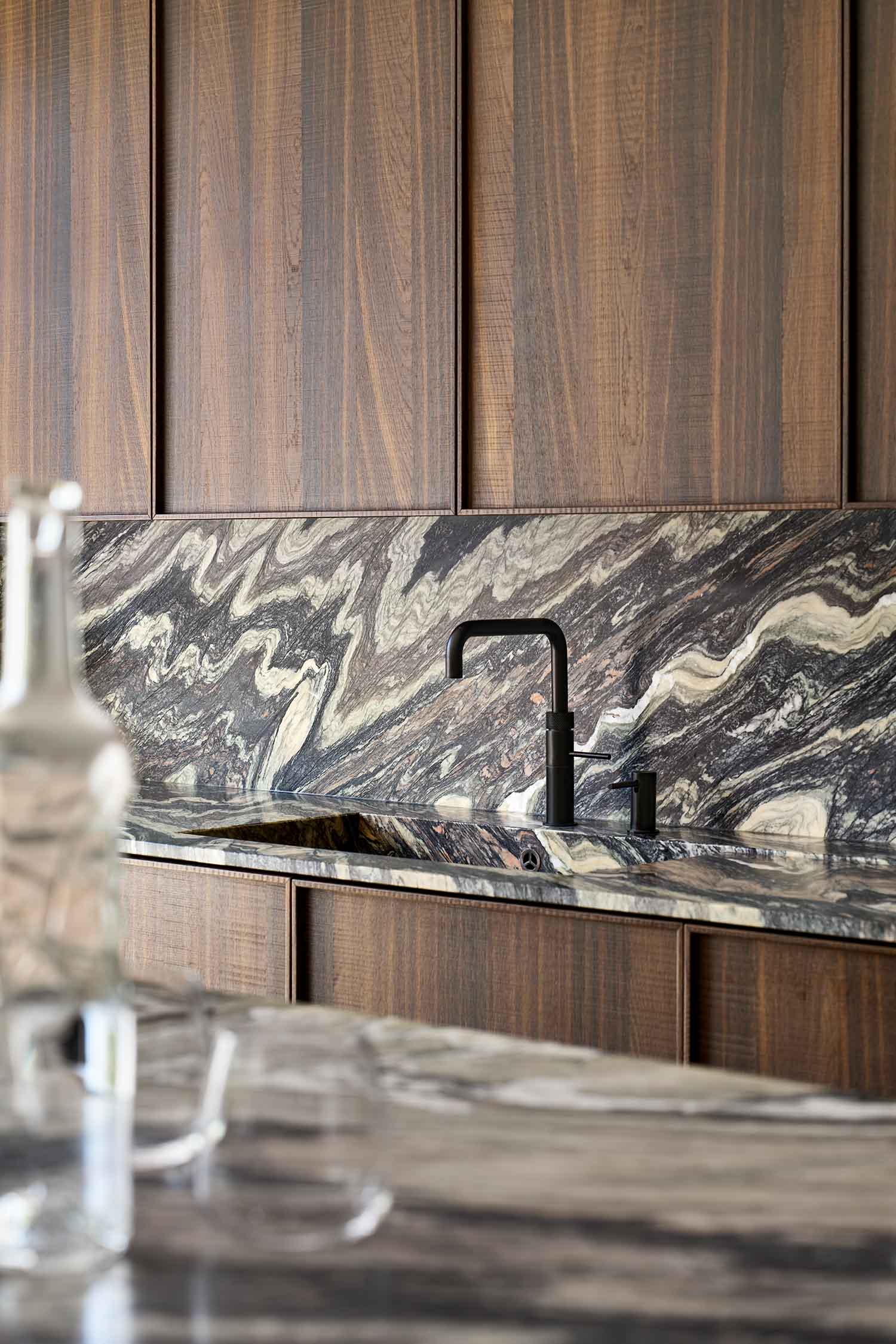
Natural stone can develop marks and patina that some owners value as character and others find frustrating. Engineered surfaces, porcelain and sintered stone have different strengths around staining, scratching, heat and upkeep. None is automatically the right answer. The choice depends on what you are prepared to live with, not which sample looks most dramatic under showroom lighting.
“Imagine making Sunday lunch for ten people. Hot pans, red wine, olive oil, children making sandwiches, somebody rolling pastry. That’s the environment your worktop is being designed for, not an empty showroom.” – Matthew Yeatman
If occasional marks will bother you, choose accordingly. If you value the way natural materials develop with age, that points in another direction. Krieder’s kitchen materials guide compares marble, quartz, Dekton, Fenix and other surfaces in more detail.
Decision 5 – You’ll Notice Poor Lighting Long Before You Notice the Cabinet Colour
Lighting has an unfortunate habit of being left until the end of a project. By then, the layout has been agreed, the cabinetry ordered and the appliances chosen. The plan can quickly become a case of putting fittings wherever there is room in the ceiling.
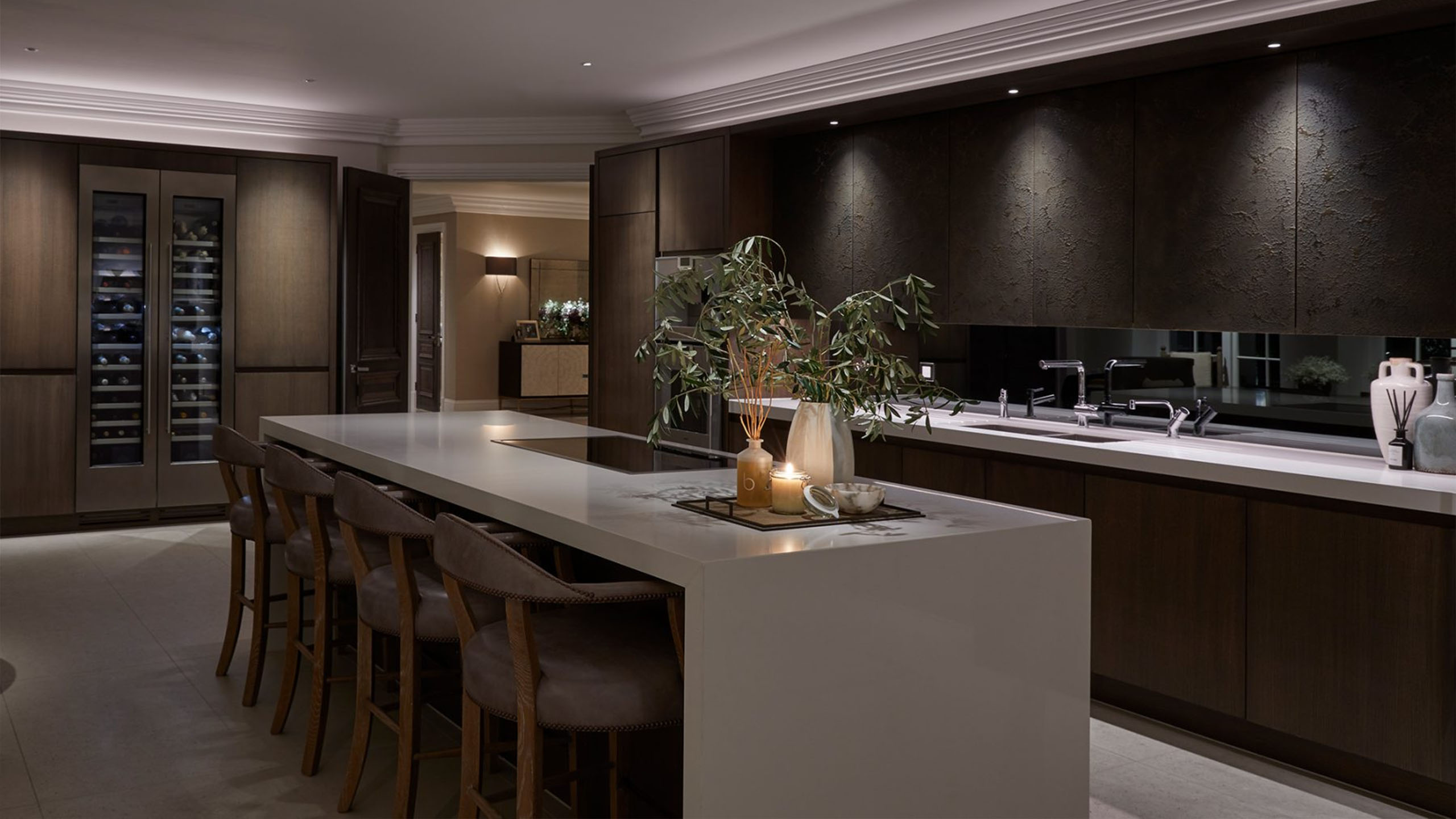
That is a problem because light changes both the appearance and the usefulness of the kitchen. A beautiful worktop is less impressive if your own shadow falls across it whenever you prepare food. Pendant lights may look striking above an island but still leave the rest of the room flat after sunset. The kitchen also needs to feel different at breakfast from the way it feels after dinner, when cooking has stopped and the room becomes somewhere to sit and talk.
Ask the lighting question early: where will somebody actually stand when chopping, washing, cooking and clearing? Then ask a second one: how should this room feel at nine o’clock on a winter evening? Those two answers are more useful than deciding how many spotlights fit neatly into a ceiling grid.
Good lighting rarely attracts comment. Poor lighting makes itself known every evening.
Decision 6 – Buy Appliances for the Way You Cook, Not the Way You Shop
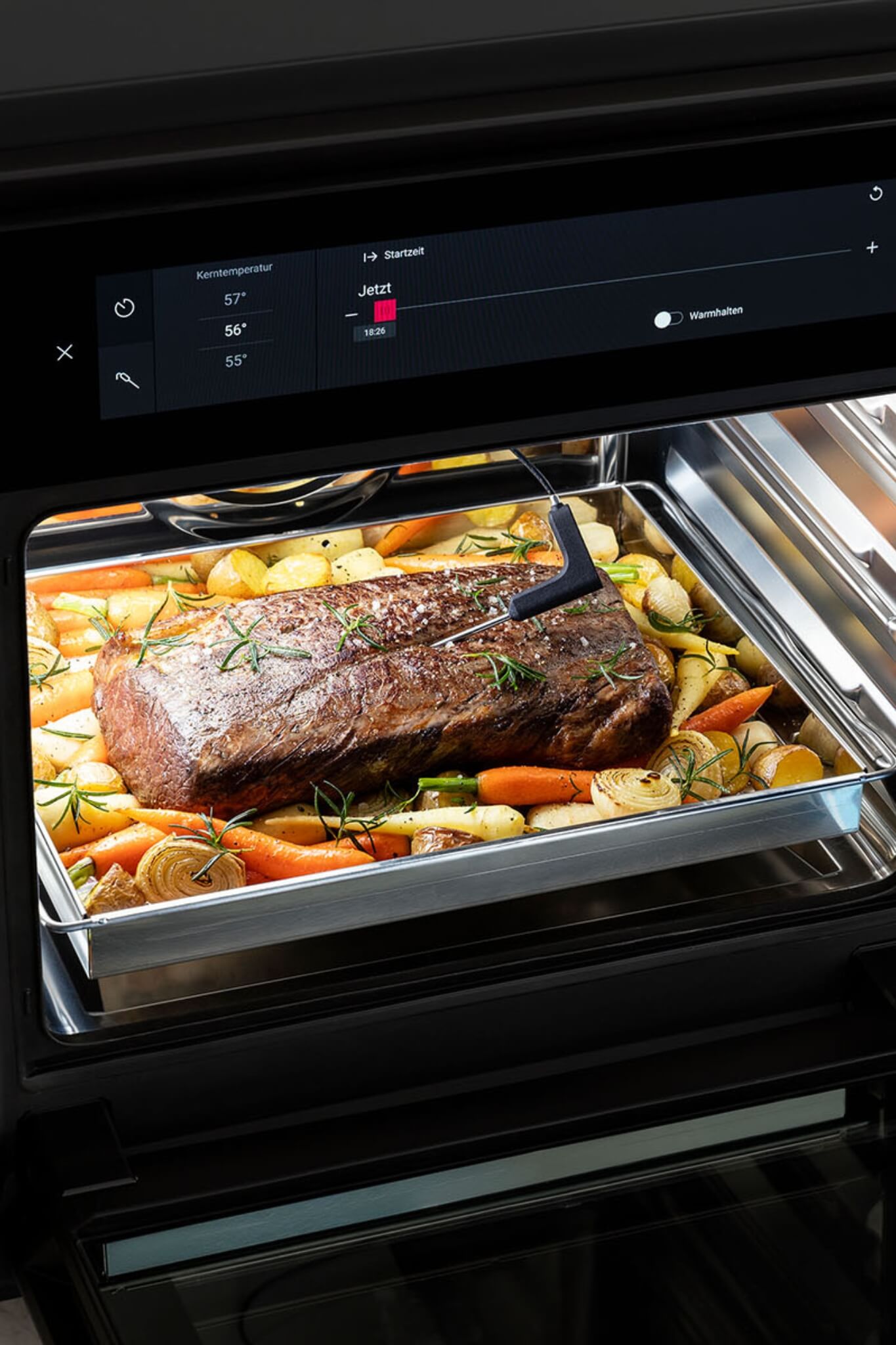
Kitchen appliances have become remarkably good at selling themselves. Steam cooking, automatic programmes, connected controls and increasingly sophisticated refrigeration all look persuasive when they are presented one feature at a time.
A better question is simpler: what do you cook on an ordinary Wednesday evening? Not Christmas Day and not the dinner party you have been planning for weeks. Think about the evening when everybody is hungry and dinner needs to happen without too much thought. That is the kitchen your appliances should support.
“If someone cooks every night, they usually know exactly which features they’ll appreciate. It’s the features they never use that become expensive decorations.” – Matthew Yeatman
Premium appliances can justify their cost through the everyday things: accurate temperature control, dependable performance, quiet operation, solid construction and controls that make sense after the novelty has worn off. If you are comparing brands, Krieder’s Gaggenau vs Miele guide looks at those differences from the perspective of how the appliances are actually used, while the luxury kitchen appliances section covers the wider range available.
The appliance with the longest specification is not automatically the one you will value most. Often, it is the one that makes an ordinary evening easier.
Decision 7 – Think About What Your Kitchen Will Sound Like
A beautiful kitchen can still become an irritating place to spend time because of something that never appears in photographs: noise.
Open-plan living has made this more important. The room where meals are prepared may also be where somebody works, children do homework, guests gather and the television is playing a few metres away. A powerful extractor is less impressive if everyone raises their voice whenever it is switched on. A dishwasher can be unobtrusive in a busy showroom and surprisingly noticeable late in the evening. Hard floors, stone, glass and large expanses of cabinetry can also make sound behave differently in an open room.
If the kitchen opens into the main living space, listen as carefully as you look. Can the dishwasher run after dinner without dominating the room? Is extraction effective without becoming the loudest thing in it? Will people be able to talk comfortably while somebody is cooking?
The word people often use for a successful kitchen is “calm”. Acoustics are part of that, even when nobody consciously mentions them.
Decision 8 – Design the Kitchen for the House, Not for the Next Owner
It is easy to become distracted by resale value. Advice about choosing colours with broad appeal and avoiding anything too personal has some merit, but taken too far it produces rooms designed for hypothetical future buyers rather than the people paying for and using them now.
A Victorian townhouse asks different questions from a converted barn or a contemporary extension with large areas of glass. Materials, proportions and detailing should have some relationship with the architecture around them. A kitchen that belongs to the house is less likely to feel awkward when fashions move on.
This is a more useful definition of timeless design. It does not mean trying to create a room that never reveals when it was made. It means getting the architecture, proportions and expensive-to-change decisions right enough that colours, lighting and decorative details can evolve around them. Krieder explores the same idea in why some luxury kitchens age beautifully while others date quickly.
Social media moves quickly. Houses do not. When two design directions are competing for attention, ask which one feels as though it genuinely belongs in the building.
Decision 9 – Stop Planning for the Kitchen You Wish You Had
Spend enough time looking at kitchen inspiration and it is easy to start designing for a version of yourself that does not exist. The keen baker imagines making sourdough every weekend. The occasional dinner host starts planning for twelve guests. The coffee drinker convinces themselves they need every function on a built-in machine.
Kitchens are lived in by today’s habits, not tomorrow’s ambitions. Before committing to a layout or appliance, look at an ordinary week. Which cupboard do you open most? What stays on the worktop because there is nowhere sensible to put it? Where does everybody gather at six o’clock? Which appliances earn their space and which are waiting for an occasion that rarely comes?
“Your current kitchen is already telling you what the next one needs to do better. The trick is knowing what to listen to.” – Matthew Yeatman
This does not mean designing without ambition. It means making sure the improvement solves real problems. A breakfast cupboard might be more valuable than another display shelf. Permanent space for a frequently used coffee machine may matter more than an appliance bought for occasional entertaining. The design consultation becomes much more productive when these habits are understood before finishes take over the conversation.
Decision 10 – Know When to Stop Adding Things
One of the hardest parts of designing a kitchen is deciding what to leave out. Every project gathers momentum. Another bank of cabinets seems useful. Another appliance might come in handy. A larger island feels more impressive. Individually, every addition can sound reasonable. Together, they can make the room busier than it needs to be.
The most convincing kitchens often feel uncomplicated because each element has earned its place. A wider walkway can be more valuable than one extra cupboard. A clear stretch of worktop may improve cooking more than squeezing in another small appliance. Leaving a wall free from cabinetry can preserve natural light, proportion or simply enough visual space for the room to breathe.
Not every available centimetre is storage waiting to happen. Sometimes it is circulation. Sometimes it is light. Sometimes it is the empty space that makes everything around it feel better judged.
Before approving the final design, remove something mentally and ask whether you would genuinely miss it. If the answer is no, it may not need to be there.
What Makes One Kitchen Feel Better Than Another?
Walk into two kitchens that cost roughly the same amount and it is surprisingly common for one to feel immediately more comfortable. That difference is rarely down to one expensive feature. Usually, dozens of practical decisions are working together.
Take unloading the dishwasher. If the plates are stored on the opposite side of the room, you will walk that route thousands of times over the life of the kitchen. Move the crockery drawer closer and the task becomes easier without anybody noticing why. The same applies to clear worktop beside the hob, the position of the bin, whether someone can make coffee without blocking the route through the room and whether two people can prepare dinner together without constantly moving around one another.
This is why copying a kitchen from Pinterest or Instagram can disappoint. A photograph can show cabinetry, lighting and materials. It cannot show whether the fridge door blocks a drawer, where the recycling lives or how somebody actually moves between the sink and the hob.
That is the difference between a kitchen that photographs well and one that works well. The second may look just as beautiful, but its real value only becomes obvious through use.
The Best Decisions Are Usually Made Before You Visit a Showroom
People often assume a showroom is where kitchen decisions begin. In reality, some of the most useful work can be done beforehand simply by paying attention to the kitchen you already have.
For a week, notice what frustrates you without trying to solve it. How often do you carry wet plates across the room because the cupboards are in the wrong place? Which appliance permanently lives on the worktop because there is nowhere sensible to store it? Is everyone trying to stand in the same area at six o’clock? Are there cupboards you avoid because they are awkward to reach?
Those observations are more valuable than another evening collecting inspiration images. They give a designer a real brief. Instead of deciding whether an island should be 2.8 or 3 metres long, you can discuss why people gather where they do. Instead of choosing storage from a catalogue, you can solve the reason the worktops are permanently cluttered.
If you are preparing to start that conversation, Krieder’s guide to preparing for a kitchen design consultation explains what is useful to bring and, just as importantly, what you do not need to have decided beforehand.
Ten Years From Now, Nobody Will Remember Why You Chose That Tap
Walk into a kitchen that has been properly lived in for ten years and very little of the conversation revolves around products. People rarely remember why they chose a particular hinge or exactly which finish was fashionable when the order was placed. They remember the room.
They remember whether family dinners naturally happened there, whether children could sit at the island without getting in the way, whether friends gathered comfortably while dinner was being finished and whether the kitchen adapted as the household changed.
That is a more demanding test of design than installation day. A successful kitchen does not need to remain pristine or frozen in time. It needs to keep supporting ordinary life without forcing the people using it to work around decisions that looked good on paper but never quite worked in practice.
Ten years from now, the taps, stools and lighting may have changed. If the layout still feels natural, the storage still makes sense and the room still belongs to the house, the difficult decisions were probably the right ones.
If you are planning a new kitchen and want to work through those decisions before committing to a specification, you can book a design consultation or visit the Krieder showroom in Tonbridge to discuss the space, materials and appliances in person.