People often arrive at our showroom asking the same question: Gaggenau or Miele?
It sounds straightforward. Both are established German appliance brands, both are associated with premium kitchens and both offer ovens, refrigeration, dishwashers, coffee machines and other appliances designed to sit comfortably within a carefully planned interior. Yet the conversation rarely stays that simple for long.
Once we begin talking about how somebody cooks, who uses the kitchen, how often they entertain and what they want the room to feel like, the question changes. It becomes less about choosing the better manufacturer and more about deciding which appliances belong in that particular home.
That is how we approach every luxury kitchen we design. The products matter, but they have to make sense within the wider room and the life taking place around them.
Most People End Up Asking a Different Question
It is funny how often this happens. A couple arrive with notes on Gaggenau and Miele, ready to compare ovens, steam functions and control systems. Half an hour later, we are talking about Sunday lunches, teenagers raiding the fridge and who makes the first coffee in the morning.
The appliance conversation is still there, but it has moved into the background. What they really want to know is whether the kitchen will feel natural once the novelty has worn off. Will the controls make sense on a busy Tuesday evening? Will there be enough refrigeration when everyone is home? Will they still enjoy using the room after ten years?
Sometimes the answer is Gaggenau. Sometimes it is Miele. On quite a few projects, it is both.
Do You Have to Choose One Brand?
Many clients assume a premium kitchen should contain appliances from one manufacturer throughout. There are good reasons for doing that. A consistent range can create a calm visual line, particularly when ovens, coffee machines and warming drawers sit together in a tall bank of cabinetry. Controls may also feel more familiar from one appliance to the next.
That does not mean it is always the right approach.
We might prefer the way one brand’s ovens suit the architecture of a room while another brand’s dishwasher or refrigeration answers a more practical need. The decision is not about loyalty. It is about giving each appliance a clear role and making sure the whole kitchen feels coherent.
The advantage of working across a considered range of luxury kitchen appliances is that we do not have to force an entire project around a single badge. The kitchen should work for its owners, not for the manufacturer.
You Will Forget the Features. You Will Remember How It Felt to Use
We sometimes smile when clients arrive carrying printed comparison sheets. By the end of the appointment, those sheets are usually folded away.
That is not because the information was useless. It is because opening an oven door, turning a control and standing in front of an appliance tells you something a list cannot. People notice the weight of a handle, the movement of a hinge and whether the interface feels obvious or demands attention.
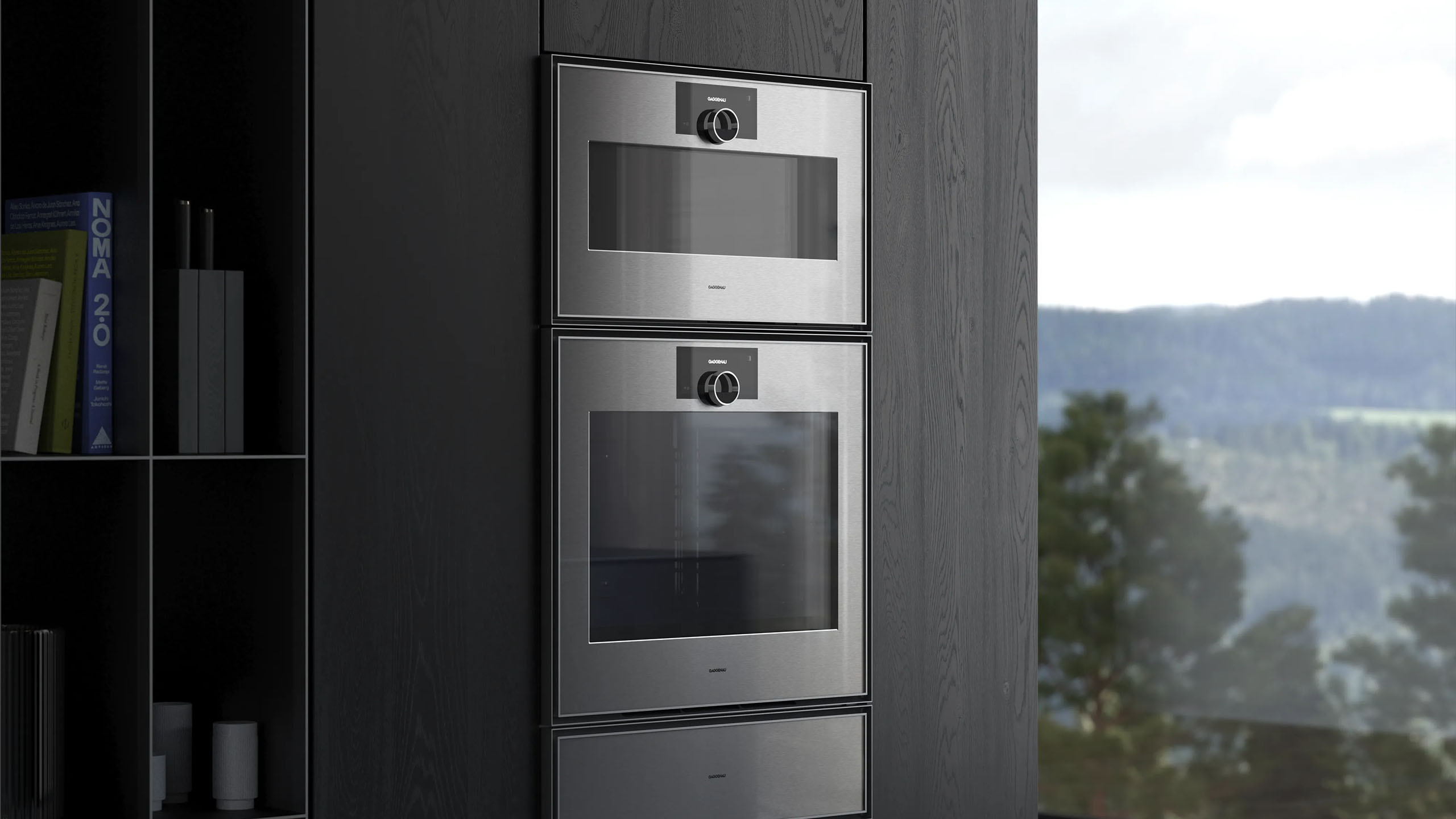
We have seen clients change their minds within minutes. An appliance they had almost ruled out online suddenly felt completely natural. Another that looked perfect in photographs felt less convincing once they used it.
This is why we encourage people to spend time with working displays at the Krieder showroom. There is no substitute for seeing appliances in a kitchen setting rather than isolated on a product page.
Why People Fall in Love with Gaggenau, and Why Others Choose Miele
People rarely fall in love with an appliance because of a brochure. It tends to happen more quietly. They open the door, look at the controls, pause for a moment and say, “I really like that.”
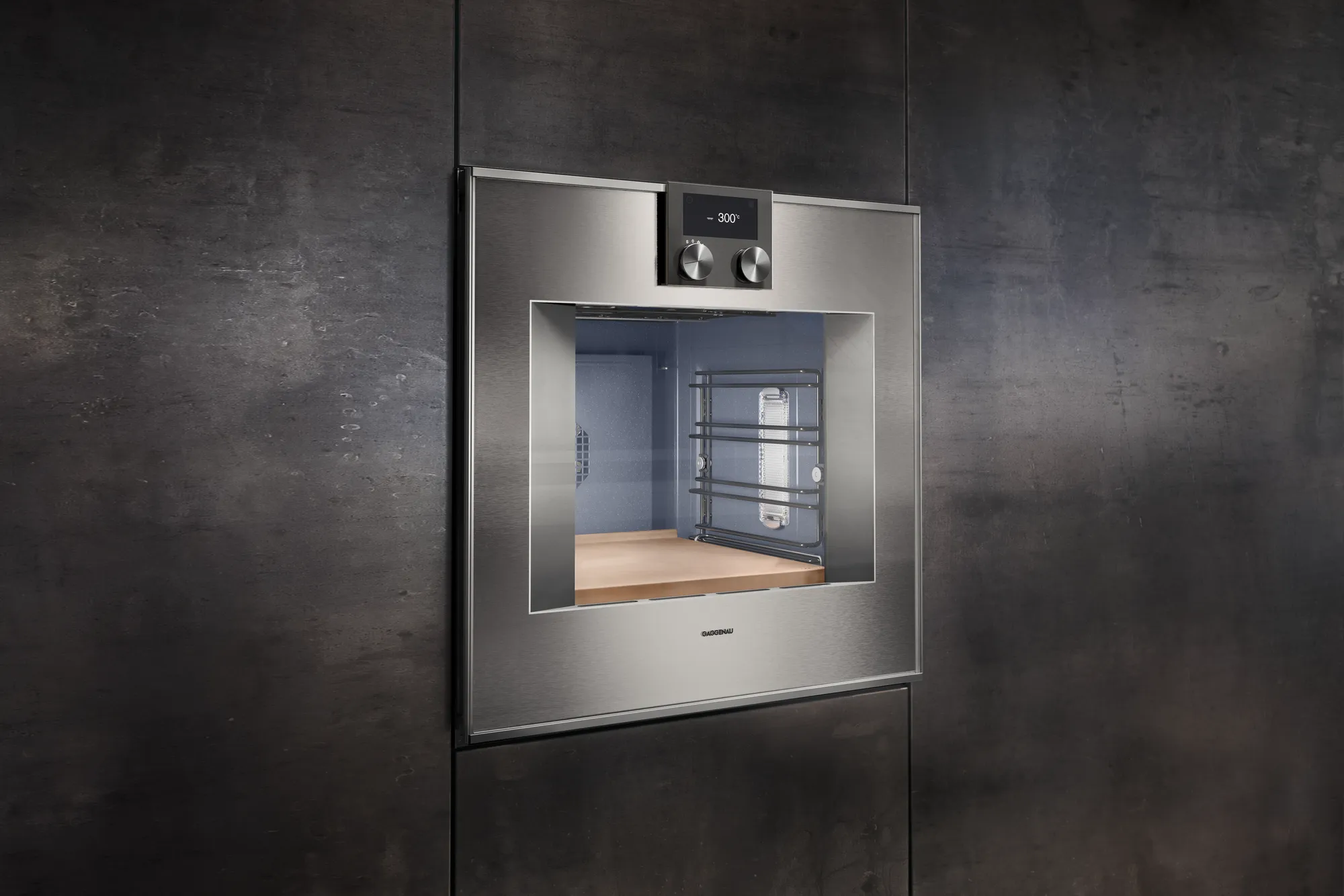
Gaggenau appliances often appeal to clients who notice architecture and engineering. The designs feel restrained, but never anonymous. Details appear deliberate. The ovens have a presence that suits interiors where the appliances are intended to form part of the composition rather than disappear completely.
There is also a sense of theatre to the brand. That does not mean showiness. It is closer to the feeling of using a well-made professional tool, particularly for somebody who genuinely enjoys cooking and wants the appliance to be part of that experience.
Miele appliances often create a different reaction. Clients talk about familiarity, confidence and ease. The technology can be advanced, but it tends to settle into everyday life without asking to become the centre of attention. For a household that cooks frequently and wants things to feel intuitive from the beginning, that can be very persuasive.
Neither response is more sophisticated than the other. People are simply recognising the kind of appliance they will enjoy living with.
The Oven Is Usually Where the Decision Becomes Real
People often arrive convinced they are choosing a kitchen. By the time they are making decisions about ovens, they are choosing how they want to cook for the next decade or two.
One client told us they had barely cooked in years. Their old oven was inconsistent, the controls frustrated them and, somewhere along the way, preparing food had become a chore. They were not looking for a new hobby. They simply wanted an oven that made everyday meals feel easier.
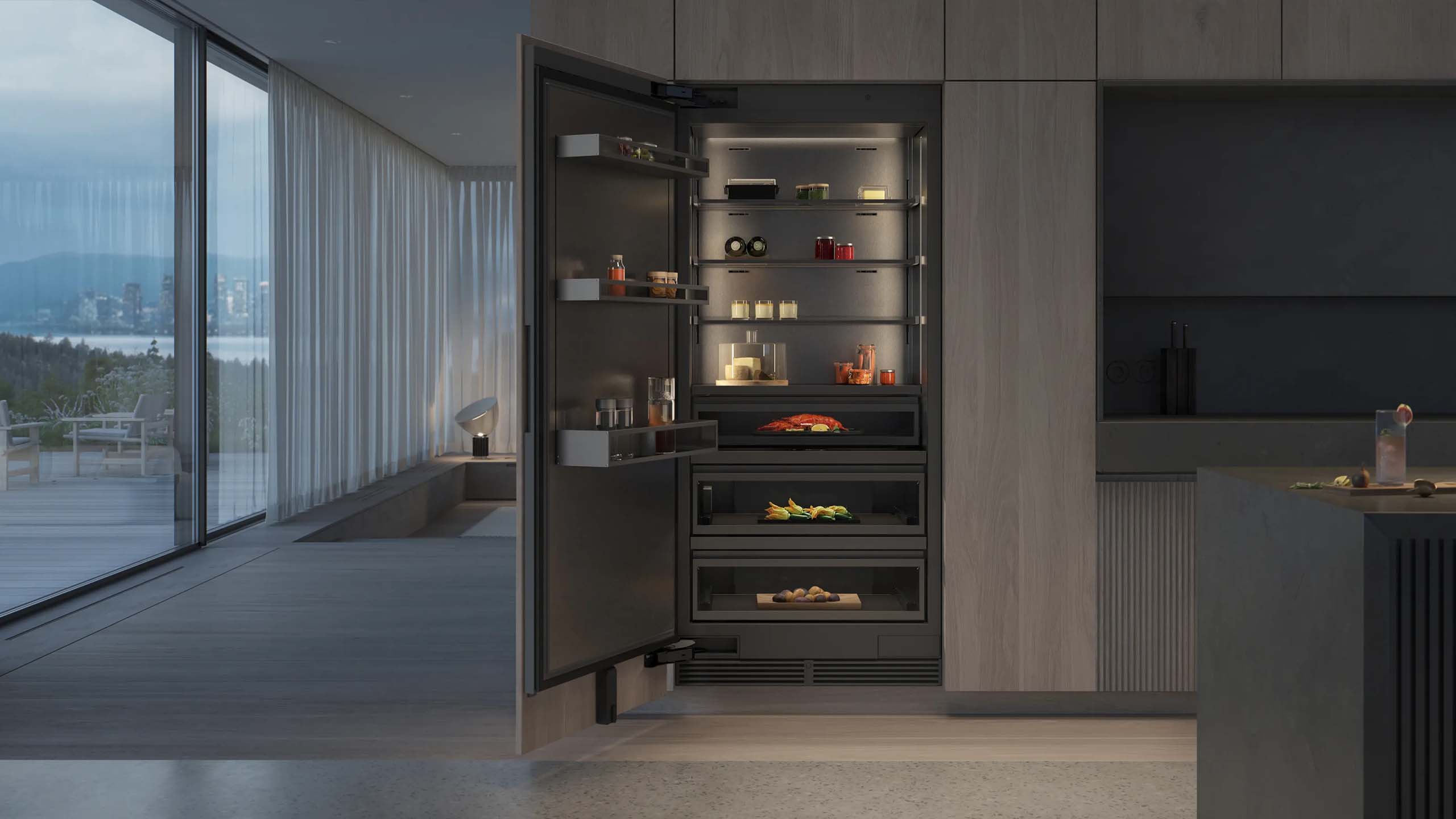
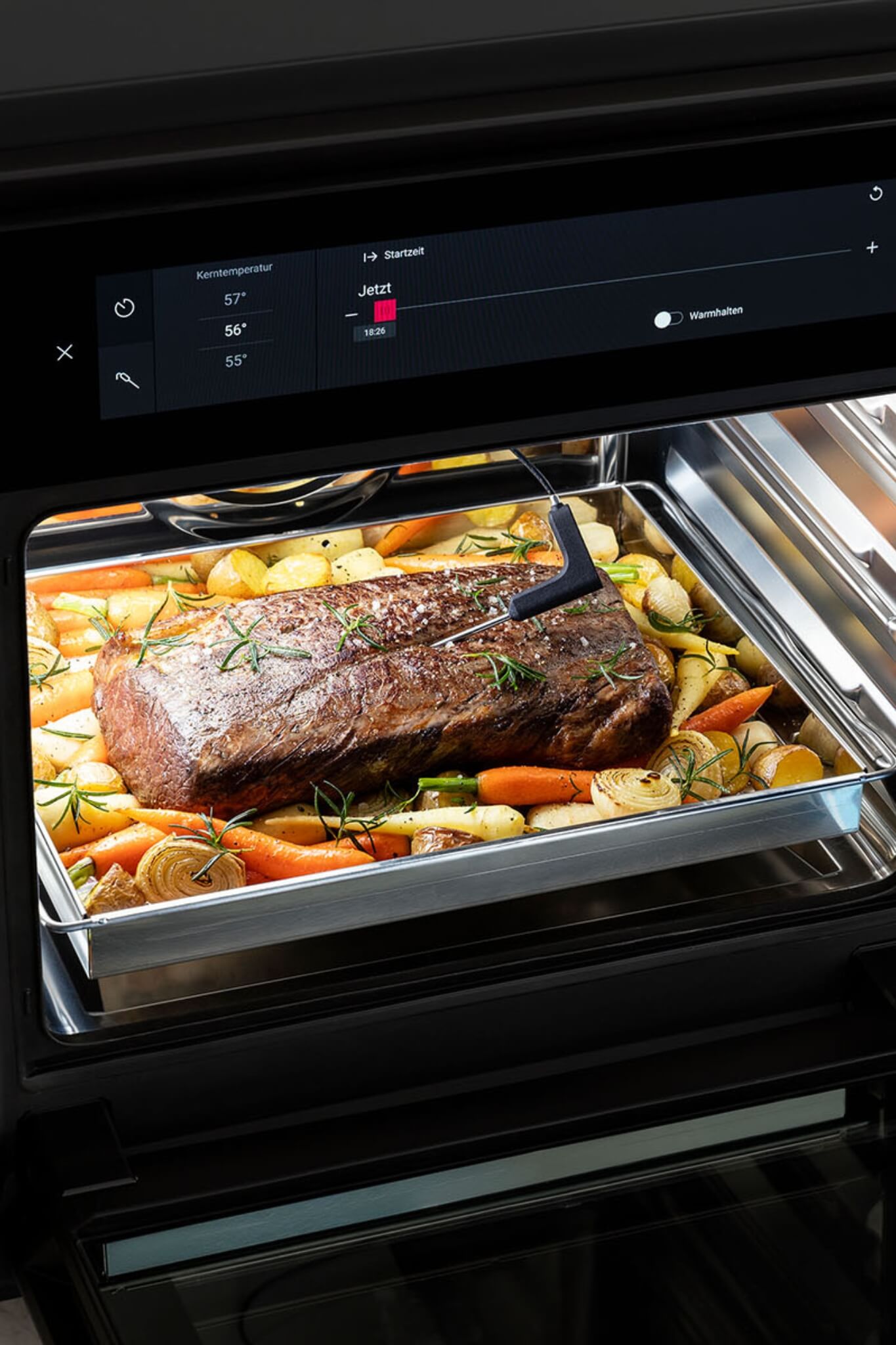
A few weeks after the kitchen was completed, they sent us a photograph of a Sunday roast. Not because the oven had a particular mode, but because they had started enjoying cooking again.
That is where the personalities of the two brands become clearer. Gaggenau can make cooking feel like an occasion. Miele often brings a sense of ease from the first day. One may encourage somebody to slow down and experiment; the other may slip almost immediately into the rhythm of daily meals.
The useful question is not which oven offers the longest list of functions. It is which one somebody is more likely to use with confidence.
“Is There Ever a Wrong Choice?”
That question usually arrives towards the end of a meeting. We have looked at layouts, finishes and appliances. The conversation is winding down, then somebody smiles and asks whether they are making the right decision.
It is a fair question. When you are investing this much in a kitchen, nobody wants to look back in five years and wish they had chosen differently.
We rarely hear clients say they wish they had bought the other brand. What they talk about is whether the kitchen suits the way they live. Some tell us they cook far more than they used to. Others mention that friends naturally gather around the island. A few laugh because they expected to use the steam oven every day, yet it is the warming drawer they can no longer imagine being without.
Very little of that has anything to do with winning a comparison. It is simply the kitchen becoming part of the household.
The Conversation That Changes Everything
There is a point in almost every project where we stop talking about appliances.
It usually begins with a simple question: “Do you cook much?”
One client answered, “Not really.” His wife immediately laughed. “He says that, but every Sunday he disappears into the kitchen for four hours.”
That told us far more than a specification sheet ever could.
Another couple were not interested in roasting joints of beef or baking bread. What they loved was having people over. Friday evenings meant friends, wine and small dishes scattered across the island. Their priority was not becoming better cooks. It was creating a kitchen where nobody felt left out while the food was being prepared.
Those conversations led to very different recommendations. Not because one budget was higher, but because the kitchens were going to be lived in differently.
Comparison articles naturally focus on products because that is all they can see. We have the advantage of seeing what happens afterwards: the family that now cooks together, the couple who volunteer to host Christmas, or the client who returns years later because they are moving house and want to create another kitchen.
Manufacturers improve their appliances every year. The way people gather around a kitchen has not changed very much at all.
Sometimes the Appliance Is Not the Problem
Every now and then, somebody asks whether Gaggenau or Miele is the better investment. We do not always answer immediately. Instead, we go back to the plans.
We have seen beautiful appliances placed in kitchens that do not quite work. An oven mounted slightly too high. A dishwasher that blocks a walkway whenever it is open. Refrigeration that looks impressive until two people try to cook together.
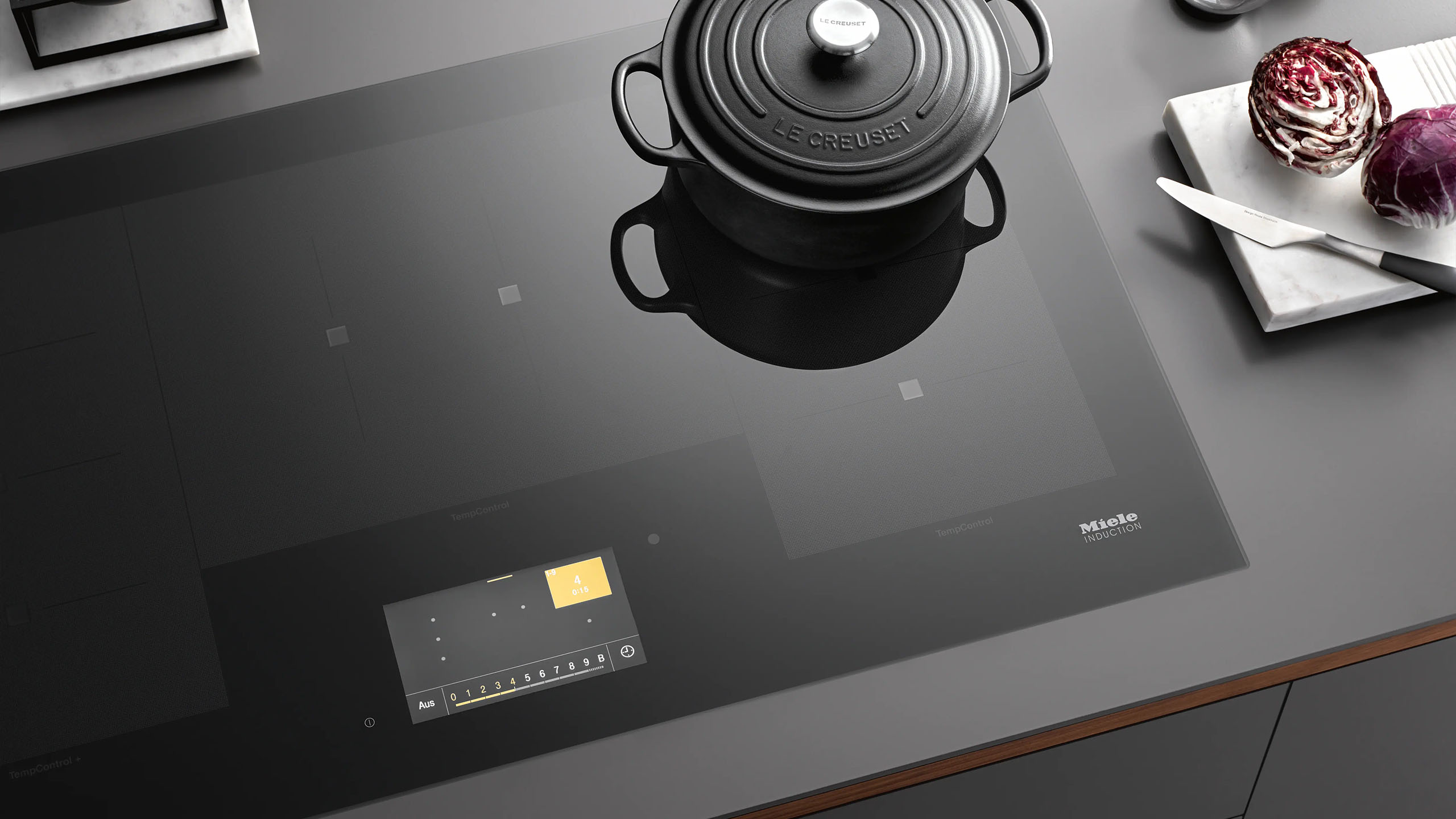
No appliance can solve that.
On one project, the conversation had almost become an argument about brands. We had spent the best part of an hour discussing ovens before somebody asked whether we were missing something.
We were. The island was in the wrong place.
Moving it by a few hundred millimetres changed the room. The appliances remained the same, but the kitchen suddenly worked. From that point on, the conversation was about cooking, moving around the space and where the grandchildren would sit after school.
A successful kitchen is the result of hundreds of small decisions working together. Most of them should never demand attention individually.
You Can Usually Tell Within Five Minutes
Occasionally a client walks into the showroom, looks around for a few minutes and heads straight towards one appliance. There is no hesitation and no comparison. They open the door, stand back and call their partner over.
“Come and have a look at this.”
We have watched that happen many times. The interesting part is that it does not always happen with the same brand.
Some people connect with Gaggenau almost immediately. Others drift towards Miele without being able to explain why. You could hand both of them a technical comparison and it probably would not change their minds.
One architect spent an afternoon examining the smallest details of a Gaggenau oven: the proportions of the handle, the movement of the door and the finish around the controls. Another client took one look at a Miele display and simply said, “That feels like me.”
Somebody else’s favourite appliance will not automatically become yours. People are wonderfully inconsistent, which is one reason kitchen design remains interesting.
The Things People Wish They Had Asked Earlier
We do not often hear clients say they chose the wrong appliance. What we do hear are comments that begin, “If we were doing it again…”
One couple wished they had spent more time thinking about refrigeration. During the design stage it had not seemed especially exciting. Once they began using the kitchen every day, it quietly became one of the hardest-working parts of the room.
Another client admitted they had been completely focused on appliance brands and had barely considered the lighting. It was only when the evenings started drawing in that they realised how much atmosphere came from everything around the appliances.
Those conversations have changed the questions we ask. We want to know how often somebody shops, whether everyone eats together, who usually makes breakfast and whether the kitchen is peaceful in the morning or gloriously chaotic.
Sometimes a client stops halfway through and says, “Nobody has ever asked us that before.”
The answers help us understand the room in a way that a product list never could. For anyone preparing to begin that process, our guide to preparing for a kitchen design consultation explains what is useful to bring and what to expect from the first meeting.
There Is a Moment When People Stop Comparing
At the beginning of a project there are screenshots on phones, magazine cuttings and browser tabs filled with different comparisons. Questions come quickly. What does this one do? Should we consider that instead? Have we missed something?
Then the questions change.
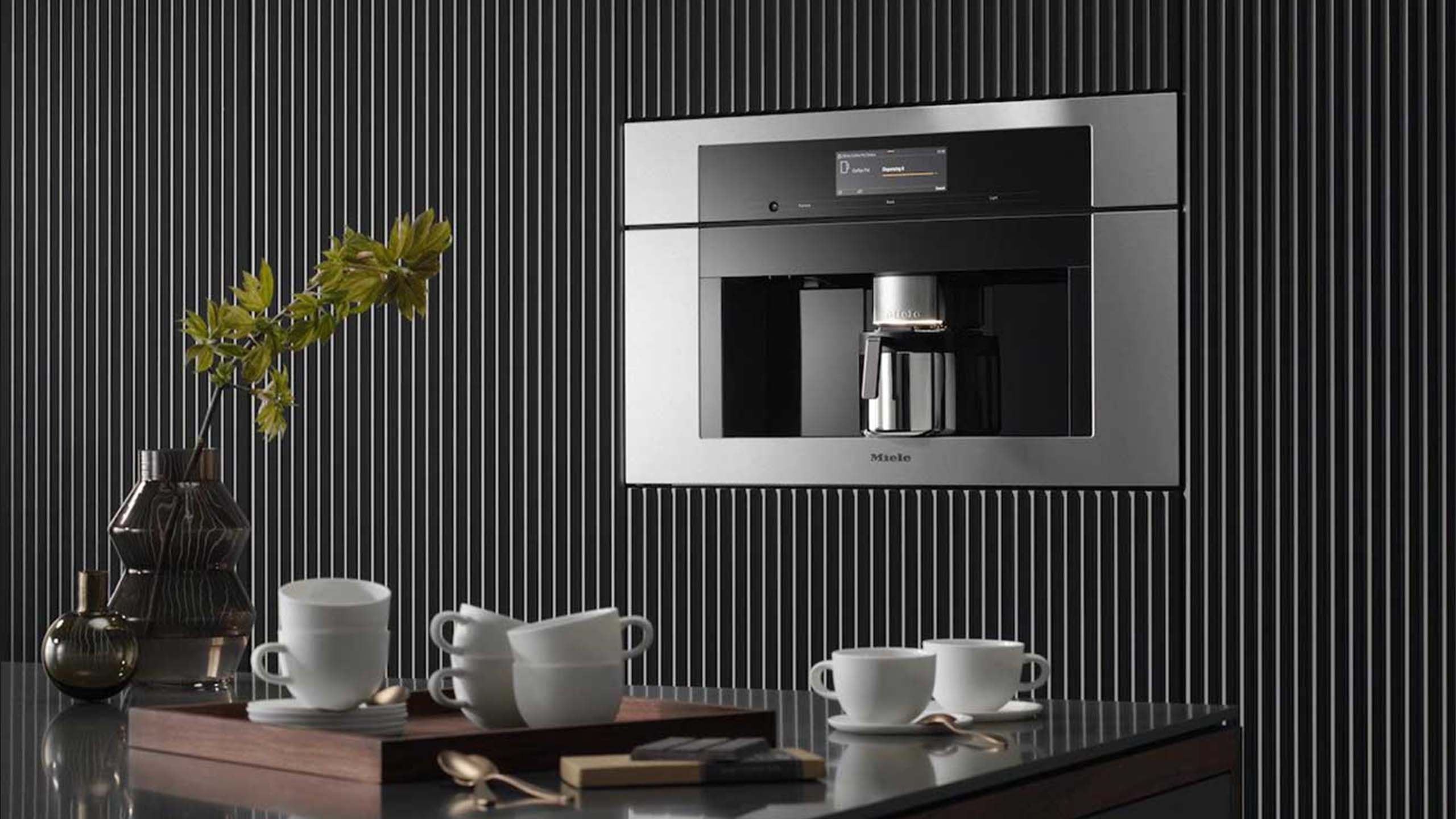
A client will look at the drawings, glance at the appliance they have chosen and say, “I can picture it now.”
One gentleman arrived with pages of notes and model numbers folded neatly inside a folder. We worked through them all. A few meetings later, he pushed the folder to one side and laughed. “I do not think I need this anymore.”
The information had not become irrelevant. He had simply started trusting his own instincts.
The internet can provide details, reviews and opinions. It cannot tell you how a kitchen will feel when it is yours. That confidence tends to arrive through conversation, seeing products in person and allowing the design to take shape.
A Kitchen Is Not Built in Departments
Every so often, somebody tells us they have visited three appliance showrooms before coming to see us. Each showroom has probably done exactly what it should. The oven specialist knows ovens. The refrigeration specialist knows refrigeration. The worktop company knows stone. The lighting designer knows lighting.
Somebody still has to stand back and look at the whole picture.
We once worked with a couple who had chosen almost every appliance before we met. They had done their homework and every decision made sense on its own. Together, though, the room felt busy. Nothing was wrong, but nothing quite belonged together either.
We did not replace everything. A handful of changes, a different combination of finishes and one appliance moved to another wall transformed the design.
When it was finished, the husband looked around and said, “I cannot actually tell you what you have changed.” He paused. “It just feels calmer.”
People often imagine luxury is about adding more: more features, more technology and more statements. In practice, it is frequently about knowing what to leave out.
This wider view is also behind many of the points covered in what luxury kitchen designers wish clients knew before starting a project. The decisions that shape a room are not always the ones that appear most important at the beginning.
We Know We Have Got It Right When the Appliances Disappear
This may sound strange coming from people who spend so much time discussing appliances, but there comes a point when we stop noticing them.
We remember a family inviting us back after their project had been completed. Nothing was wrong and they did not want to change anything. They were having friends over and wanted us to see the kitchen in use.
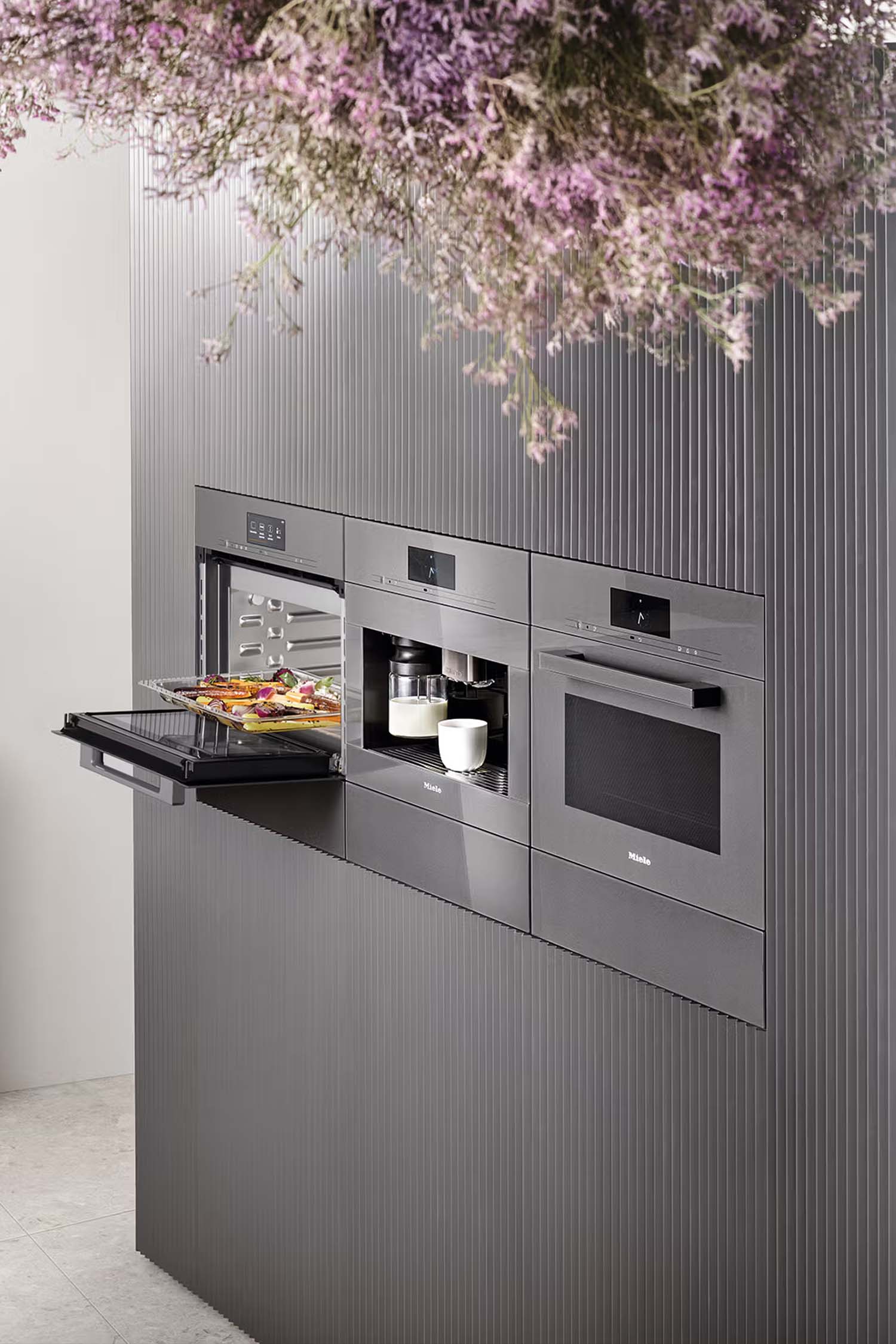
The ovens were on, music was playing and somebody was opening wine while two children pinched food from the island before dinner. Nobody was admiring the appliances. Nobody was talking about brands. The kitchen had simply become part of everyday life.
When a room is new, it is natural to notice every detail: the grain of the timber, the finish on the doors, the weight of a handle and the gentle click as something closes. Months later, those things fade into the background. Not because they matter less, but because they have become familiar.
The kitchen becomes the place where birthdays begin with coffee before anyone else is awake, where teenagers appear long after saying goodnight because they are hungry again, and where somebody sits quietly with a cup of tea after everyone has gone to bed.
Those moments do not belong to Gaggenau or Miele. They belong to the people living there.
Some Decisions Are Better Made Slowly
We have never worried when somebody leaves the showroom without making a decision. We would probably be more concerned if they did not.
Choosing a kitchen is not like replacing a phone or buying a dishwasher after the old one has failed. Most people are making decisions they will live with every day for a long time. That deserves some thought.
Every so often, an email arrives a week or two after a meeting. “I have been thinking about what we discussed…”
Those emails often include something that seemed unimportant during the appointment. “I realised I always stand by the window when I make coffee.” Or, “My daughter always sits on the worktop while I am cooking.”
Small observations can change the direction of a project far more than another hour spent reading appliance reviews.
One gentleman returned after three weeks and apologised for taking so long. “There was nothing left to compare,” he said. “I just needed to know which one I would still be pleased with in ten years.”
Good decisions often settle gradually. Eventually, the question stops being “Which one is better?” and becomes “Can I see this in my home?”
So, Which Would We Choose?
People ask us that surprisingly often, usually with a smile, as though there is a correct answer hidden somewhere in the showroom.
There is not.
If there were, we would install the same appliances in every kitchen. We do not. Some homes seem to call for Gaggenau from the first sketches. Others feel completely at home with Miele. Sometimes the strongest result comes from combining the two.
That is the advantage of starting with people rather than products. We have worked with enthusiastic home cooks who chose Miele because it suited their routine, and families who connected with Gaggenau before the rest of the kitchen had been discussed. We have also watched clients compare products for weeks, only to discover that the decision felt obvious once they stood in front of the right appliance.
After designing kitchens for many years, we have become less interested in asking which brand is better. The more useful question is whether somebody will still enjoy walking into the room five or ten years later.
Long after the cooking programmes and model numbers have been forgotten, there will still be Sunday lunches that turn into Sunday evenings, conversations that continue around the island and children wandering into the kitchen because that is where everyone else is.
Those moments are not created by an appliance manufacturer. They are made possible by a kitchen that has been planned around the people using it.
That is where we always begin. To discuss your project, visit our contact page or arrange a visit to the showroom.