Some kitchens somehow manage to feel just as good ten years later.
Not necessarily newer. Not trendier. Just… right.
The materials soften slightly. The timber develops character. The lighting still feels calm in the evening. Nothing jars. Nothing screams for attention. The room settles into the house naturally, almost like it was always supposed to be there.
Others go the opposite way.
A kitchen that felt dramatic and exciting during installation can start feeling oddly tiring a few years later. Certain colours begin dating the room. Glossy finishes lose their appeal. What once felt bold starts feeling heavy-handed. The details that demanded attention on day one continue demanding it every single day afterwards.
That’s the interesting thing about kitchen design.
The kitchens people continue loving years later are rarely the ones that tried hardest to impress on day one.
If you’re planning a luxury kitchen, longevity has less to do with avoiding trends completely and far more to do with understanding what genuinely ages well in daily life.
Why “timeless” doesn’t mean boring anymore
For years, timeless kitchen design became strangely associated with playing it safe.
White cabinetry. Pale quartz. Chrome handles. Nothing too warm. Nothing too dark. Nothing too personal.
The problem is that many of those kitchens didn’t really feel timeless at all. They just felt cautious.
That’s changing now.
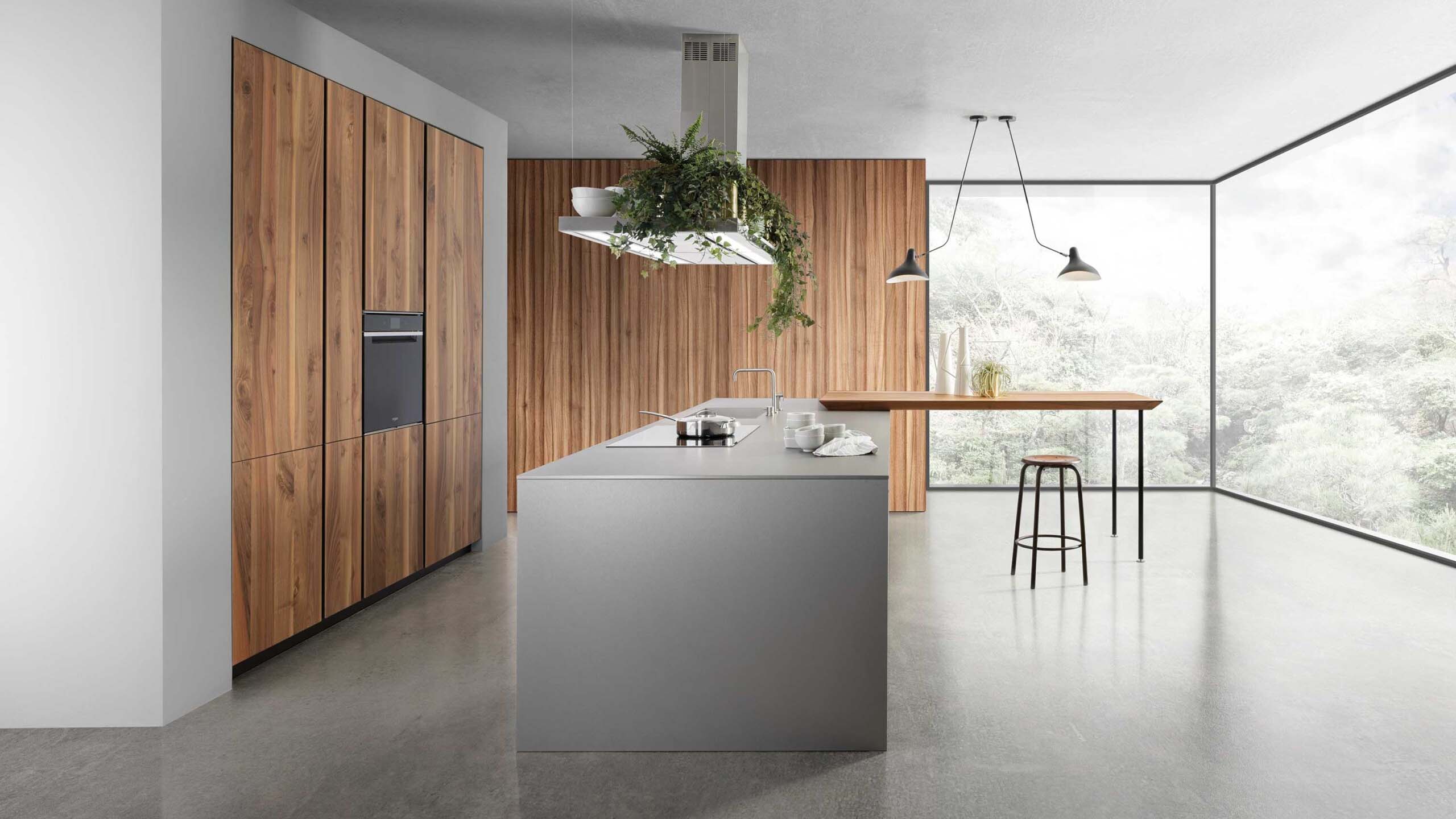
Some of the most enduring kitchens being designed today still feel contemporary, but they also feel warmer, calmer and more human. Texture matters more. Lighting matters more. Materials are allowed to feel natural rather than overly polished.
You can see this shift happening across modern kitchen design trends. The spaces that age best are rarely the coldest or most clinical. They’re the ones with enough warmth and restraint to continue feeling comfortable long after trends move on.
And that balance matters.
Because timeless design isn’t really about removing personality from a room. It’s about making sure personality doesn’t overpower everything else.
The problem with statement-first kitchen design
One of the quickest ways for a kitchen to date is when a single feature tries too hard to dominate the room.
It happens surprisingly often.
Oversized extractor hoods. Aggressive splashbacks. Trend colours used everywhere at once. Open shelving covering entire walls. Statement lighting that feels theatrical rather than atmospheric.
These things photograph well initially because they create impact.
The trouble is that impact can become exhausting over time.
A kitchen isn’t somewhere you glance at occasionally like a hotel lobby or restaurant interior. You live in it. Every morning. Every evening. Sometimes in silence with coffee before anyone else is awake. Sometimes while unpacking shopping after a long day when nobody wants visual chaos.
That’s why the kitchens that age beautifully often feel quieter.
Not boring. Just composed.
There’s usually one strong idea holding the room together rather than ten competing ones.
The faster a kitchen tries to impress, the faster it often dates.
Why materials matter more over time
Materials are one of the biggest differences between kitchens that improve with age and kitchens that slowly lose their appeal.
Natural materials tend to develop character. Synthetic-looking materials often do the opposite.
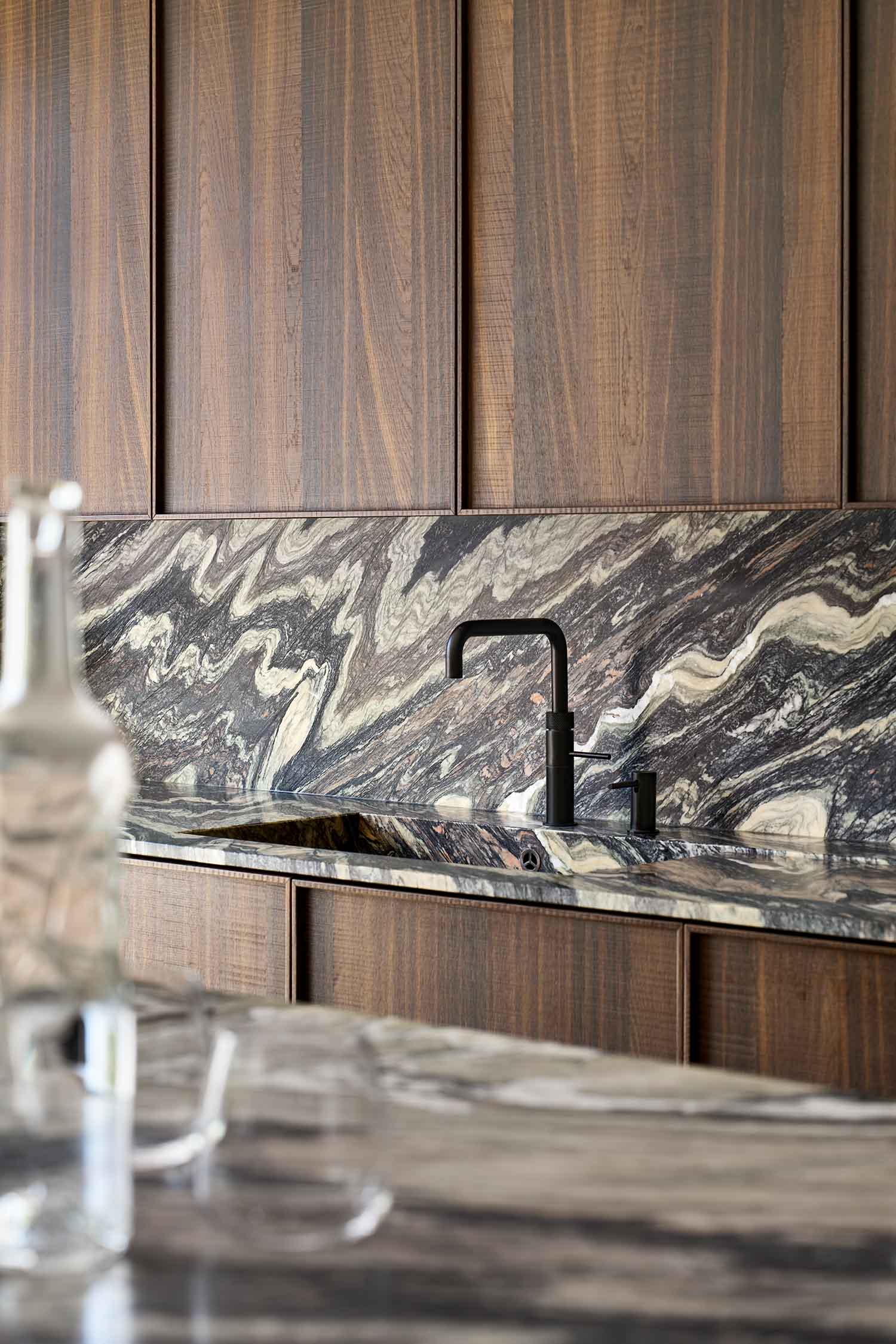
A softly textured timber can become richer over time. Honed stone tends to soften beautifully with use. Warm metals pick up subtle patina and depth. Even tiny imperfections can start making the room feel more relaxed and authentic.
Whereas overly glossy surfaces often become harder to live with. Every fingerprint shows. Every reflection feels sharper. Every mark stands out.
That doesn’t mean kitchens need to feel rustic or deliberately aged. Far from it.
But the best luxury kitchens usually include materials with enough depth and tactility to continue feeling good once real life moves in.
This is one of the reasons carefully considered surface selection matters so much in modern kitchens. We explored this more deeply in our kitchen materials guide, particularly around how different finishes behave over time rather than simply how they look in a showroom.
Because a material does not need to stay visually perfect forever.
It needs to age with dignity.
Cold minimalism is fading
Minimalism still works beautifully in kitchens.
But the version people are increasingly moving away from is the cold, clinical kind.
The ultra-flat grey kitchens. Harsh white lighting. Endless gloss surfaces. Spaces so stripped back they almost stop feeling comfortable to live in.
For a while, those kitchens represented modernity. Now many of them feel strangely dated because they chased a very specific aesthetic moment too aggressively.
The newer direction feels softer.
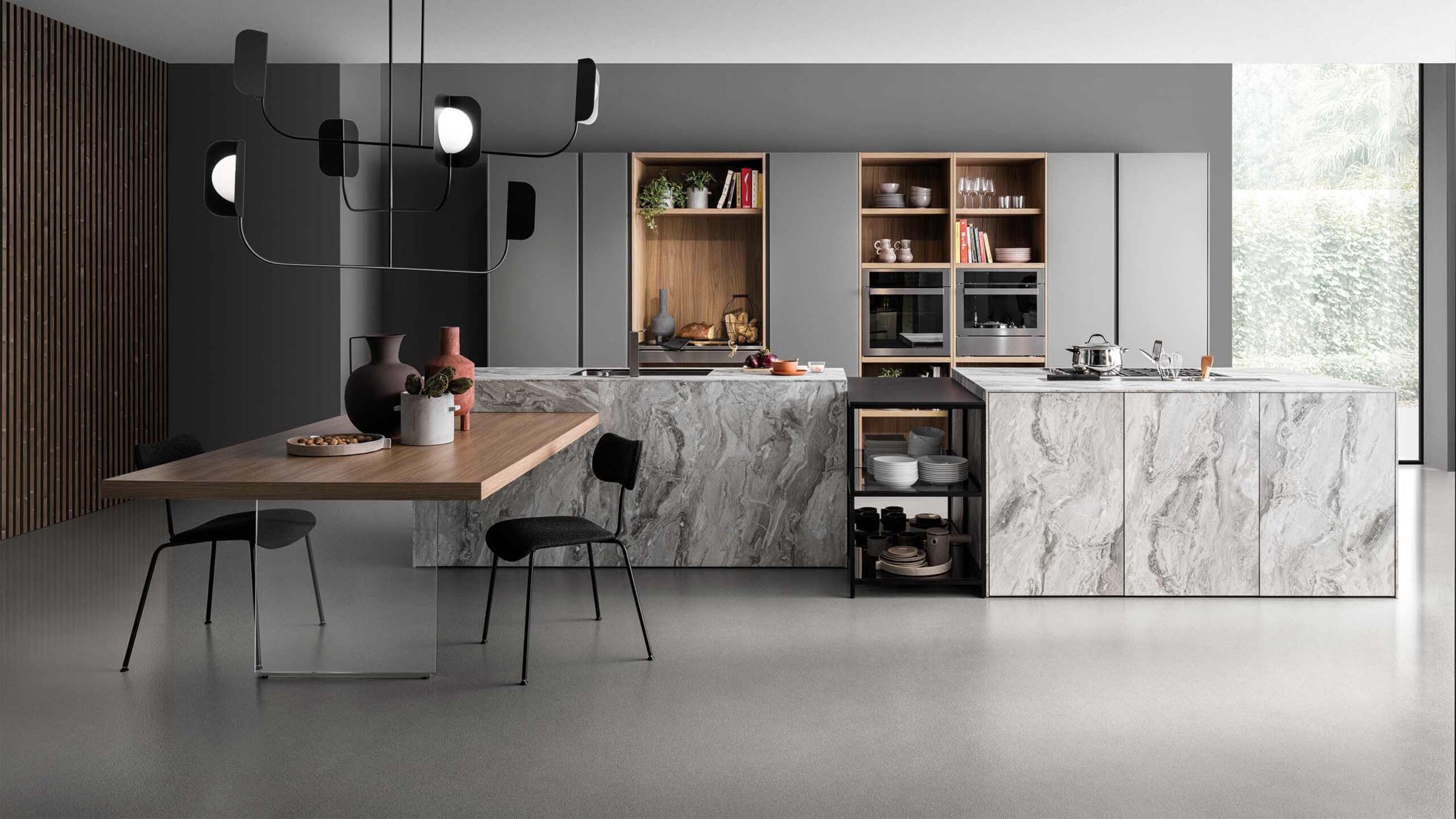
Handleless kitchens still remain hugely popular, but they’re increasingly balanced with warmer tones, natural materials and calmer lighting. The result feels architectural rather than sterile. There’s still simplicity, but also texture and atmosphere.
That shift is one of the reasons handleless kitchen design continues evolving so successfully. The concept itself isn’t the problem. It’s how aggressively minimalism is applied.
A calm kitchen ages better than a clinical one.
Why layout dates as much as style
People often assume kitchens date because of colours or finishes.
But layout can date too.
In fact, badly planned layouts often age faster than the materials themselves.
You can see it in kitchens designed around trends rather than movement and practicality. Double islands squeezed into rooms that don’t really need them. Vast open-plan layouts with no sense of separation. Kitchens designed almost entirely for visual impact without enough thought given to how people actually move through the space.
That’s where problems start appearing later.
Noise travels too easily. Clutter becomes impossible to contain. The room feels exposed rather than open. Cooking becomes awkward. Storage starts overflowing.
And suddenly the kitchen feels tiring, even if visually it still looks current.
This is something we explored more deeply in both open-plan luxury kitchen design and our guide to designing open-plan kitchens.
The kitchens that age best usually have rhythm to them. Different zones. Moments of quietness. A sense that the room was designed around living rather than purely appearance.
The kitchens that age best usually hide more
One of the strongest design shifts in modern kitchens is how much functionality now disappears from view.
And honestly, it makes sense.
Modern kitchens are expected to do far more than they used to. They’re social spaces, workspaces, family spaces, entertaining spaces. Which means visual clutter builds faster too.
That’s why concealed storage has become such a defining feature of high-end kitchens.
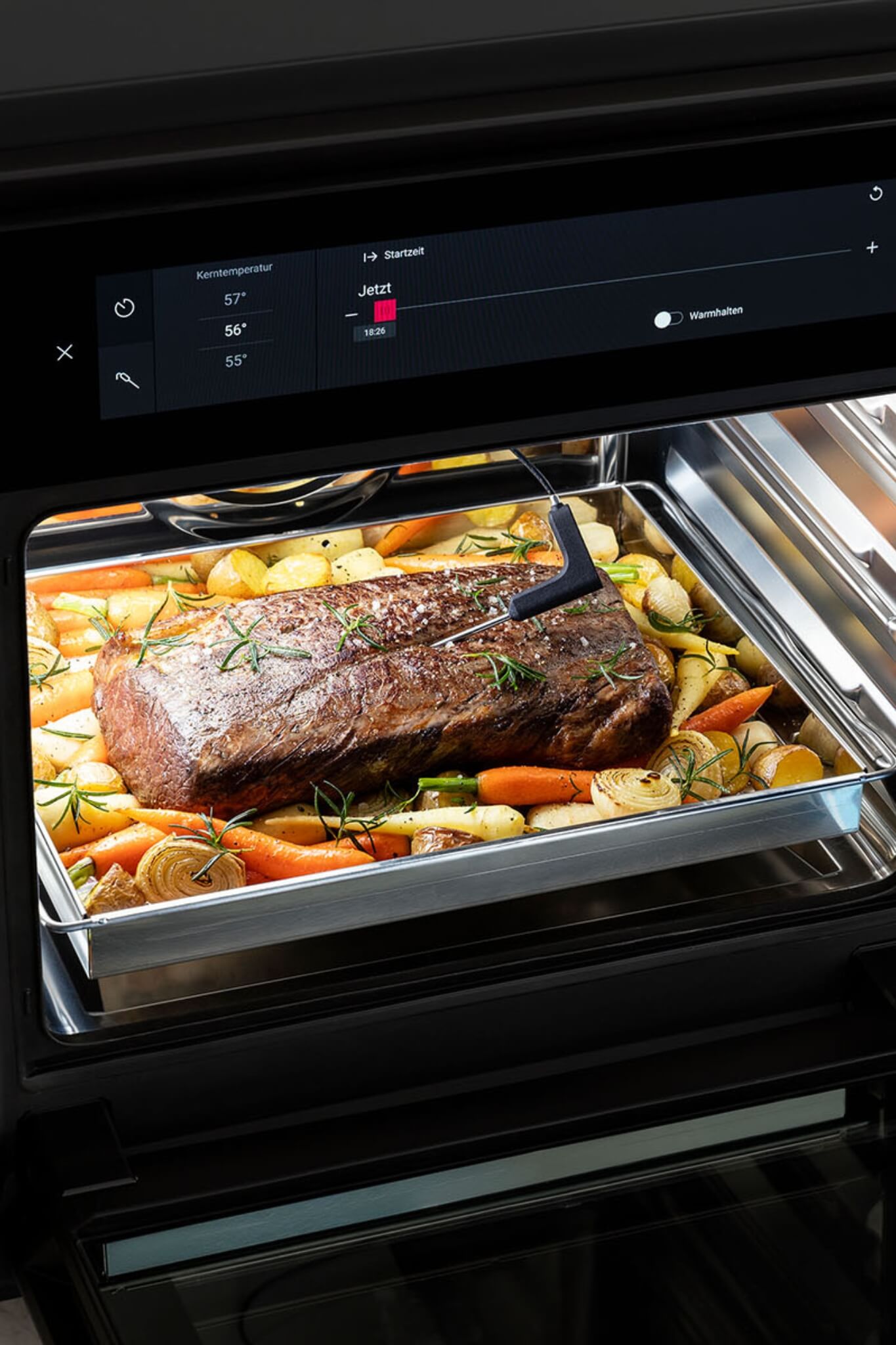
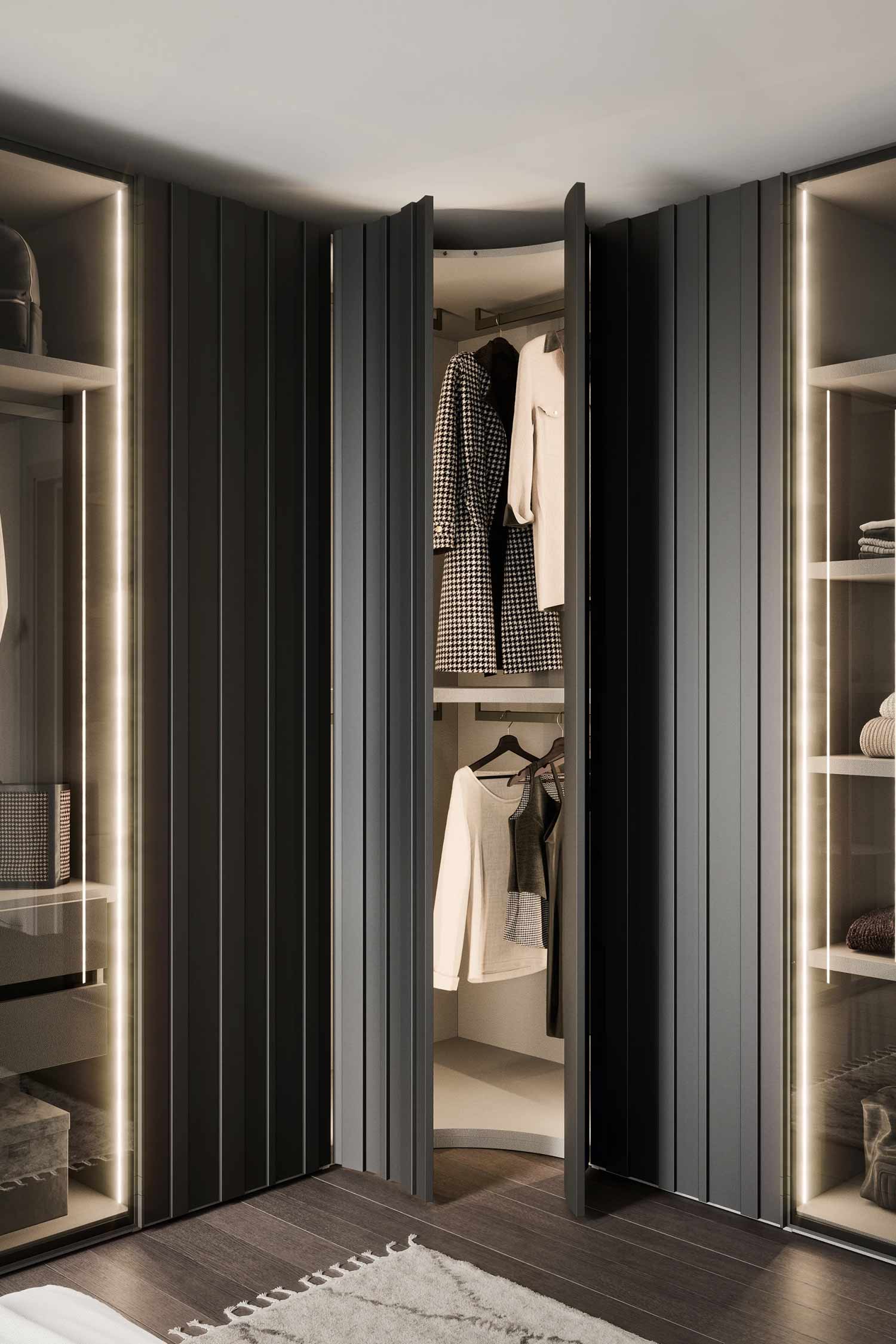
Coffee stations hidden behind pocket doors. Appliance garages. Integrated extraction. Hidden charging drawers. Concealed recycling systems. Worktops with fewer interruptions.
Not because people suddenly own fewer things.
Because they want the room to feel calmer.
You can see this same philosophy throughout modern luxury kitchen storage design, where the focus increasingly shifts towards reducing visual noise rather than simply adding more cabinets.
Even smaller details play a role. Concealed sockets, for example, feel far less intrusive visually than traditional wall plates scattered around a room. It’s one of the reasons we explored hidden kitchen sockets in more detail recently.
The kitchens that continue feeling good years later are often the ones that ask the eye to process less.
Lighting quietly decides whether a kitchen ages well
Lighting is one of the most overlooked reasons kitchens either age beautifully or date quickly.
A kitchen can have stunning cabinetry and expensive stone and still feel strangely uncomfortable because the lighting is wrong.
Overly cool lighting is usually the biggest culprit. It flattens materials. Removes warmth. Makes surfaces feel harsher than they really are.
The opposite is also true.
Soft layered lighting allows materials to breathe properly. Timber feels richer. Stone develops depth. Shadow and texture start working together instead of fighting each other.
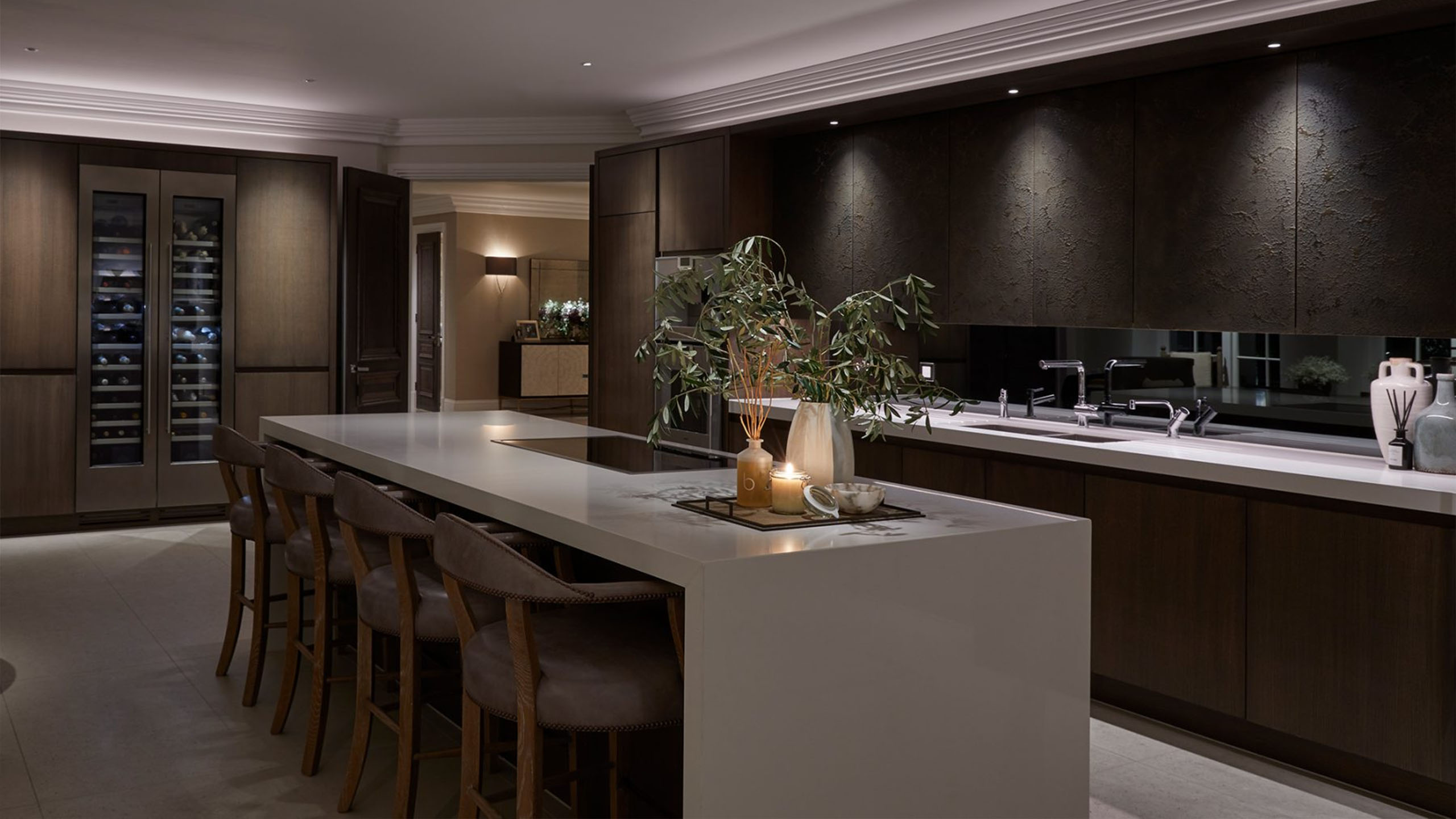
The best luxury kitchens rarely rely on a single dramatic light source anymore. Instead, they layer light carefully: task lighting, ambient lighting, concealed lighting, storage lighting and softer evening lighting.
The overall effect becomes calmer and far more adaptable.
And importantly, adaptable kitchens tend to age better because they continue responding to different ways of living over time.
Why restraint matters more than trend forecasting
People often ask how to design a kitchen that won’t date.
The honest answer is that every kitchen belongs to a period eventually. Even the most timeless spaces still reflect their era in subtle ways.
The difference is that some kitchens wear that age elegantly.
Usually because restraint was built into the design from the start.
The kitchens that age beautifully tend to avoid chasing every new idea simultaneously. They allow space around materials. They rely on proportion more than decoration. They understand that calmness is often more valuable than drama in a room people use every single day.
There’s also confidence in restraint.
A kitchen does not need twenty statement features to feel luxurious.
Often the opposite.
The most timeless kitchens are usually the ones that never tried too hard to look timeless.
What actually makes a kitchen feel timeless?
Not one single thing.
It’s usually a combination of smaller decisions working quietly together.
Warmth. Proportion. Storage. Material honesty. Calm lighting. Thoughtful layout. Hidden functionality. Surfaces that feel good to touch as well as look at.
And above all else, usability.
Because the kitchens that truly age beautifully are rarely the ones designed purely for photographs.
They’re the ones that still feel calm and natural on an ordinary Tuesday evening years later, when the trends around them have already moved on.