After a while, kitchen designers start noticing patterns.
The projects that run smoothly.
The decisions clients are still happy with years later.
And the small mistakes people wish they had understood earlier.
Most of them have very little to do with colours, handles or worktops.
That’s the surprising part. People often arrive at a kitchen project with a clear idea of what they want it to look like. They have saved images. They know the kind of stone they like. They may already have strong opinions about handleless cabinetry, statement islands or the appliance brands they want to include.
But the things that make a kitchen truly successful tend to sit slightly deeper.
How the room moves. Where the light falls. What happens during the morning rush. Where the coffee machine lives. How much clutter appears after a normal week. Whether the extractor interrupts the view. Whether the island helps the room flow, or quietly gets in the way.
“People often arrive with folders full of inspiration images, but very few have spent time thinking about how they’ll actually live in the space,” says Matthew Yeatman, Creative Director at Krieder.
“The kitchens that work best always start with lifestyle rather than aesthetics.”
And that, really, is the point. A luxury kitchen is not just a beautiful object placed inside a home. It has to absorb real life. Cooking, talking, hosting, rushing, cleaning, working, unpacking shopping, making coffee before anyone else is awake.
If you’re planning a luxury kitchen, these are the things worth understanding before the first serious design conversation begins.
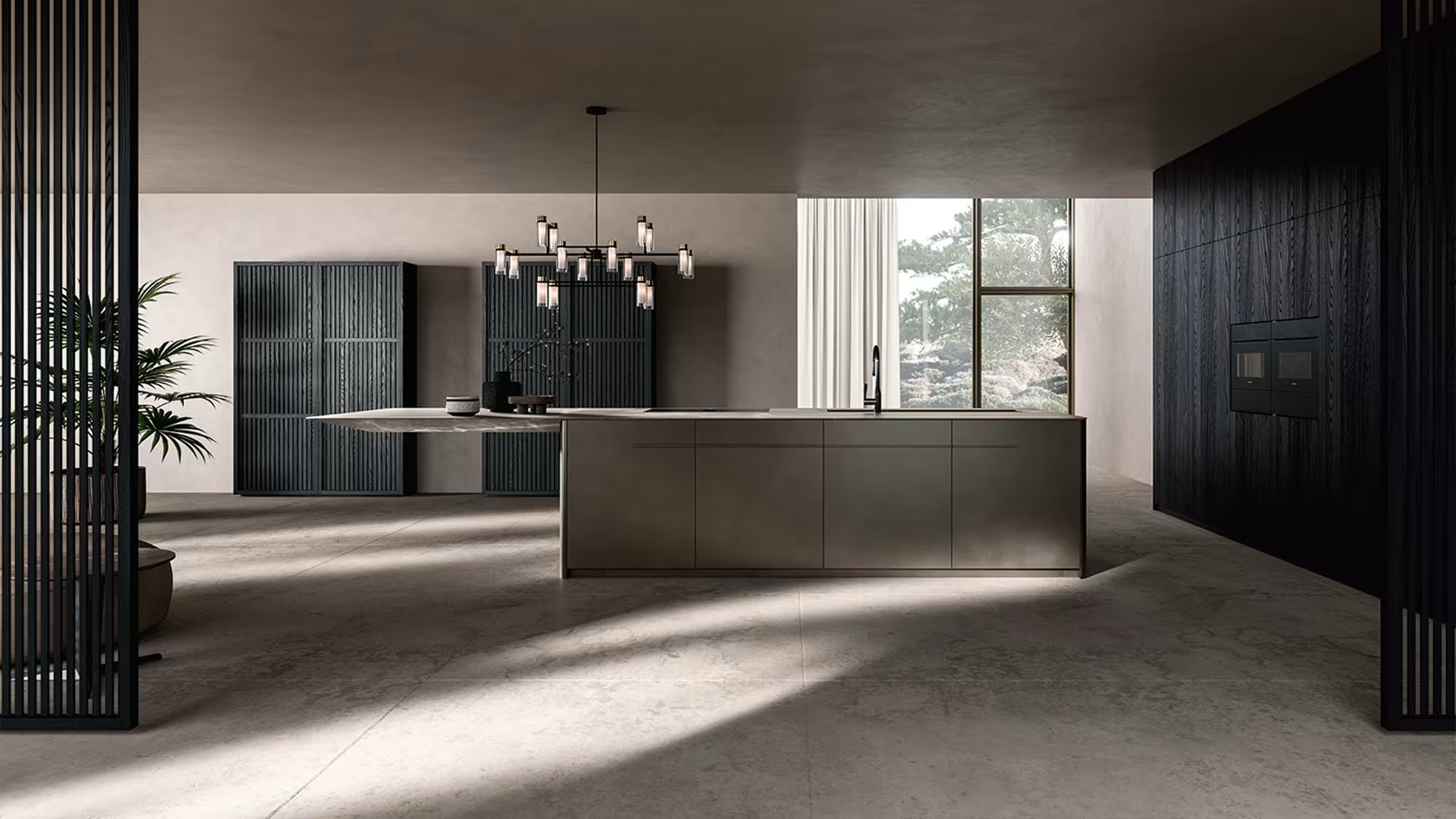
Most people think about appearance before lifestyle
It’s completely natural.
The visual part of kitchen design is exciting. Materials, colours, doors, worktops, lighting, appliances. These are the things people can see and respond to immediately.
But good designers tend to start somewhere else.
They want to know how the kitchen will be used.
Is this a family kitchen that needs to handle busy mornings and school bags? Is it a calm, architectural space for entertaining? Does the client cook properly every day, or is the kitchen more about hosting and atmosphere? Will the room be open to the rest of the house? Does it need to hide clutter quickly?
These questions might sound ordinary, but they shape everything.
“A beautiful kitchen is important,” says Matthew. “But if it doesn’t fit the way you live, you’ll notice that every single day.”
That’s the difference between a kitchen that looks impressive and one that feels effortless.
The best kitchens usually come from honest conversations, not just mood boards. How people move. What frustrates them now. What they never use. What they always wish they had more of.
Those details matter.
Because real luxury is not just how a kitchen looks when it is finished. It is how easy it feels to live with afterwards.
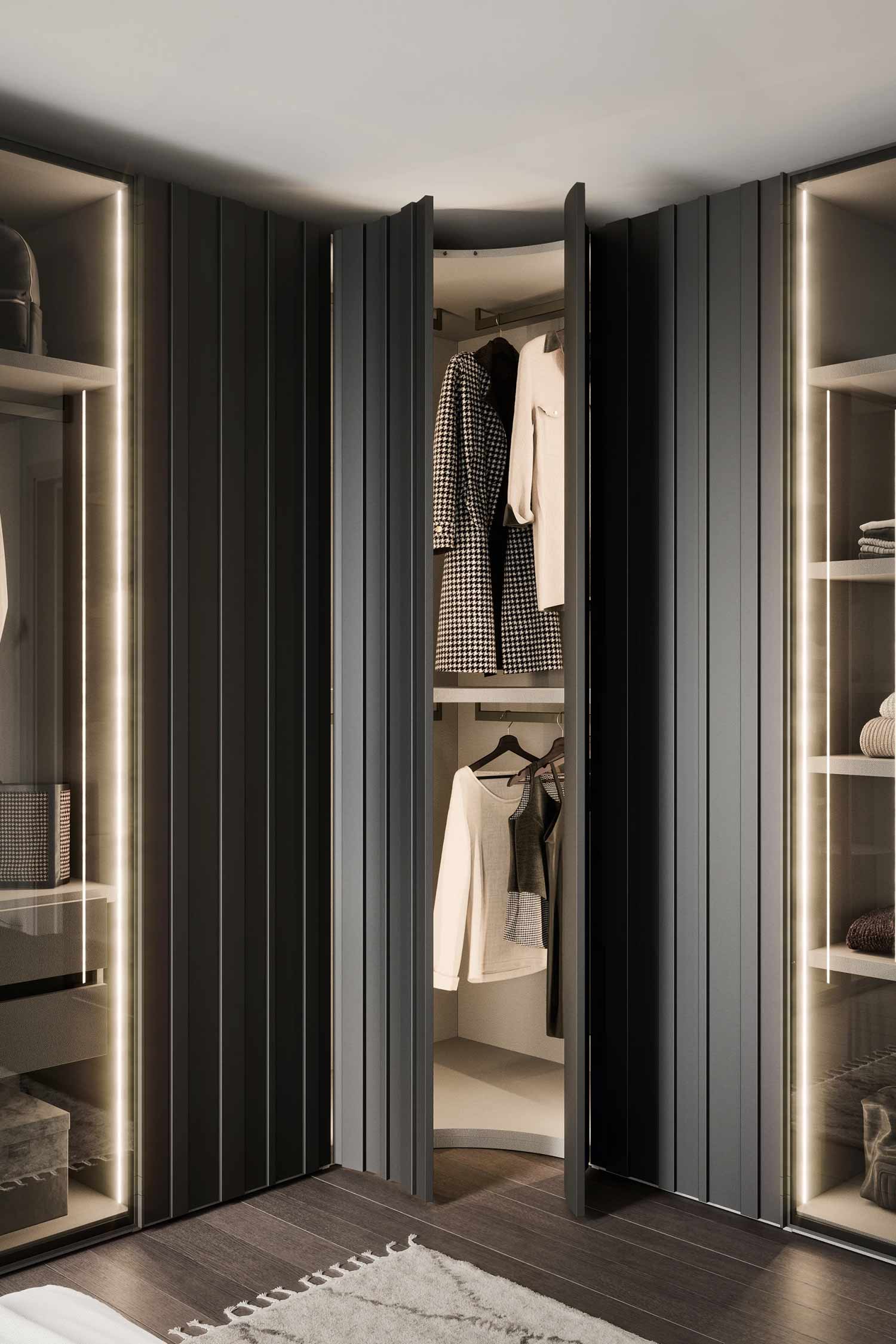
Storage is almost always underestimated
Nobody ever wants the dull conversation first.
Storage rarely gets the same attention as marble, appliances or lighting. It doesn’t have the same immediate glamour. It is not the thing people point at in a photograph.
But it might be the thing that decides whether the kitchen still feels calm six months later.
Worktop clutter is not usually a lifestyle failure. It is often a design failure.
If there is nowhere sensible for the toaster, it stays out. If charging points are badly planned, cables appear. If recycling is awkward, it builds up around the sink. If pantry storage is too small, food storage spreads into cupboards that were never meant for it.
And slowly, the kitchen starts to lose the calmness everyone loved at the beginning.
“People rarely ask for less storage after they’ve lived with a kitchen,” says Matthew. “They usually wish they’d planned for more.”
This is why storage needs to be designed around habits, not guesswork.
Where does breakfast happen? Where do small appliances live? How much dry food storage is actually needed? Are there children in the house? Pets? Regular entertaining? Bulk shopping? Wine storage? Recycling? Cleaning products?
The answers shape the kitchen quietly but powerfully.
This is something we explored in more depth in luxury kitchen storage ideas that improve daily life. The best storage does not simply add capacity. It reduces friction. It helps the kitchen stay calm when real life arrives.
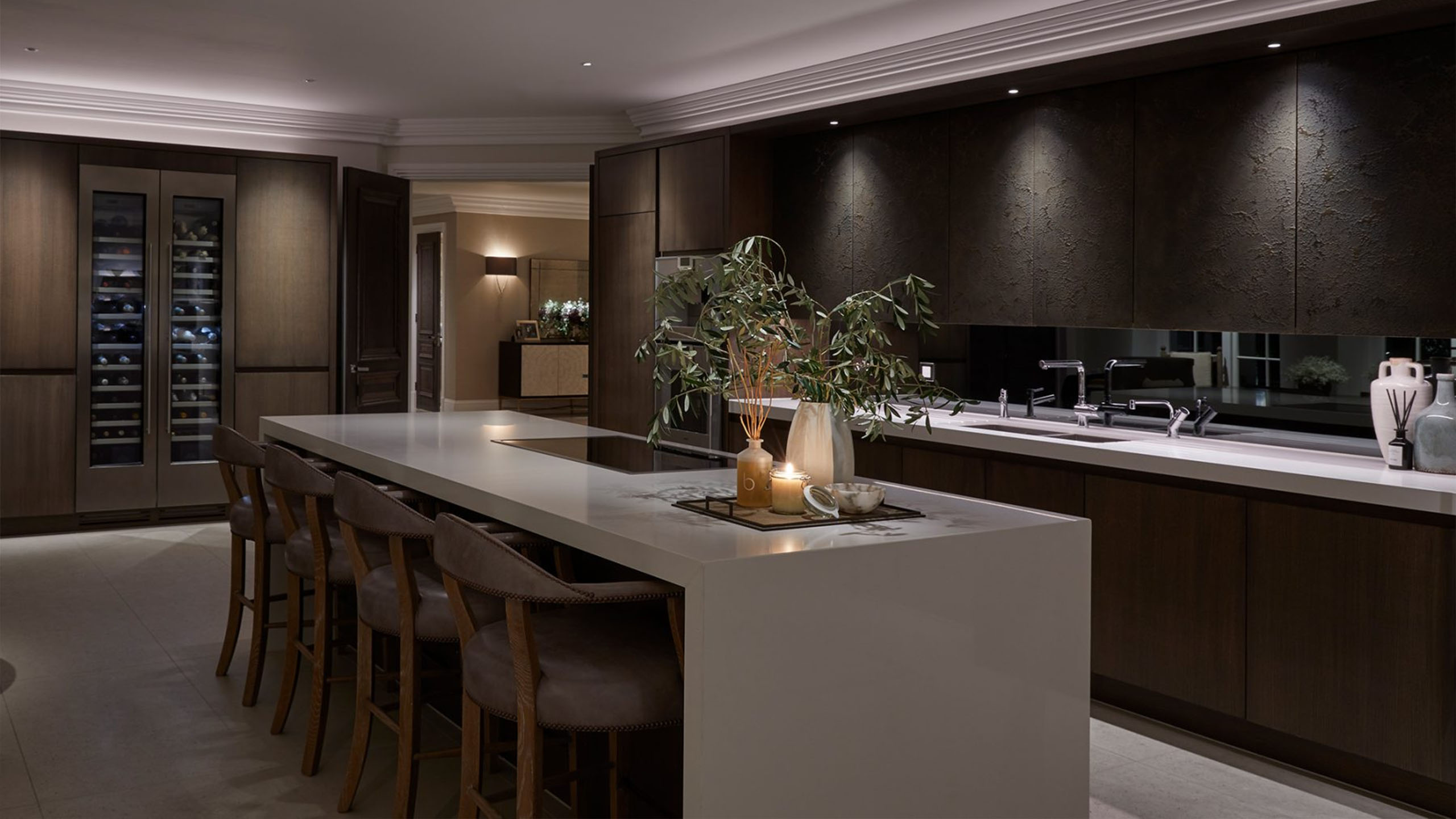
Layout matters more than finishes
A beautiful finish can’t rescue an awkward layout.
That sounds obvious, but it is one of the most common traps in kitchen planning. People spend huge amounts of time choosing surfaces, colours and visible details, while the basic movement of the room gets less attention than it deserves.
Where do you stand when preparing food?
How far is the sink from the hob?
Can two people cook without colliding?
Does the island help the room flow, or does everyone have to walk around it?
Can guests sit somewhere without blocking the person cooking?
These are not small details. They are the kitchen.
“Nobody phones us five years later to complain about the shade of stone,” says Matthew. “They remember if the kitchen feels awkward to use.”
That is where experience matters.
A good kitchen designer sees the room as a sequence of movements. Preparing, cooking, serving, clearing, socialising. Each one needs to feel natural. Nothing should feel forced.
This is especially important in open-plan spaces, where the kitchen has to work as both a functional room and part of the wider living area. We covered this in detail in our guide to open-plan luxury fitted kitchens, because these spaces can either feel beautifully connected or strangely exposed.
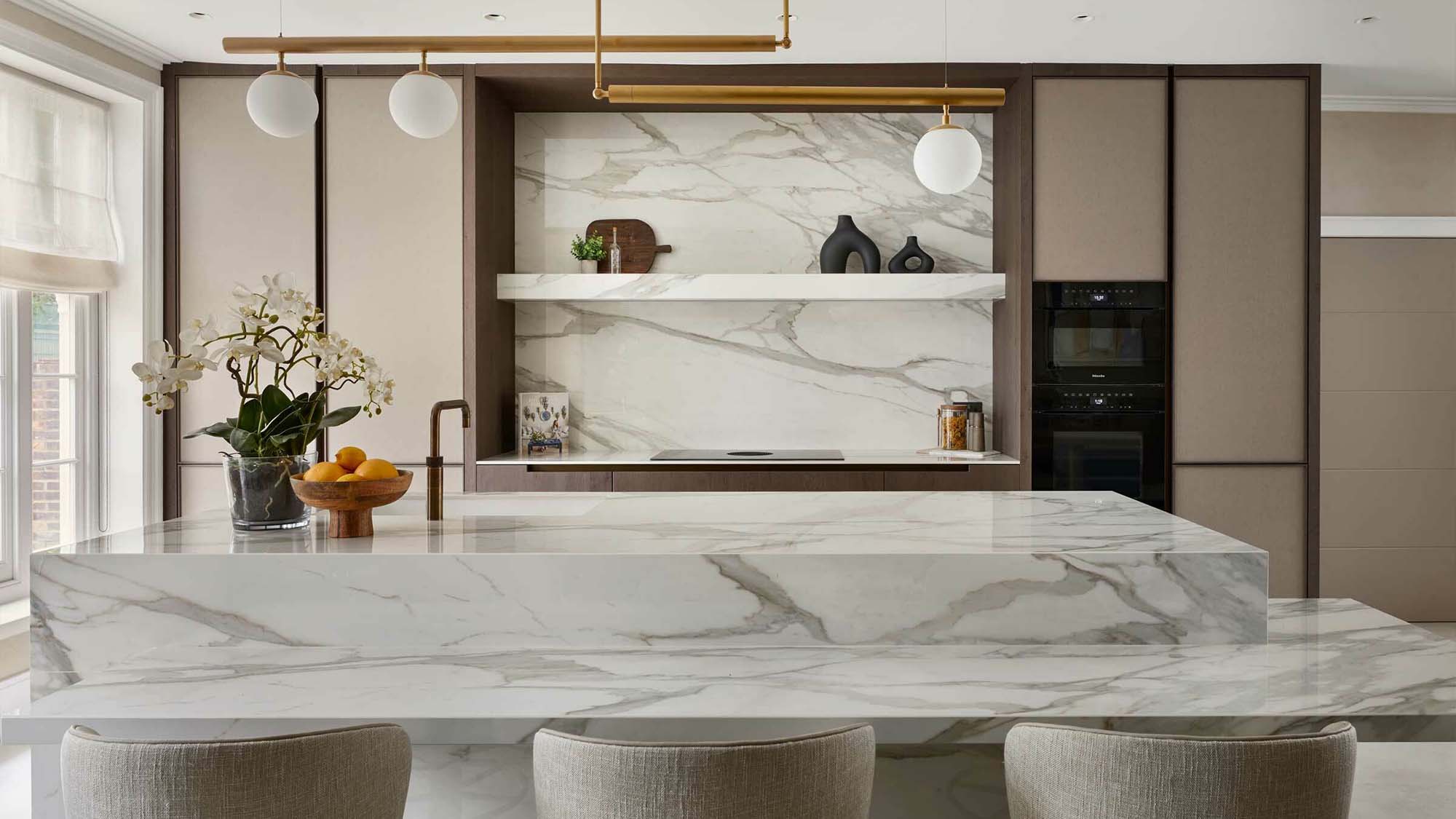
Kitchen islands are another good example. A badly planned island can dominate the room without improving it. A well-planned one becomes the centre of gravity. Storage, seating, preparation, conversation – all handled quietly in one place. That is why island design deserves proper thought, as we discussed in our article on luxury kitchen islands.
Finishes matter, of course.
But layout is what you live with.
Appliance decisions need to happen earlier than people think
Appliances are often treated as something to finalise later.
That can be a mistake.
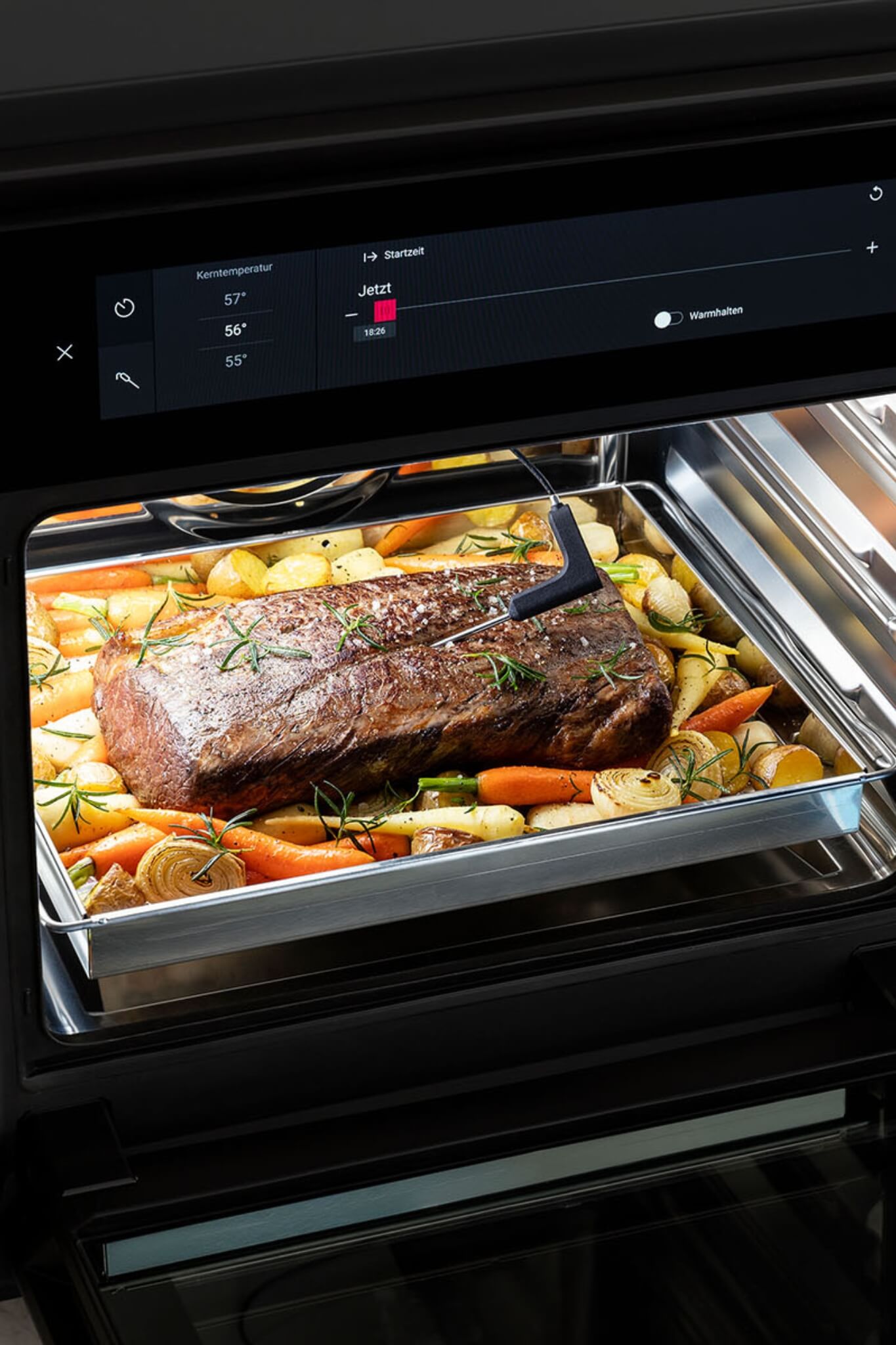
In a high-end kitchen, appliances influence far more than cooking performance. They affect layout, storage, ventilation, power requirements, cabinetry dimensions, sightlines and sometimes even the architecture of the room.
A large fridge-freezer changes how food storage works. A venting hob changes the island design. A steam oven changes cooking habits. Integrated refrigeration alters cabinetry planning. A downdraft system changes what happens above the island and how the room feels visually.
“Appliances influence far more than people realise,” says Matthew. “They affect ventilation, storage, layout and even how the room feels when you’re standing in it.”
This is why experienced kitchen designers tend to discuss appliances earlier than clients expect.
The appliance decision is rarely just about cooking.
It’s about how the entire kitchen functions around it.
Take extraction as an example. Traditional overhead extraction, ceiling extraction and integrated downdraft systems all create very different design opportunities. One might suit a keen home cook perfectly. Another might create cleaner sightlines across an open-plan space.
Similarly, refrigeration choices influence everything from pantry planning to cabinet configuration.
The best appliance decisions aren’t made in isolation.
They’re made as part of the wider design.
If you’re exploring premium appliance options, our comparisons of Gaggenau vs Sub-Zero Wolf and induction, gas and downdraft cooking systems offer a useful starting point.
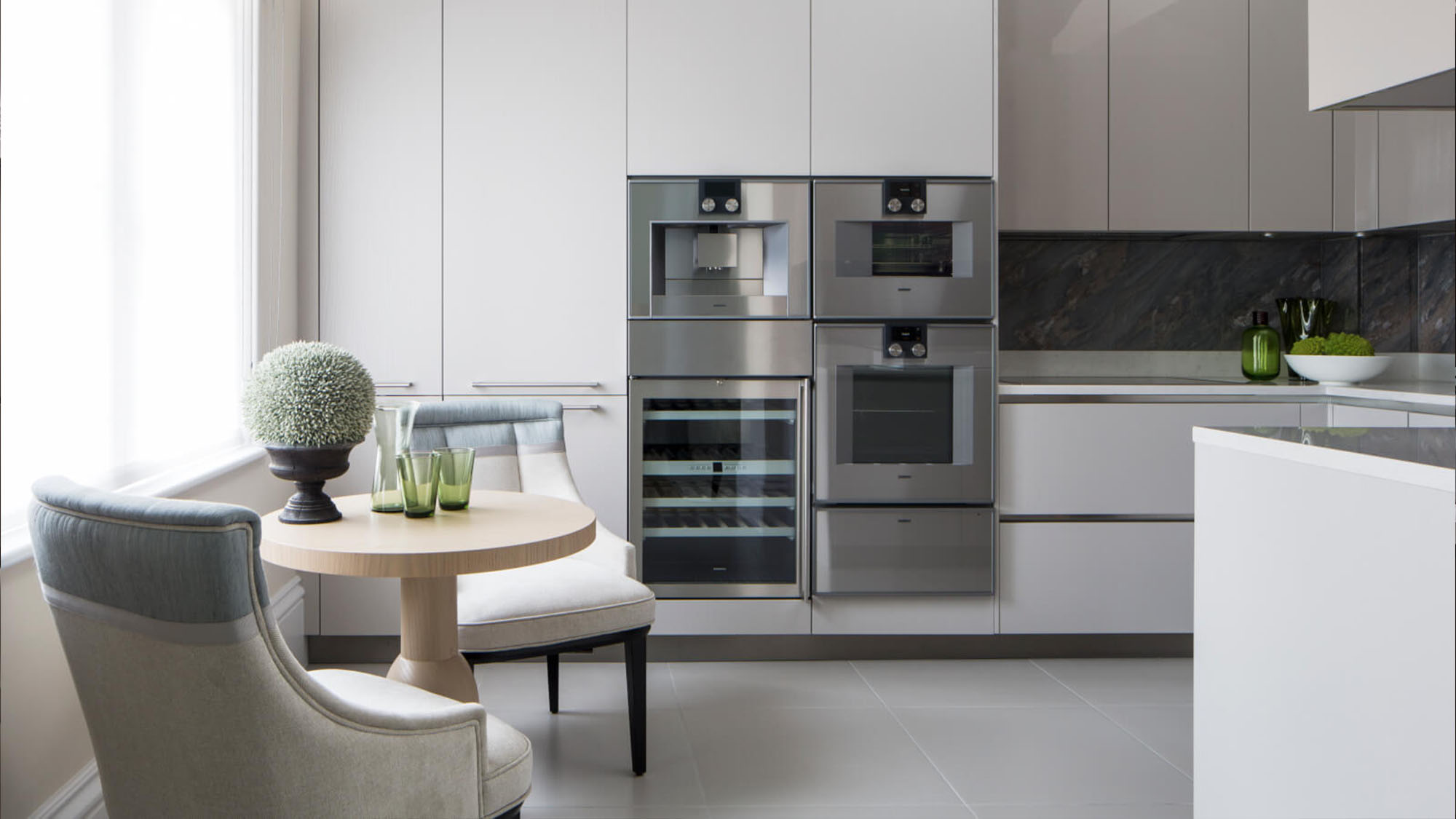
Lighting is usually left too late
If there is one thing kitchen designers repeatedly wish clients would think about earlier, it’s lighting.
Not decorative pendants.
Not statement fittings.
Lighting itself.
Because lighting changes everything.
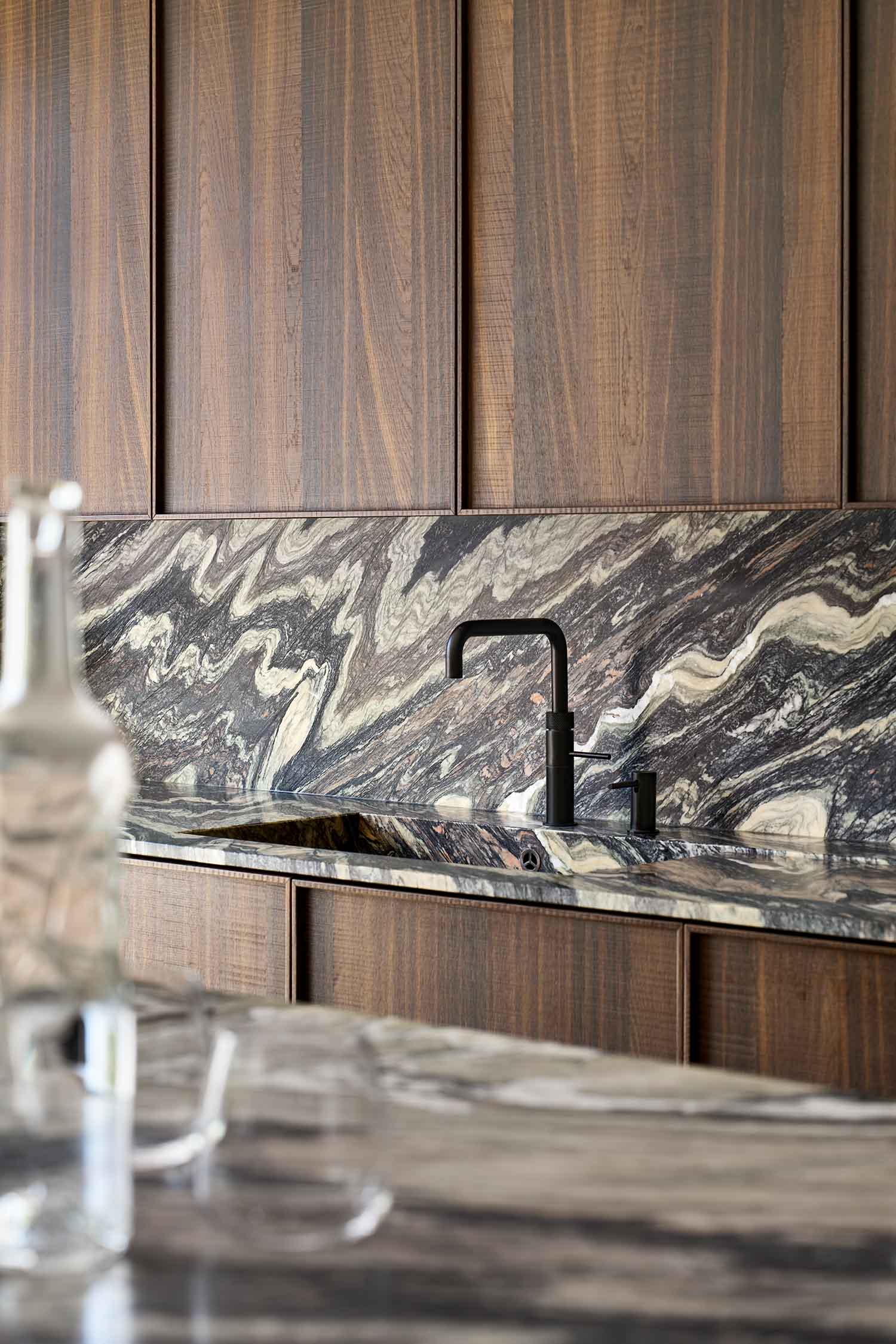
The same stone surface can look rich and luxurious under one lighting scheme and surprisingly flat under another. Timber can feel warm or lifeless. Cabinetry can feel sophisticated or harsh.
And yet lighting is often discussed towards the end of the project.
“Lighting can make expensive materials look ordinary or ordinary materials look exceptional,” says Matthew.
The best kitchens rarely rely on one dramatic source of light.
Instead, they layer it.
Task lighting where people actually work. Ambient lighting that softens the room in the evening. Accent lighting that adds depth and atmosphere. Internal lighting within cabinetry and storage.
The goal isn’t brightness.
The goal is flexibility.
A kitchen should feel different at seven in the morning than it does at nine in the evening when friends are gathered around the island with a glass of wine.
The kitchens that age best usually understand this.
Trends matter less than people think
Every year brings a new collection of colours, finishes and design predictions.
Some become genuinely influential.
Many disappear surprisingly quickly.
The mistake isn’t following trends entirely. Trends often highlight interesting shifts in how people want to live.
The mistake is building an entire kitchen around one particular moment.
“The kitchens that age best aren’t trend-proof,” says Matthew. “They’re simply designed well enough to outlast the trend.”
That’s an important distinction.
A well-designed kitchen can absolutely include contemporary ideas. It can feel current and relevant. But the foundations tend to remain rooted in proportion, usability, quality materials and thoughtful planning.
That’s one of the reasons some kitchens still feel beautiful a decade later while others feel tired after only a few years.
The trend wasn’t necessarily wrong.
It just became the entire design.
We explored this further in our article on why some luxury kitchens age beautifully while others date quickly.
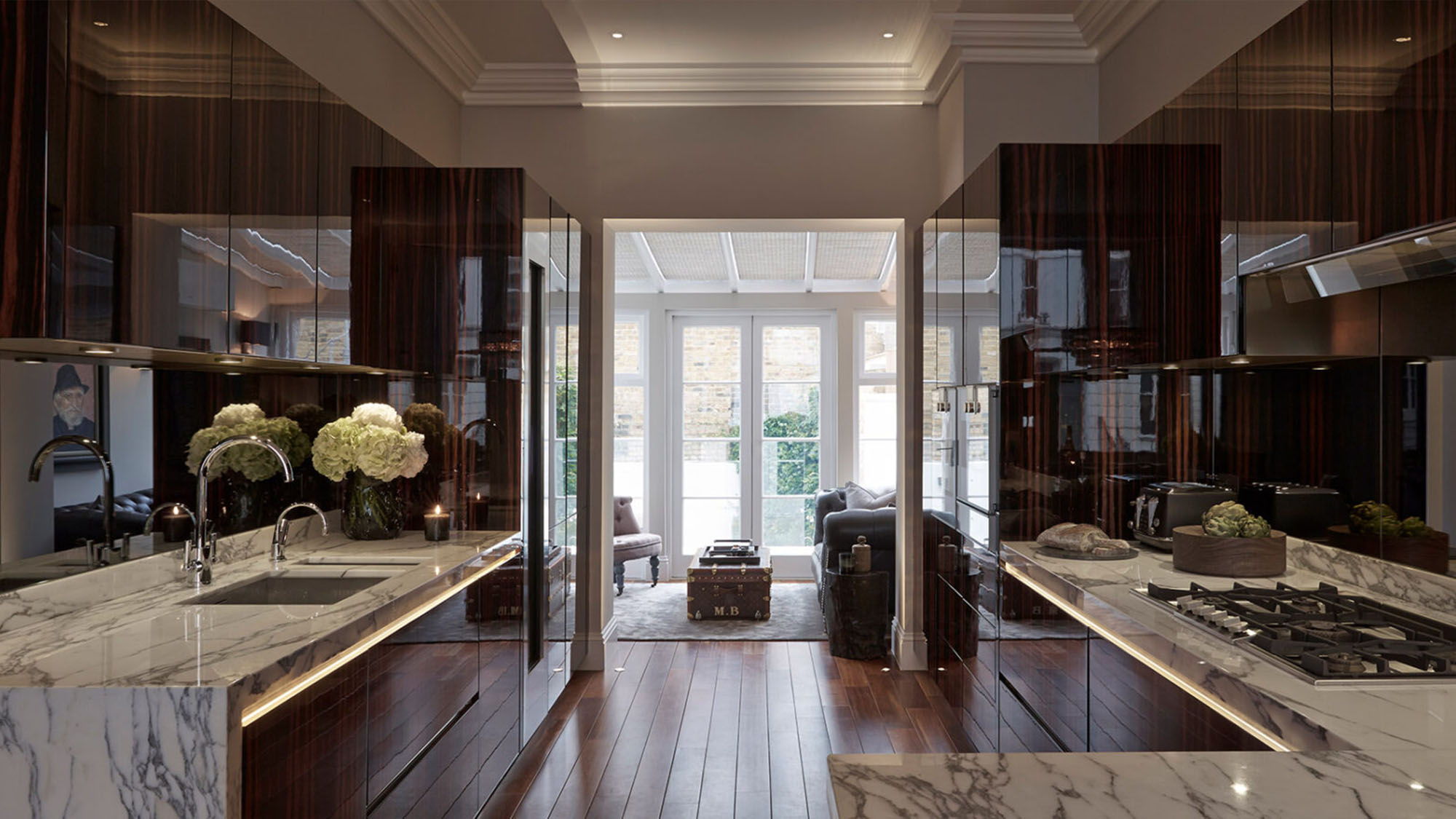
Budget should follow priorities
One of the most valuable conversations in any kitchen project isn’t about spending more.
It’s about spending wisely.
Luxury doesn’t mean choosing the most expensive option in every category.
It means understanding where investment genuinely improves the experience of using the kitchen.
Cabinetry quality matters.
Storage systems matter.
Lighting matters.
Worktops matter.
The appliances you interact with every single day matter.
Other things often matter less than people assume.
“Luxury isn’t about spending more everywhere,” says Matthew. “It’s about spending intelligently in the places you’ll notice every day.”
The most successful projects usually have a clear sense of priority.
They invest heavily in the elements that improve daily life and avoid overspending on features that exist primarily to impress.
The best kitchens evolve from conversation, not Pinterest boards
Inspiration is useful.
It helps identify preferences. Materials. Colours. Atmosphere.
But inspiration images have limitations.
They show how a kitchen looked for one photograph on one particular day.
They don’t show how that family lives.
They don’t show the storage behind the doors.
They don’t show the morning routine.
They don’t show the compromises.
“The goal isn’t to recreate somebody else’s kitchen,” says Matthew. “It’s to create the right kitchen for your home and your lifestyle.”
That’s why the strongest projects usually begin with conversation.
Questions.
Observation.
Understanding.
The final design may end up looking completely different from the original inspiration images.
And that’s often a good thing.
Because it means the kitchen has become personal rather than copied.
What the best projects have in common
After years of designing kitchens, certain patterns become clear.
The best projects aren’t necessarily the largest.
They aren’t always the most expensive.
They don’t always contain the most dramatic materials or the newest appliances.
What they share is thoughtfulness.
They begin with lifestyle rather than aesthetics.
They take storage seriously.
They prioritise layout.
They consider lighting early.
They understand where quality matters.
And they resist the temptation to chase every trend at once.
“The best kitchens don’t just look good when they’re finished,” says Matthew. “They still feel right years later when life has properly moved in.”
And perhaps that’s the simplest definition of good kitchen design.
Not a room that impresses for a weekend.
A room that continues working beautifully long after the excitement of installation has passed.